


























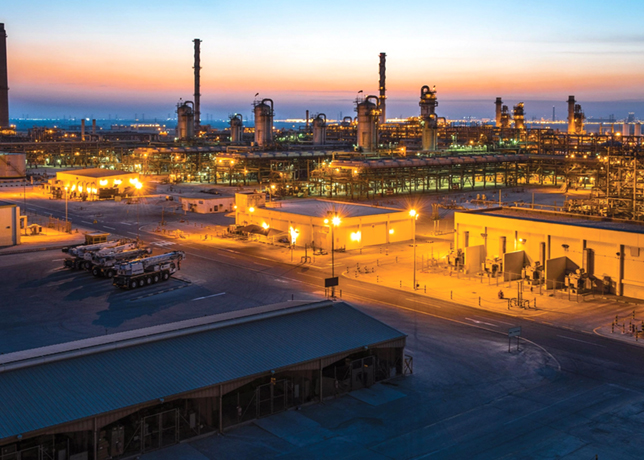





















NON-OPEC oil exporter Oman plans to increase the capacity of its 116,000 barrels per day (bpd) Sohar refinery by as much as 35 per cent, a refinery executive says.
“The feasibility is complete and is with the Council of Ministers for approval,” an Oman Refinery Co executive says.
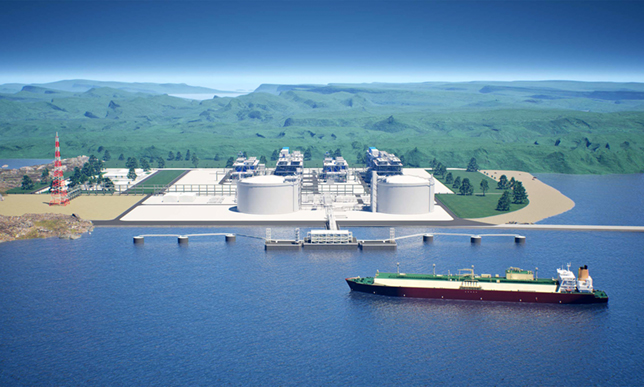
“Construction will run side-by side with the Duqm refinery project once it gets approval,” says the official, who asked not to be named.The government announced plans to build the Duqm Refining & Petrochemical Complex last December, but has yet to approve the scheme which would see the construction of Oman’s third refinery at Al-Duqm in the southeast of the country.
The scheme would include a 300,000-bpd refinery and a petrochemicals facility including a polypropylene plant with a capacity of 1.2 million to 1.5 million tonnes a year.
The country’s other refinery, the 106,000 bpd Muscat plant run by Oman Refinery Co, has limited space for expansion.
Signs that the Duqm project will go ahead came when the government signed an agreement for a $660 million loan from Japan Bank for International Cooperation to partly finance the construction of an estimated $1.1 billion new port and drydocks in Duqm to serve industrial projects.
The refinery schemes now fall under the auspices of Oman Refineries and Petrochemicals Co (OMRC), a new entity created in September, which merged the Oman Refinery Co and Sohar Refinery Co.
OMRC has also invited local and international contractors to express interest in building a new 5,000-bpd bitumen plant at a cost of about $80 million, the executive says.
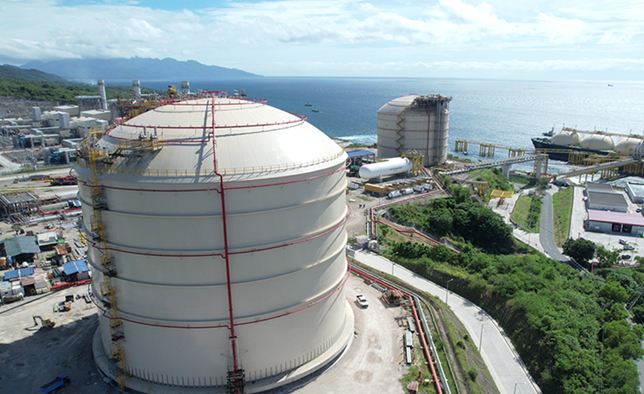
Oman’s Sohar refinery is running close to capacity after being limited to around 60 per cent last year, refinery director Pil-Hong Oh says. It has been ramping up since the start of the year. The 116,000 bpd crude distillation unit is currently running at around 100 per cent and the 75,000 bpd residue fluid catalytic cracker at almost 100 per cent, he says.
Last April, a Sohar executive prematurely declared the facility fully operational.
The refinery has been plagued with technical problems since completion in September 2006. Last year, it suffered from leakages in the seawater exchanger used for cooling, which caused some corrosion, Oh says. The exchanger has now been upgraded, but continued leakage is being addressed, he says.
Sohar is considering an upgrade to boost naphtha output to 30,000 bpd from 20,000 bpd. The new stream would supply a nearby aromatics project due to start up in 2009. Oh says it was too early to talk about price, but it would be costly given the current market. The original grassroots facility, on which construction began in late 2003, was a relative bargain at $1.3 billion.
The refinery is owned 20 per cent by Oman Oil Co and 80 per cent by the Finance Ministry.
State ORC operates Oman’s first refinery at Mina Al-Fahal, which produces 106,000 bpd and is linked by pipeline to Sohar. ORC managing director Adil Al-Kindy has been named ORPC chief executive.
Meanwhile, state-owned Oman Refineries and Petrochemicals Company has turned into a regular gasoline exporter, with exports of low-octane gasoline from its Mina Al-Fahal refinery expected to reach up to 50,000 cubic metres (314,500 barrels) each month, company officials say.
First gasoline exports have started, following the company’s sale of 20,000-25,000 cu m 90 RON gasoline.
“We have revamped the (Mina Al-Fahal) refinery and added new units...so gasoline output is higher,” a company official says.
Exports are expected at one to two cargoes each month.
Balance-wise, Oman — which used to import 95 RON gasoline regularly via Oman Refinery Company — is to be net-long in lower-octane gasoline following the startup of 116,400 bpd Sohar refinery in Wilayat last April.


