




























BANAGAS has been awarded OHSAS 18001:2007 certification after having successfully passed both stage one and two of the audit requirements.
Representatives of the certification body have expressed their complete satisfaction for Banagas’s occupational safety, health and environment management system. No non-conformities have been discovered throughout the sections and departments which were subject to the auditing process.
Banagas has also achieved a record safety rate of 6.5 million hours without any lost time incidents since May 27, 2007.
The company bettered its own previous record when in 2010 it achieved six million hours without a single lost time accident.
This year, the company has won several international safety awards from reputed organisations such as the Royal Society for the Prevention of Accidents, the Gas Processors Association and the UN National Safety Council.
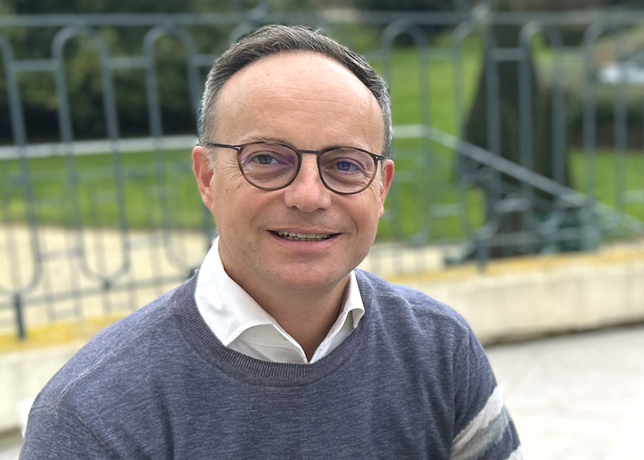
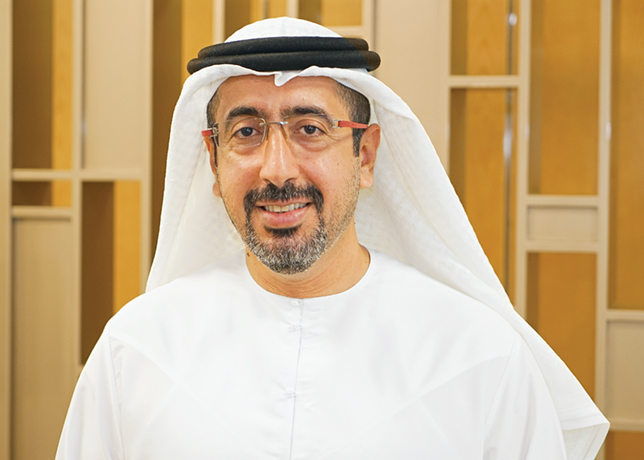
‘I am grateful to each and every member who has worked dedicatedly to make this achievement,’ says Banagas general manager Dr Shaikh Mohammed bin Khalifa Al Khalifa.
‘I call upon the staff to maintain such excellent performance to reach our next goal of ISO 14001:2004 on environmental management systems,’ he adds.
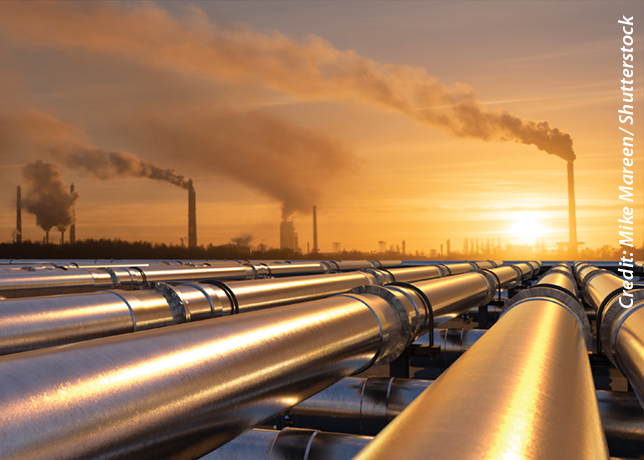
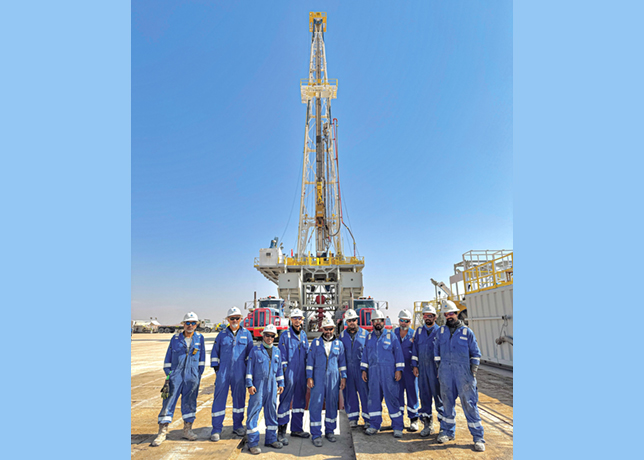
A company that processes highly flammable gases has to pay the greatest attention to occupational health and safety and right from the start of operations this has been of paramount importance. “To safeguard life and property we enforce the most stringent regulations to ensure safe working conditions at all our facilities, following closely the health and safety standards of the international gas industry as a whole,” says a company spokesperson.
Since the establishment of Banagas was in itself an environmental measure, solving the problem of associated gas that was flared and thus wasted for 40 years, the company has continued to set an example for its industry. Its established safety, health and environment policy includes a clear strategy to preserve the environment and safeguard the health and safety of all citizens, employees and contractors within its facility.
The Board of Directors of the Bahrain National Gas Company considers the occupational safety and health of its employees and the protection of the environment as one of their primary responsibilities.
The company is committed to providing a safe and healthy work place for all employees and contractors working within the facilities and shall take all reasonable measures and precautions to minimize and prevent personal accidents, pollution, damage to property and the environment.
To fulfill this commitment, the company shall provide the necessary resources to:
• Comply with occupational safety, health and environment rules and legislation enacted in the Kingdom of Bahrain and to other requirements to which the company subscribes, and establish and maintain communication channels with the concerned authorities.
• Develop and maintain guidelines and clearly defined procedures on occupational safety, health and protection of the environment systems.
• Provide appropriate occupational safety, health and environmental awareness and training programmes to enable management, employees and contractors to meet their respective responsibilities.
• Monitor, continually improve and evaluate performance of the systems to ensure that high standards are maintained.
BANAGAS RECORD HAILED
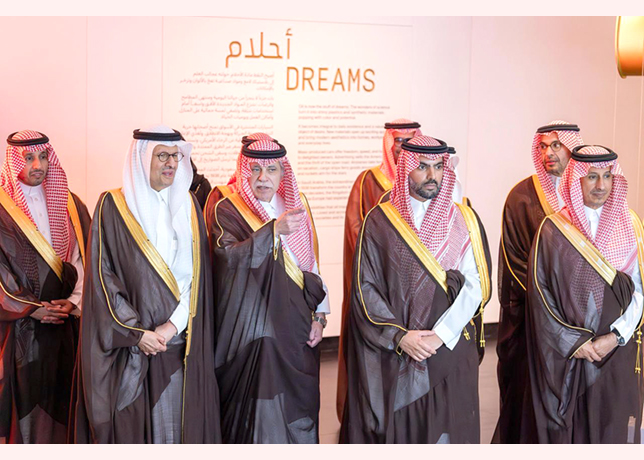
Energy Minister and National Oil and Gas Authority chairman Dr Abdul Hussain Bin Ali Mirza praised Banagas general manager Dr Shaikh Mohammed bin Khalifa Al Khalifa for his record on safety.
Dr Mirza congratulated Dr Shaikh Mohammed on Banagas winning an excellence certificate in the field of health and safety from the British Safety Council. The certificate confirmed the company’s full compliance with international safety standards applied in this area, the minister said.
Dr Mirza expressed his appreciation for the efforts made by the executive management and all employees to improve the health and safety conditions in the company. He congratulated the management and staff for the prestigious recognition in achieving the highest levels of safety.
MEASUREMENT OF AIR POLLUTION
In compliance with Ministerial order No3 for 2001, issued by the Ministry of State for Municipalities and Environment, gas emissions produced by gas turbines and driers at compression stations and the main plant are regularly measured and reported to the Public Commission for the Protection of Marine Resources, Environment and Wildlife.
OZONE DEPLETING GASES
Banagas was the first company in Bahrain to eliminate the use of halons in firefighting systems, replacing them with more environmental friendly ozone-protective products, pursuant to the resolutions of the Montreal Protocol to which Bahrain is signatory.
DEDICATED LANDFILL FOR WASTE:
A dedicated landfill has been designated for disposal of hazardous industrial waste such as filters and carbon substances used in cleaning hydrocarbons from impurities. Procedures have also been developed for waste management and transportation to the industrial waste landfill designated by the Public Commission for the Protection of Marine Resources, Environmental and Wildlife.
ITEMS CONTAINING ASBESTOS
A specialised committee has identified all spare parts containing asbestos and replaced them with environment-friendly substitutes.
FORESTATION OF THE SAKHIR AREA
In support of the national environmental protection campaign 2,000 trees have been planted in the Sakhir area near the company’s facilities. This project has added a measure of beauty to the wild nature of these areas.
NOISE LEVEL CONTROLS
Noise is created by turbines, compressors, air-cooler fans and pumps. High noise areas have been identified as those where the intensity of sound reaches 85+ dB.
Noise levels in the work areas have been reduced by using silencer partitions while high level noise worksites have been designated and provided with signs indicating the need to use ear protection.
HAZOP STUDY
The company has developed a Hazard and Operability (Hazop) procedure for all engineering modifications which involves the application of a formal, systematic and rigorous examination to identify hazards and assess their potential consequences and risks to personnel and equipment.
A Hazop Committee is assigned the task to examining the process on the principle that a team approach to hazard analysis will identify more problems than individuals working separately.
The Committee is made up of individuals with varing backgrounds and expertise. The expertise is brought together during Hazop sessions and through collective brainstorming to stimulate creativity and new ideas.
MANAGEMENT OF CHANGE (MOC)
A MOC procedure has been developed to systematically manage changes in process, technology, equipment, facilities or procedures (including chemicals and control system).
The primary purpose is to ensure that all changes are:
• Carefully reviewed prior to implementation (team review);
• All relevant documentation is updated;
• All personnel involved are informed and trained;
• The procedure cover all types of changes whether permanent, temporary or emergency; and
• MOC Review meetings are conducted on a regular basis by a technical team comprising members identified by change owner and the actioning department manager.
RISK BASED INSPECTION (RBI)
A risk-based approach to inspection has been implemented by the company to identify the likelihood of failure and its consequences.
RBI methodology is used to prioritise inspection, usually by means of non-destructive testing. Those with high probability and high consequence are given higher priority for inspection than those that are high probability but for which failure has low consequences. This strategy allows for rational investment of inspection resources.
The company established the RBI programme to manage the inspection process for plant equipment especially pipelines and vessels with the ultimate goal of developing a cost-effective inspection and maintenance programme that provides assurance of acceptable mechanical integrity and reliability.
FIRE DRILL
The fire drill competition takes place every year to test the fire fighting skills of employees from industrial companies and government ministries in Bahrain. The event is supervised by the Civil Defense and Fire Services Directorate and takes place at their Riffa fire station.
Teams of five compete against each other to carry out the fire drill with the winner being the one who completes the drill in the shortest possible time without incurring time penalties.
The company has won many laurels and awards for its SHE policy and implementation. Chief among these are 1981 Bronze Award The Royal Society for the Prevention of Accidents – UK; 1982 silver Award The Royal Society for the Prevention of Accidents – UK; 1983 1st Place – Division II Gas Processors Association – US; Gold Award The Royal Society for the Prevention of Accidents – UK; 1984 1st Place – Division II Gas Processors Association – US; 2007 Order of Distinction The Royal Society for the Prevention of Accidents – UK; 2nd Place – Division I Gas Processors Association – US; Perfect Record Award Gas Processors Association – US; 2008 Order of Distinction The Royal Society for the Prevention of Accidents – UK; 2nd Place – Division I Gas Processors Association – US; Perfect Record Award Gas Processors Association – US; 2009 Commended For Industry Sector Award (Oil & Gas Industry) The Royal Society for the Prevention of Accidents – UK; 2nd Place – Division I Gas Processors Association – US; Perfect Record Award Gas Processors Association – US and many more.