














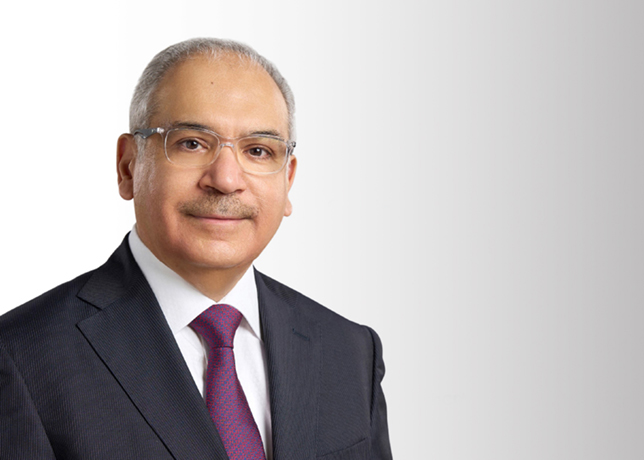







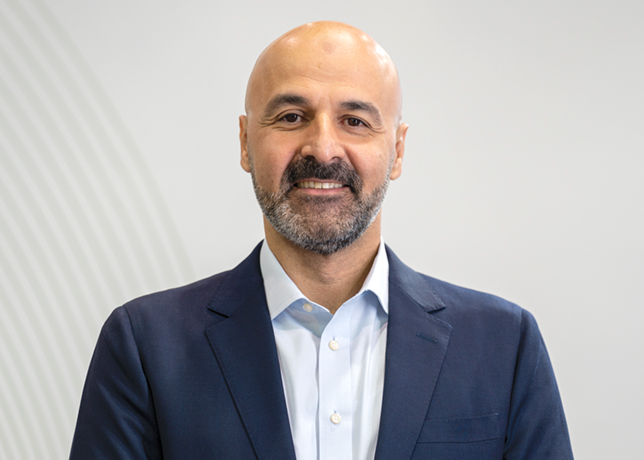













Gordon Smith, the new chief executive of Bapco succeeded Faisal Al Mahroos on January 1, 2012 and already is making his mark in Bahrain. With a background of extensive oil industry management experience at Chevron, Smith has led many successful turnarounds, plant commissioning and refinery upgrades around the world.
Smith came on board in June 2011 as Bapco’s deputy chief executive for refining and marketing, his first major posting in the Middle East except for a short stint in Sharjah during the mid-1990s.
Smith brings a wealth of both upstream and downstream experience to Bapco and immediately prior to Bahrain was based in Cape Town as director and general manager of Chevron South Africa from 2005. Before then, Smith was project manager for the startup of the massive Chevron Hamaca (Heavy Oil) project in Venezuela, a $5-billion world-scale plant that achieved 21 million man hours without an accident.
An engineer born into a hardy farming family in Scotland, Smith was born near Aberdeen, the famous granite-city and has travelled the world for more than three decades with his wife Lynda and their children. He began his career with Amoco working in various positions in Europe, Australia and India. Smith was involved in the startup of a new refinery in Kaduna, Nigeria and then moved to the Bahamas at the massive Chevron 550,000 barrels per day (bpd) Borco refinery in Freeport.
Moving into process engineering and management whilst always maintaining a position at the sharp end of operations, Smith was responsible for safety, operational reliability, mechanical turnarounds, maintenance, project startups and commissioning. Smith managed Chevron’s reliability initiatives and operations at the UK’s Texaco Pembroke refinery which also included significant responsibilities in North Sea operations. He transferred to Panama as refinery manager in 2000.
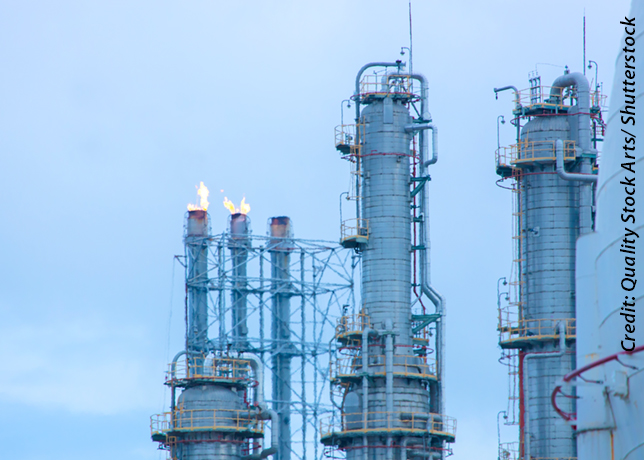
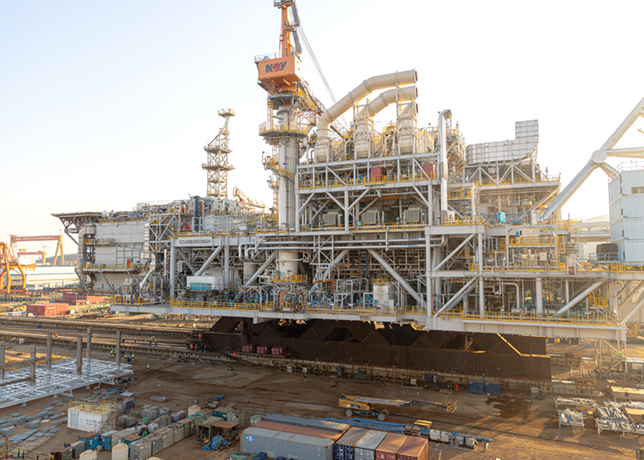
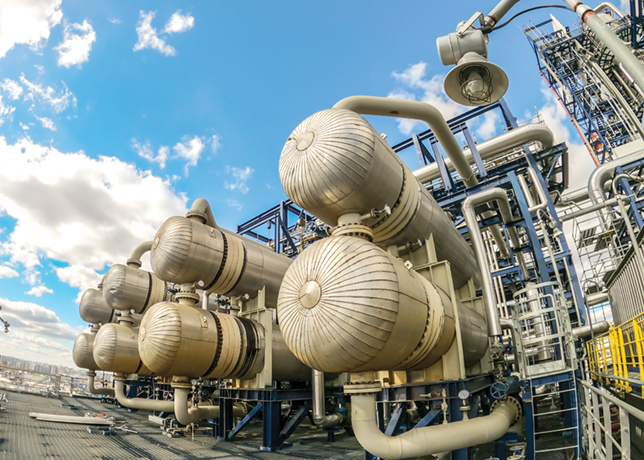
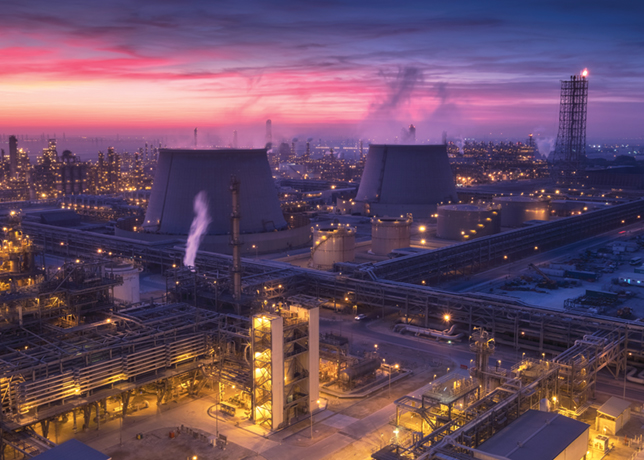
Smith is now proactively involved in taking Bapco’s modernisation masterplan forward , a refinery upgrade plan, that involves an investment of $5 to 6 billion over the next six years with completion slated for 2018. Once commissioned, Bahrain will have one of the most competitive and sophisticated pace-setting refineries in the world.
“The modernisation and expansion of the refinery will mean that the present name-plate capacity of 272,000 bpd will increase substantially to 450,000 bpd. This will involve adding several units which will convert black oil products into more value-added products whilst increasing energy efficiency and environmental compliance across the refinery,” Smith tells OGN in an exclusive interview.
The project will pass from one phase to another in terms of evaluations with the results of several studies on the detailed scope of the masterplan announced for the project from the third quarter of this year until mid-2013. During this evaluation period, a decision on the sources of finance for the project by will be secured. Realistically, we expect the EPC contracts to be awarded from the Feed (front-end engineering and design) study by 2013 and construction to start by 2014 with the upgraded refinery fully commissioned and on line by late 2017 to early 2018,” says Smith.
Smith mentions that in terms of securing project finance that the upgraded 450,000 bpd refinery could become a joint venture with another partner so Bapco is very much thinking out of the box in terms of funding in order to realise its ambitious masterplan over the next few years.
“Although much of my experience has been predominantly downstream during my career, I have extensive North Sea and Latin American upstream experience too which is proving invaluable. I am taking over at the helm of Bapco at a time when many significant projects have been completed and several more are in the pipeline both upstream and downstream,” he adds.
Central to the refinery upgrade is the completion of the new $350-million A-B pipeline between Saudi Arabia and Bahrain which must be operational prior to the commissioning of the refinery in 2017-18.
“There has been significant progress on replacing the ageing A-B pipeline linking Saudi Arabia and Bahrain to ensure environmental safety and efficiency. This new 30-inch diameter pipeline is to be constructed from Saudi Aramco’s facilities via a new 115 km long route capable of carrying 350,000 bpd of Arabian Light Crude from the Abu Safah field to the Bapco refinery. This could be extended to 400,000 bpd in the long term.
Feed studies have already begun and construction is scheduled to start by the third quarter of this year. The completion of the pipeline will coincide with that of the proposed refinery masterplan in 2017-18,” he continues.
The refinery masterplan and other initiatives also provides Bapco with the perfect opportunity to further promote education and training, a key aspect of Bahrain’s 2030 vision, which will facilitate the development of the engineers, technicians and operators of tomorrow.
“Very soon Bapco will start to invest and develop about 200 graduates which will bring young Bahrainis into our business and operational culture. This investment is vital in terms of attracting and developing the key competencies required by Bapco to take the company’s vision forward,” he says.
For more than 80 years history Bapco has been the cornerstone for the Bahrain economy and the sole supplier of precious energy that fuels the nation. Bapco continues to provide a large proportion of Bahrain’s GDP and is a major provider of employment opportunities for Bahrainis either directly or through its dependent industries.
Despite the challenges faced by Bahrain over the past year, Bapco recorded many significant achievements including several milestones in environment, health and safety in 2011 reflecting the company’s ongoing commitment to a rigorous culture of vocational safety, health and social responsibility to enhance community welfare in Bahrain.
Bapco proved to Bahrain and the world a level of resilience and dedication to fulfill all its domestic fuel requirements and meet its production commitments to international customers. With favourable global market conditions for crude and refined products, Bahrain has exceeded its revenue budgets for refined product s in 2011.
Yet Bapco does not rely on the strength of the global market to protect its future growth but proactively looks to position itself through an aggressive expansion programme. Five years ago, Bapco commissioned its ultra-low sulphur diesel plant (LSDP), a project positioning Bahrain in the forefront of process technology and as a key supplier for environment-friendly export products.
As well as the LSDP project, Bapco commissioned the cutting-edge refinery gas desulphurisation project (RGDP) in January 2009, marking another milestone in the company’s vision to turn the refinery into one of the greenest and cleanest in the world.
Bapco succeeded in launching a number of key projects and initiatives in 2011 to further enhance the kingdom’s development. Several global strategic agreements were signed as well as several key sponsorships to support Bahrain’s economic, industrial and social development.
This includes the successful completion of hub turnaround and inspection (T&I), the largest maintenance programme ever undertaken in Bapco’s long history without a single lost-time injury. In terms of safety, Bapco was able to achieve successive milestones by completing three times, one million man hours with lost time injuries.
In addition, Bapco achieved three million man hours without lost time injuries throughout 2011 making one of its best safety records in its history.
By laying down the foundation stone for its Environmental District in the refinery, Bapco further enhanced its environmental compliance and corporate social responsibility. More than $400 million has been spent by Bapco in recent years on projects that protect the air, water and land resources.
November witnessed the successful commissioning of the Lube Base Oil Plant (LBOP) without incident or injury. This world-scale LBOP project, the outcome of this joint venture between Neste Oil of Finland and Nogaholding produces Group III Very High Viscosity Index (VHVI) base oils, next generation products that are in increasing demand in Europe and North America meeting stringent environmental standards.
Bapco operates and maintains the plant on behalf of the joint venture and Neste Oil markets the products worldwide. Strong international lube base oil prices ensure that the LBOP plant is a high value added project in Bapco’s diversified product portfolio. Following the commissioning of the lube plant, Bapco exported four lube base oil cargoes and celebrated the first shipment arrival in Antwerp, Belgium.
By December, Bapco continued its excellent safety performance by achieving 10 million man hours in the LBOP plant without a single lost time injury in coordination with principal EPC contractor, Samsung. Bapco also completed negotiations and arranged for the ratification of the Deep Gas EPS agreement with Occidental Petroleum (Oxy).


