














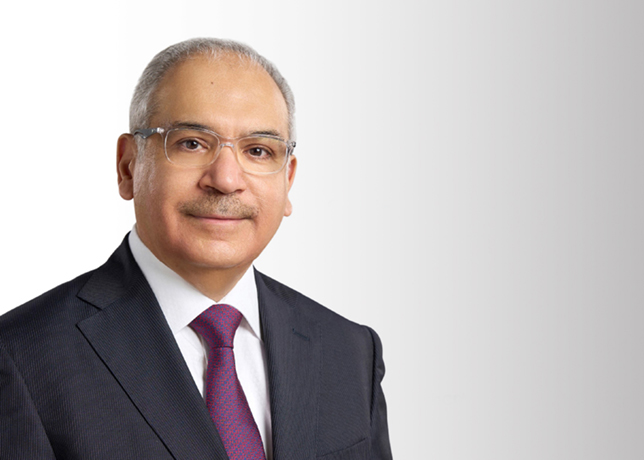







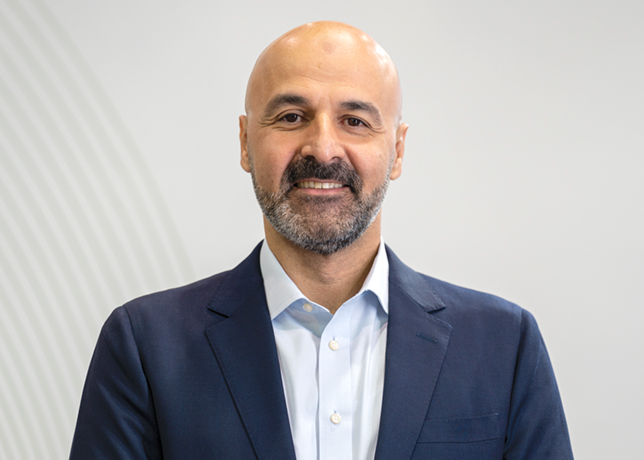


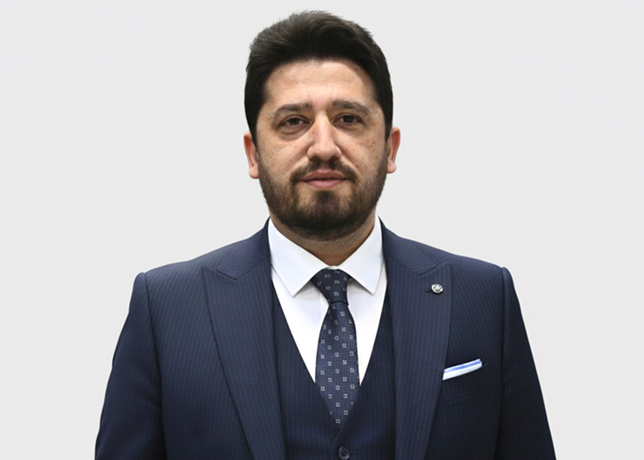







Bahrain has a larger strategic goal than just meeting the growing demand for gas, and would like to develop Bahrain as a regional gas hub along with petrochemical industrial complex similar to the one in Jubail, Saudi Arabia, says Banagas chief executive Dr Sheikh Mohamed bin Khalifa Al Khalifa.
“Bahrain is exploring the development of an LNG import/export terminal, which would also allow for the purchase of LNG (either on contract or the spot market) during time of low demand such as summer time in Europe.
Bahrain has contracted Hess Corp to examine the feasibility of building and operating such a terminal. The enormous infrastructure cost of such a venture would only make sense if LNG becomes a significant and sustained import or export commodity,” says Sheikh Mohamed in an exclusive interview with OGN.
Excerpts from the interview:
With increased development of residential areas and the expansion of major industrial companies, gas will certainly continue to play an important role in the region and in Bahrain, in particular. What short-term and long–term measures are being taken to meet the increasing demand?
Bahrain has the ability to meet short-term gas demand. Bahrain power needs will exceed gas production within next 10 years. Bahrain’s goal is to acquire at least one billion standard cubic feet per day (bscfd) of gas beyond current production, and is pursuing a multi-pronged approach toward this end.
The current strategies being pursued are: onshore exploration in Awali field (eight wells are already in process); offshore exploration; enhancement of the existing Bahrain field; purchasing gas from Qatar; acquiring gas directly from Iran and acquiring Iranian gas through a three-way deal with Russia’s Gazprom.
In a related initiative, Bahrain signed on MOU with American energy company Hess Corp in October 2008 to study the feasibility of building an LNG import/export terminal to acquire enough surplus gas to build and sustain an export-oriented gas/petrochemical industry.
How do you plan to deal with the tricky issue of ‘doing away with subsidies’ considering that shortage of gas is a harsh reality too?
Many energy intensive industries in the Middle East have thrived on huge gas price subsidies. However, with the advent of gas shortage combined with gas sky-rocketing prices, these subsidies would have inevitably to be phased out, not to the extent to push the prices beyond what the industries can afford but to encourage investment in regional gas exploration and discourage waste.
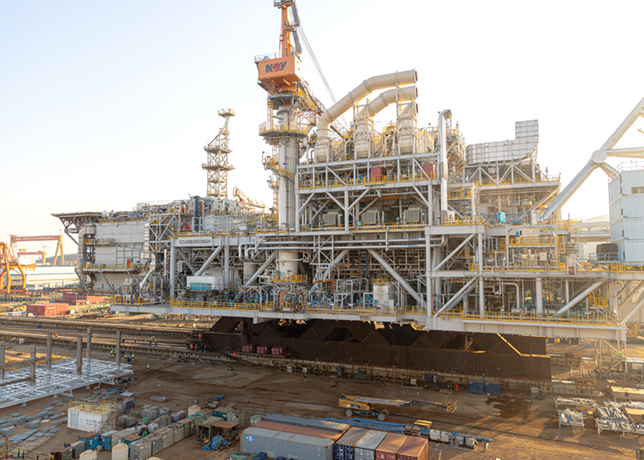
What is the scope of the agreement reached with Japan’s JGC for the construction of the ninth gas compressor station?
The major activities for the construction works of the ninth gas compressor station are progressing well as 52 per cent of engineering works and 37 per cent of procurement activities were completed taking the cumulative progress status to 30 per cent.
Mechanical work on the project is expected to be completed in 22 months with commissioning and start up is to take place as scheduled in August 2013.
Some time back we were told that Bahrain through the National Oil and Gas Authority (Noga) had formed working teams to discuss the supply of gas to the kingdom for Qatar. What is the status of those talks? Have the negotiations been fruitful? What is Banagas’ strategy on gas imports?
There has been no movement in gas negotiations with Qatar as the Qataris insist that they cannot, or will not, comment any further development of their North Dome field until a field sustainability study is finished.
The study, originally scheduled for completion in 2008, now will not be completed until at least 2012. As far as Banagas is concerned, we are restricting our operation to processing produced onshore associated gas.
What impact would the entry of Russia’s Gazprom have on Bahrain’s oil and gas sector?
As you know Bahrain’s Minister of Energy Dr Abdul-Hussain bin Ali Mirza signed a letter of intent with Gazprom chairman to explore business opportunity in Bahrain.
Gazprom has long stated that they would like to have a Middle East outlet.
Under the agreement, Gazprom would supply gas to Iran’s North Pars field in return for concessions in Iran’s South Pars field in the Gulf, which in turn Gazprom could be developed to sell gas to/from Bahrain.
One big advantage of purchasing gas from Gazprom and not directly from Iran is that the previous negotiations with Iran have precluded the inclusion of “rich” or “wet” gas, a deal that the Russians are open to and which would support the development of a petrochemical complex. Further negotiations with Bahrain cannot move forward until Gazprom secures a deal with Iran.
Will it (the entry of Gazprom) help ease gas shortages or will it help further the kingdom’s aim of becoming an LNG hub?
Bahrain has a larger strategic goal than just meeting the growing demand for gas, and would like to develop Bahrain as a regional gas hub along with petrochemical industrial complex similar to the one in Jubail, Saudi Arabia.
Bahrain is exploring the development of an LNG import/export terminal, which would also allow for the purchase of LNG (either on contract of the spot market) during time of low demand such as summer time in Europe.
Bahrain has contracted Hess Corp to examine the feasibility of building and operating such a terminal. The enormous infrastructure cost of such a venture would only make sense if LNG becomes a significant and sustained import or export.
Foster Wheeler, we believe, has been appointed to conduct a feasibility study for Banagas’ LPG facilities. What is the objective of conducting such a feasibility study when Banagas’ LPG production is too small and also several studies conducted in the past have turned out negative?
 |
|
Banagas’ ongoing awareness and dedicated |
The recent appointment of Foster Wheeler was only to conduct a feasibility study for Banagas’ existing LPG facilities to handle a bigger volume of the rich high yield refinery of gas. The previous study carried out by Foster Wheeler was to explore the possibility of handling additional volume of associated gas the availability of which is yet to be confirmed by Tatweer Petroleum.
What role is Banagas playing in Tatweer Petroleum?
Banagas’ operating mission is to process the associated gas which is a byproduct of crude oil. Without Banagas an average volume of 300 million standard cubic feet per day (mscfd) of gas will have to be flared/vented at the field of Bahrain. As per the “Development and producing sharing agreement” (DPSA) signed between Noga and Tatweer Petroleum no natural gas shall be vented or flared without prior approval from Noga at the field of Bahrain. Without Banagas, Tatweer Petroleum will not be able to fulfill that obligation.
What is your gas production and consumption forecast for the next five years in Bahrain?
Bahrain produces approximately 1.7 bscfd of natural gas plus 265 mscfd of residue gas produced from Banagas LPG plant all of which is consumed domestically, mostly for power generation. Bahrain will be able to meet its needs of fuel gas for the next ten years.


