




















Tatweer Petroleum, a joint venture operating company between Noga (National Oil & Gas Authority), Occidental Petroleum Corporation and Mubadala Development Company (Mubadala), has significantly improved production from the Bahrain Field during 2011 using advanced recovery techniques.
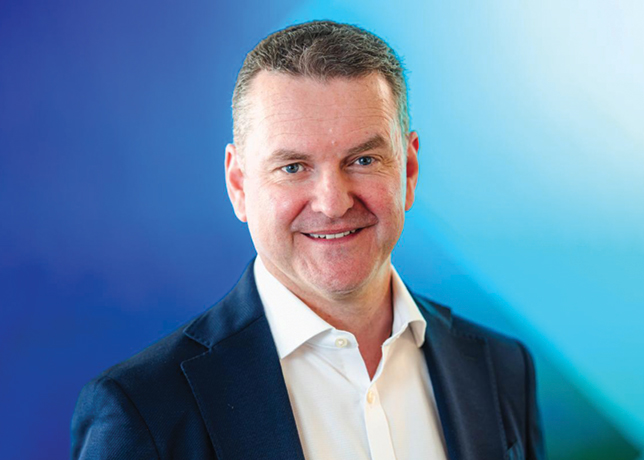
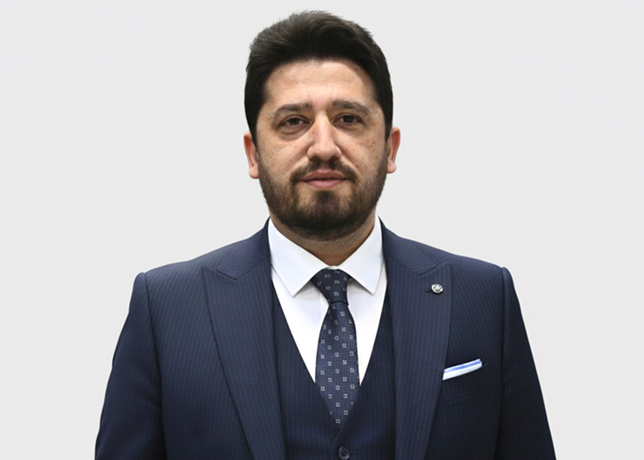
Ed Hanley, CEO Tatweer Petroleum tells OGN in an interview that Tatweer increased oil and condensate production from the Bahrain Field by 24 per cent in 2010 and 33 per cent in 2011.
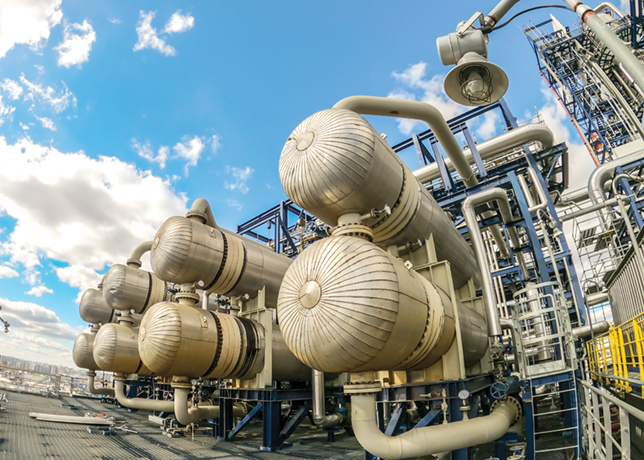
A key achievement was realised in 2011 with the fast-track commissioning of three new gas compression plants to handle the increase in associated gas being generated from new wells. These new compression facilities can handle an increase volume of approximately 135 million standard cubic feet per day (mmscfd).
“The Tatweer programme for 2012 is very ambitious and is clearly focused on increasing oil production and to enhance non-associated gas production capacity to enable us to meet the kingdom’s gas demand at any point of time even during peak summer demand conditions. Our aim is to double oil production within the first five years of field operations and we are currently on target to achieve this significant milestone,” he says.
Excerpts from the interview:
What have been the significant achievements of Tatweer during 2011?
 |
|
Hanley ... achieving objectives |
Tatweer has made a number of significant achievements during 2011. Drilling activity was taken to an all-time high level for the Bahrain Field with the drilling and completion of 165 new oil wells and 1 deep gas (Khuff) well. This is a major change in drilling activity compared to the 25 oil wells and 3 deep Khuff gas wells drilled in 2010 which was more typical of the historical drilling level. Tatweer also implemented a number of new enhanced recovery processes in the Bahrain Field in 2011 including waterflooding and steam injection.
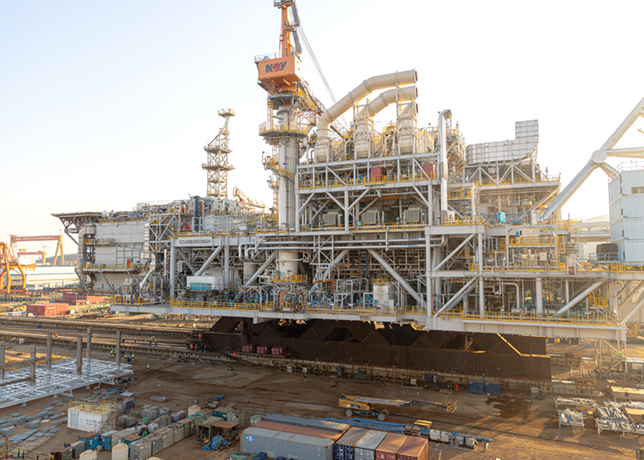
To accommodate the increased production of oil and gas from the new drilling and new recovery processes, a number of facilities expansion projects were implemented including compression, water treatment, steam generation, fluid processing and testing facilities.
To better monitor and control the operations, new instrumentation and automation was installed which is monitored from a new control room facility utilising a state-of-the-art digital canopy which wirelessly covers and connects instruments over about 175 sq km of the Bahrain Field.
After over two years of operation how much have you been able to improve production at the Bahrain Field?
Tatweer increased oil and condensate production from the Bahrain Field by 24 per cent in 2010 and 33 per cent in 2011. If we compare the average oil and condensate production in December 2010 to that of 2011, the production of black oil was increased from 33,700 to 41,700 barrels per day (bpd). Also, Tatweer increased the capacity to produce non-associated gas from 1.5 to 1.9 billion standard cubic feet per day (bscfd) from 2010 to 2011.
How many more wells will be drilled during 2012?
During 2012, Tatweer’s drilling activity will continue to increase with more than 200 wells planned. These will be a combination of new oil production wells in addition to a significant number of injection wells for water and steam flooding oil recovery projects.
What were the challenges you faced in your task of boosting output? How did you overcome them?
Boosting oil production in an oilfield that is nearly 80 years old is not an easy task, particularly in the case of the Bahrain Field which had been very well managed by Tatweer’s predecessor, Bapco.
The bigger challenge was to boost production as well as extending the producing life of the field and the overall recovery volumes.
The key to increasing production and recovery is to determine the best enhanced recovery process for each individual reservoir and then apply these processes on a large scale. Tatweer began implementing this strategy in earnest in 2011.
One of the most difficult operational challenges we faced in our field redevelopment plan was to ensure adequate capacity to handle the increased production, particularly the increase in associated gas production.
A key achievement was realised in 2011 with the fast-track commissioning of 3 new gas compression plants to handle the increase in associated gas being generated from new wells.
These new compression facilities can handle an increase volume of approximately 135 million scfd. Even more compression facilities are planned for 2012.
What are the new initiatives currently being used to boost output at the Bahrain Field?
 |
Tatweer celebrates its 1,000th well |
In 2011, the company implemented a number of enhanced oil recovery (EOR) pilots for the first time in Bahrain. These included a steam injection pilot to extract heavy oil from the rubble reservoir at around 1,500 feet, together with a waterflooding pilot to produce light oil from the Mauddud reservoir at just under 2,500 feet.
One of the shallow reservoirs in the Bahrain Field contains a significant undeveloped accumulation of heavy oil. In 2011, Tatweer initiated a steam flood pilot to assess the potential of extracting heavy oil form the rubble reservoir.
To achieve the historic 1st steam injection into the Bahrain Field the surface pilot steam facilities were designed, built and commissioned in a staggering record time of just 11 months – which is a testament to the tremendous team work of all the subsurface, drilling, facilities and operations groups.
Waterflooding is a proven oil recovery technique which consists of injecting water into the reservoir to the potential success of this method. Tatweer initiated water injection in the Mauddud reservoir in 2011 and began construction of three water treatment plants which will be commissioned in 2012 to treat up to 150,000 bpd of water for waterflooding injection.
Tatweer plans to pilot waterfloods in over six of the reservoirs within the Bahrain field. If commercially successful, the pilots will be expanded to other areas for each reservoir.
It was also a very successful year for non-associated gas projects.
A new Khuff well was drilled and hooked up and a total of 13 low pressure modifications to the gas dehydration units (GDUs) were commissioned, exceeding the plan of 12 and significantly boosting the deliverability capacity for the gas supply to the kingdom to well over 1.9 bscfd by the year end.
Could you tell us more in detail about the progress on new facilities installations?
Outstanding progress was made during the year in the acceleration of new strategic facilities projects. Major projects were contracted for 2 new tank batteries, 15 new well manifolds and 3 new water treatment plants, electrical power distribution systems, 2 new steam flooding facilities, gas compression plants, automation systems as well as many major pipelines.
In addition, a new interim central control room was inaugurated, and significant progress was made in installing an electrical infrastructure grid within the field.
The well development programme constructed pads and hooked up 165 new wells during the year, with well hook-up time having been reduced dramatically from weeks to just a few hours, demonstrating the significant increase in efforts being applied in the Bahrain Field redevelopment.
How many technology transfers have been effected during your collaborative work with Bapco?
 |
|
Bahrain Energy Minister |
There have been many projects that involved use of new technology initiatives in the Bahrain Field. To name a few our company has succeeded in introducing the digital canopy concept in the Bahrain Field which enabled our staff to continuously monitor our oil and gas operations in more than 1,000 well sites and production facilities online, thus creating a major shift in the way field operations are being carried out as opposed to in the past years where the wells and facilities were physically visited and checked perhaps at most once each day.
Other achievements in this field was demonstrated by our swift move to roll out new subsurface and engineering applications to enable our engineering resources to the use the latest technology to understand the behaviours of the individual reservoirs and to explore the potential for increasing oil and gas production.
What are the targets set by Tatweer for 2012?
The Tatweer programme for 2012 is very ambitious and is clearly focused on increasing oil production and to enhance non-associated gas production capacity to enable us to meet the kingdom’s gas demand at any point of time even during peak summer demand conditions.
Our aim is to double oil production within the first five years of field operations and we are currently on target to achieve this significant milestone.
Do you plan fresh capital injection to fast-track the field development?
The shareholders continue to invest millions of dollars to support Tatweer’s development programme. Our total spending in 2011 was increased by more than double the amount of 2010 and the budget for 2012 is even bigger.
The shareholders continue to provide sufficient funding to meet our future development plans within the most expeditious and realistically possible time schedule.
What have been Oxy’s and Mubadala’s share for 2011 from the production boost achieved at the Bahrain Field?
The shareholders are still in the early cost recovery phase of the project and it will likely take a number of years before they reach break-even but in all fairness we are delighted to see encouraging production response and we hope that we will be able to meet our future targets.


