
































The world’s biggest oil company expects to start up 16 major oil and natural gas projects during the next three years and is on track to increase daily production to 4.3 million oil-equivalent barrels by 2017
ExxonMobil Corp added more oil and gas to its reserves than it produced in 2014, with most of the new reserves coming from Canada.
The world’s biggest oil company says it replaced 104 per cent of its 2014 production by adding proved oil and gas reserves totaling 1.5 billion oil-equivalent barrels, including a 162 per cent replacement ratio for crude oil and other liquids.
'ExxonMobil’s diverse global portfolio of attractive opportunities puts us in a unique position to execute our strategy to identify, evaluate and develop new energy supplies,' says Rex W Tillerson, chairman and chief executive officer. 'Our ability to achieve an industry-leading record of long-term reserves replacement is made possible by the size and diversity of ExxonMobil’s resource base along with its project execution and technical capabilities.'
At year-end 2014, ExxonMobil’s proved reserves totaled 25.3 billion oil-equivalent barrels, which was made up of 54 per cent liquids, up from 53 per cent in 2013, and 46 per cent natural gas.
Liquid additions during 2014 totaled more than 1.2 billion barrels, or 162 per cent of production, and natural gas additions totaled approximately 300 million oil-equivalent barrels for a 42 per cent replacement ratio. Excluding the impact of asset sales, reserves additions during 2014 replaced 111 per cent of production.
It was the 21st consecutive year that ExxonMobil replaced more than 100 per cent of its production. The average replacement ratio over the past 10 years – considered a better indicator of reserves performance due to the long-term nature of the industry – was 123 per cent. Liquids replacement over the period averaged 124 per cent and natural gas replacement averaged 121 per cent. The reserves additions made over the 10-year period comprise a diverse range of resource types and have broad geographical representation. ExxonMobil’s reserves life at current production rates is 17 years.
Reserve additions in 2014 in the US include the liquids-rich Bakken, Permian and Woodford-Ardmore plays and the Gulf of Mexico and totaled approximately 580 million oil-equivalent barrels. In Canada, reserve additions totaled almost 700 million barrels as a result of further definition of the Kearl resource. Other additions to proved reserves were made in Angola, the Netherlands and Russia.
Reserves additions in 2014 reflect new developments with significant funding commitments as well as revisions and extensions of existing fields resulting from drilling, studies and analysis of reservoir performance. The annual reporting of proved reserves is the product of the corporation’s long-standing, rigorous process that ensures consistency and management accountability in all reserves bookings.
Resource Base
During 2014, ExxonMobil added 3.2 billion oil-equivalent barrels to its resource base, driven primarily by resource additions in Argentina, Canada, Nigeria, Tanzania and the US Additions include continued success in by-the-bit exploration discoveries, undeveloped resource additions and strategic acquisitions. ExxonMobil’s by-the-bit exploration success in 2014 included discoveries in Argentina, Australia, Nigeria, Norway and Tanzania. Overall, the corporation’s resource base totaled more than 92 billion oil-equivalent barrels at year-end 2014, taking into account field revisions, production, and asset sales. The resource base includes proved reserves, plus other discovered resources that are expected to be ultimately recovered.
Adds new oil and gas production
Meanwhile, ExxonMobil expects to start up 16 major oil and natural gas projects during the next three years and is on track to increase daily production to 4.3 million oil-equivalent barrels by 2017, Tillerson says.
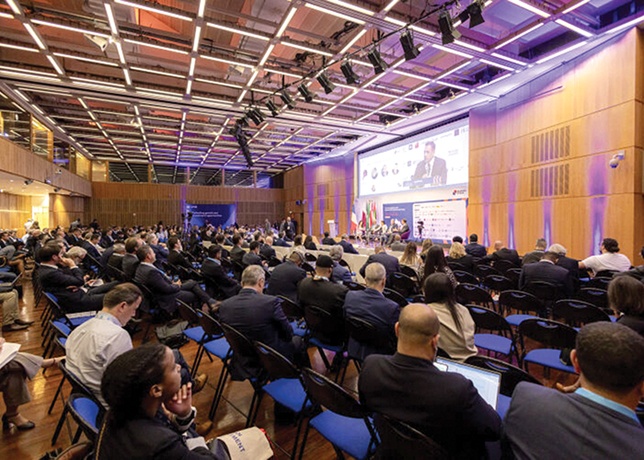
'Our long-term capital allocation approach has not changed,' Tillerson says at the company’s annual analyst meeting at the New York Stock Exchange. 'We remain committed to our investment discipline and maintaining a reliable and growing dividend. Our integrated model along with our unmatched financial flexibility enable us to execute our business strategy and create shareholder value through the commodity price cycle.'
In 2015, ExxonMobil expects to increase production volumes 2 per cent to 4.1 million oil-equivalent barrels per day, driven by 7 per cent liquids growth. The volume increase is supported by the ramp up of several projects completed in 2014 and the expected startup of seven new major developments in 2015, including Hadrian South in the Gulf of Mexico, expansion of the Kearl project in Canada, Banyu Urip in Indonesia and deepwater expansion projects at Erha in Nigeria and Kizomba in Angola.
In 2016 and 2017, production ramp up is expected from several projects including Gorgon Jansz in Australia, Hebron in Eastern Canada and expansions of Upper Zakum in UAE and Odoptu in Far East Russia.
'ExxonMobil has a deep and diverse portfolio of opportunities around the world and a total resource base of more than 92 billion oil-equivalent barrels,' Tillerson says. 'We have unparalleled flexibility to select and invest in only the most attractive development projects.' ExxonMobil anticipates capital spending of about $34 billion in 2015 – 12 per cent less than in 2014 – as it continues to bring major projects online.

