






















Saudi Arabia’s aggressive decarbonisation targets under Vision 2030 are driving a structural transition across industrial material handling sectors, prompting Saudi Diesel Equipment Company to deploy Bobcat electric forklift fleets designed to replace carbon-intensive internal combustion units across rapidly expanding national logistics hubs.
By replacing conventional engines with high-efficiency alternating current electrical drive systems, industrial operators achieve substantial reductions in energy consumption alongside lowered lifecycle maintenance demands, even when operating under demanding high-ambient warehouse temperature conditions.
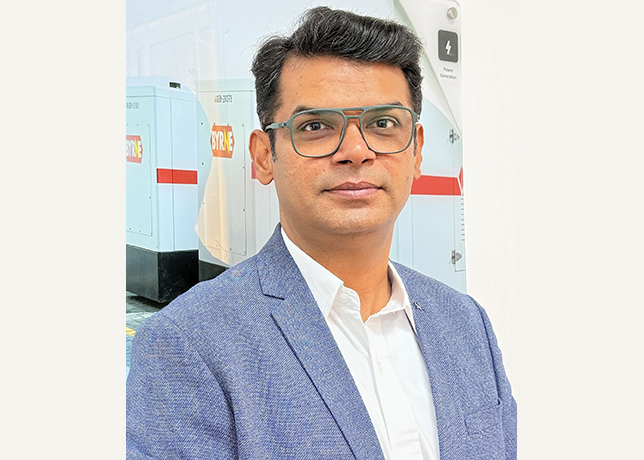
“Bobcat electric forklifts eliminate tailpipe emissions, reduce energy consumption, lower noise levels and require less routine maintenance than internal combustion models,” Mohammed Al Ansi, Director of Forklift, Lifting Equipment and Sales, tells OGN energy magazine in an exclusive interview.
Below are excerpts from the interview:
1. How is Saudi Diesel leveraging its partnership with Bobcat to support Saudi Arabia’s tightening environmental regulations and the logistics expansion under Vision 2030?
Saudi Diesel Equipment Company is supporting Saudi Arabia’s Vision 2030 by offering Bobcat forklifts that combine productivity, operator safety, fuel efficiency and low-emission electric technology.
Together with nationwide after-sales support, genuine spare parts and technical expertise, we help customers modernise their material handling operations while improving efficiency and sustainability.
Looking ahead, Saudi Diesel aims to expand the adoption of Bobcat electric material handling equipment throughout Saudi Arabia by strengthening customer support, increasing market awareness, growing the installed fleet, and supporting customers’ transition toward more sustainable warehouse operations in line with Vision 2030.
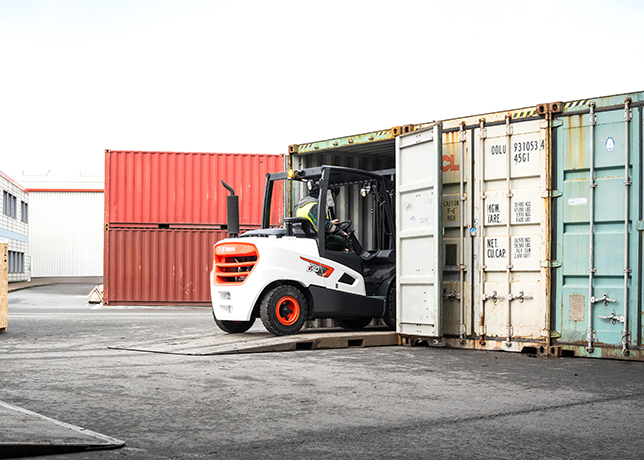
Bobcat customers benefit from quiet operation, zero exhaust emissions, and precise handling
2. How do Bobcat’s electric forklifts help warehouse operators improve sustainability, and how does their total cost of ownership compare with conventional diesel and LPG models?
Bobcat electric forklifts eliminate tailpipe emissions, reduce energy consumption, lower noise levels and require less routine maintenance than internal combustion models.
Although the initial investment may be higher, electric forklifts generally provide lower energy costs, reduced maintenance, fewer wear components, longer service intervals, and lower overall operating costs over their lifecycle.
This enables customers to reduce operating costs while maintaining high productivity and uptime.
3. What charging strategies and battery management practices do you recommend to maximise uptime, and how are you helping cautious operators overcome electrification concerns?
We recommend opportunity charging during scheduled breaks when suitable, following manufacturer charging guidelines, using approved chargers, monitoring battery health, avoiding deep discharge, and performing regular battery inspections; these practices maximise battery life and equipment availability.
To assist cautious industrial operators, we conduct application studies, recommend suitable battery technology, advise on charging infrastructure, provide operator training, offer demonstrations and technical support, and calculate total cost of ownership to support investment decisions.
4. How are Bobcat electric forklifts adapted for Saudi Arabia’s severe high temperatures, and which warehouse applications are proving most suitable?
Bobcat electric forklifts are designed with robust cooling systems and industrial-grade electrical components suitable for demanding operating environments.
Combined with proper maintenance and battery management, they deliver reliable performance in Saudi Arabia’s warehouse and logistics operations.
They are ideal for warehousing, distribution centres, food and beverage, pharmaceuticals, retail logistics, manufacturing, cold storage, and indoor material handling, where customers benefit from quiet operation, zero exhaust emissions, and precise handling.
5. What key engineering advantages and technology differentiate Bobcat forklifts from lower-cost electric competitors?
Key advantages include proven engineering and durability, ergonomic operator cabins, advanced AC drive technology, high-performance lithium-ion and lead-acid battery options, excellent visibility and safety, strong aftersales support through SDEC, and reliable parts availability.
Bobcat further differentiates itself through proven product reliability, high engineering standards, long equipment life, superior safety, strong residual value, comprehensive warranty, reliable after-sales support, and lower lifetime operating costs.
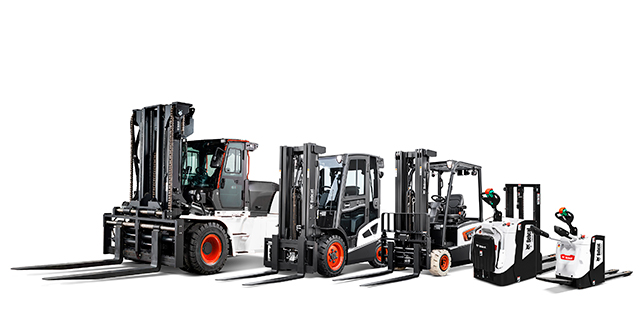
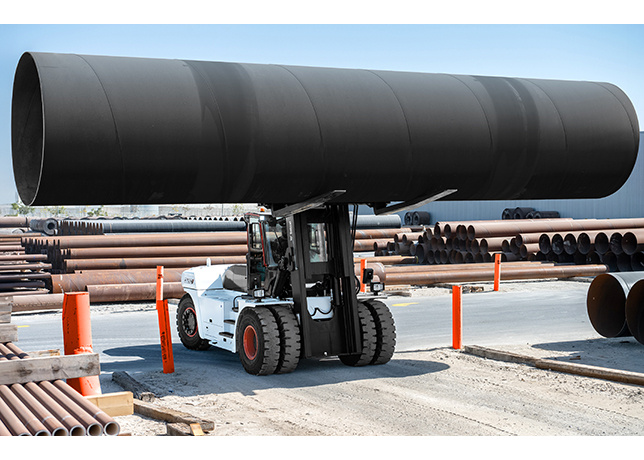
Bobcat’s family of material handling forklifts
6. What aftersales services, technical support, and operator training programmes accompany the deployment of Bobcat electric fleets?
SDEC provides a nationwide service network, factory-trained technicians, genuine Bobcat spare parts, preventive maintenance programmes, emergency breakdown support, technical consultation, warranty support, and long-term service agreements.
Additionally, SDEC provides operator training, safe operating procedures, preventive maintenance guidance, technical documentation, commissioning support, service technician training, and ongoing technical assistance throughout the equipment lifecycle.
7. What measurable financial or environmental benefits are customers reporting after transitioning to Bobcat electric forklifts?
Due to customer confidentiality, individual customer information is not disclosed.
However, customers have reported lower maintenance costs, improved equipment availability, reduced energy consumption, higher warehouse productivity, and improved operator satisfaction after adopting Bobcat electric forklifts.
8. Which Bobcat forklift models are you promoting in the Saudi market, and what range of equipment capacities is available?
Our portfolio includes electric counterbalance forklifts, diesel forklifts, LPG forklifts, reach trucks, pallet trucks, and pallet stackers.
Bobcat offers forklifts ranging from 1.2-tonne warehouse equipment up to 25-tonne heavy-duty forklifts, covering virtually all industrial and logistics applications.
9. What manufacturing heritage and technological background underpin the Bobcat forklift brand?
Bobcat has over 60 years of material handling manufacturing experience, building on the heritage of the former Doosan Industrial Vehicle business while continuing to invest in new technologies and product development.
10. How does SDEC ensure seamless commissioning and lifecycle support for facilities adopting electric material handling fleets?
SDEC provides technical documentation, commissioning support, service technician training, and ongoing technical assistance throughout the equipment lifecycle.
Together with nationwide after-sales support and genuine spare parts, this helps customers modernise their material handling operations while improving efficiency and sustainability.