
























































As fuel markets diversify, refiners face different demands: Diesel that flows freely in freezing winters and jet fuel that supports the growing demand for sustainable aviation fuel (SAF).
Both challenges share one important solution, a dewaxing catalyst.
A dewaxing catalyst plays a vital role in the production of winter-grade diesel and in processing renewable feedstocks because it directly improves cold flow properties.
By improving these properties, fuels remain fluid and reliable even in cold conditions.
Without effective dewaxing, fuels can crystallise and clog filters, leading to operational challenges.
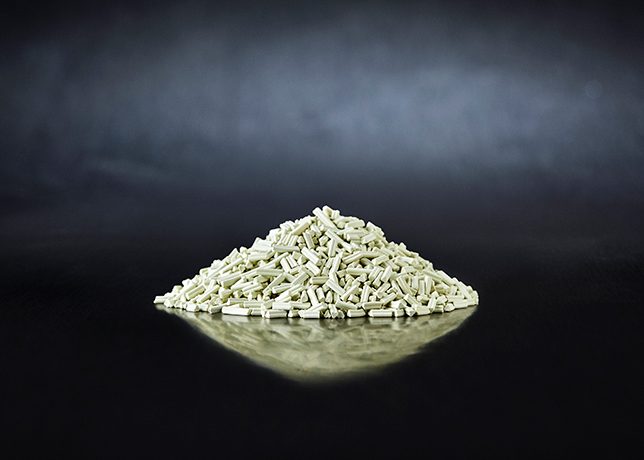
Topsoe’s TK-930 D-wax™ is a selective dewaxing catalyst designed to improve cold flow properties while minimising yield loss during the production of both conventional fuels, such as ultra-low sulphur diesel, and renewable fuels.
The result is safer and more reliable fuels for everyone, from truck drivers to airline passengers.
“TK-930 D-wax™ helps refiners improve cold flow performance while maintaining high product yields, whether the goal is winter-grade diesel, renewable fuels or a lower capex entry into SAF production through co-processing,” says Mohammed Benchekchou from Topsoe.
However, every time a fuel is dewaxed, some valuable yields are sacrificed.
But what is outstanding about the TK-930 D-wax is that even under difficult operating conditions, it delivers great cold flow improvements with minimal yield loss.
WHY WINTER DIESEL NEEDS DEWAXING
Diesel naturally contains paraffins, waxy molecules that help keep the fuel stable at room temperature but crystallise as temperatures fall.
If left untreated, these wax crystals can clog fuel filters and stall engines, creating a risk for trucking fleets, heating systems and cold-climate markets.
The temperature at which this begins is known as the cloud point, and refiners producing winter-grade or arctic diesel must keep it low enough to ensure reliable fuel performance.
Traditionally, refiners had limited options: Distilling off heavier wax-rich fractions, blending in additives or diverting material into the kerosene pool. Each approach reduces profitability or limits operational flexibility.
Selective dewaxing offers a more efficient route. Instead of removing wax-rich material, TK-930 D-wax rearranges straight-chain paraffins into branched isomers.
These molecules contain the same number of carbon atoms but deliver much better cold flow performance.
This allows refiners to meet demanding cloud point specifications while retaining more than 99 per cent of valuable diesel yield.
There are clear operational benefits, including:
• Access to premium markets by meeting strict winter or arctic diesel specifications.
• Greater flexibility to process heavier feedstocks while maintaining product specifications.
• A drop-in solution for existing hydrotreater reactors without the need for major revamps.
• Long-term catalyst stability with commercial references running for more than five years with negligible deactivation.
FROM WINTER DIESEL TO RENEWABLE FUELS
The same chemistry that improves cold flow performance in fossil diesel becomes even more important when processing renewable feedstocks.
Vegetable oils, animal fats and used cooking oil are naturally rich in long straight-chain paraffins.
Once hydrotreated, these feeds require dewaxing to meet the freezing point specifications of SAF or the cold flow requirements of renewable diesel.
TK-930 D-wax was developed to operate under the demanding conditions typical of renewable processing, including high water formation, variable sulphur and nitrogen content and the need for deep isomerisation without excessive cracking.
This gives refiners a versatile catalyst that performs across fossil, co-processing and fully renewable applications.
CO-PROCESSING AS A PRACTICAL FIRST STEP INTO SAF
For many refiners, building a dedicated renewable fuels unit represents a major investment.
Co-processing – blending a percentage renewable feedstocks into an existing hydrotreater alongside conventional fossil feed – provides a faster and lower capex route into SAF production.
Under current ASTM regulations, refiners can co-process up to 5 vol per cent renewable esters and fatty acids into jet fuel.
However, achieving the required jet fuel freezing point still depends on effective dewaxing. The renewable molecules must be isomerised without excessive cracking that pushes product out of the jet fuel range.
This is where TK-930 D-wax has demonstrated strong performance.
Pilot testing under kerosene hydrotreater conditions (units not originally designed for dewaxing) showed the catalyst delivering excellent results even under demanding operating conditions.
Following successful trials presented together with TotalEnergies at the ERTC conference in 2024, five additional refiners globally have selected the catalyst for co-processing projects.
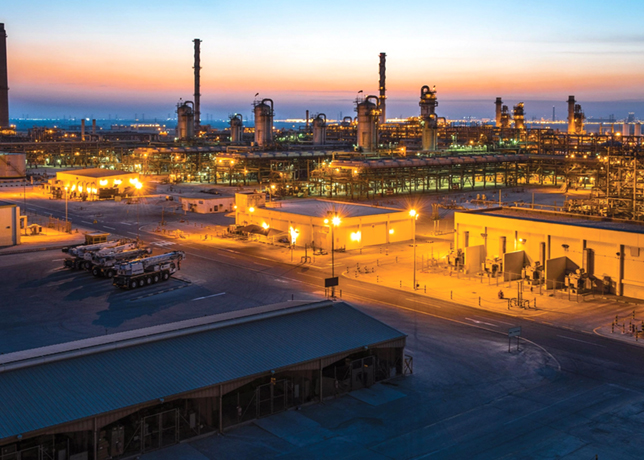
In the Middle East, following testing, four refineries have now selected Topsoe’s dewaxing catalysts; one for the co-processing of SAF and the other three for the production of winter diesel.
For refiners evaluating co-processing, the advantages include:
• Lower capex requirements, often involving only a catalyst change rather than a major unit revamp.
• Faster implementation timelines, allowing SAF production within months.
• Flexibility to adjust renewable feedstock content in line with market demand and regulation.
• A scalable pathway that allows refiners to gain SAF production experience before investing in dedicated renewable units.
A FLEXIBLE ROUTE TO CHANGING FUEL MARKETS
Whether the objective is reliable winter diesel performance or a practical route into SAF production, dewaxing catalysts are becoming increasingly important in refinery operations.
TK-930 D-wax supports refiners in maintaining yield, meeting tighter fuel specifications and expanding into renewable fuels production while continuing to use existing infrastructure effectively.