
































For decades, the world’s energy industry rewarded scale; competitive advantage belonged to companies, countries or regions with abundant resources and the ability to produce them efficiently.
Today, that advantage is increasingly going to those who can create the greatest value from every molecule.
The Kingdom of Saudi Arabia understands that future leadership in energy will be defined not only by the resources a nation produces, but also by the value it creates from them.
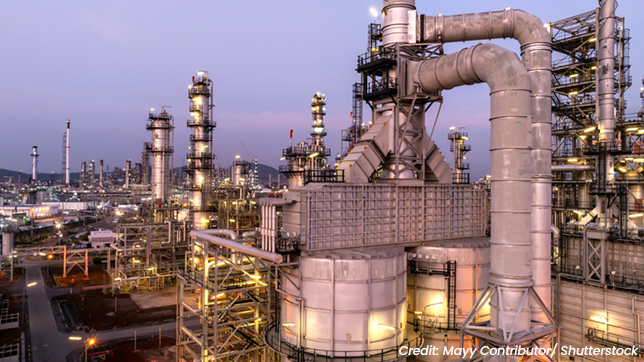
Through Vision 2030, the Kingdom is strengthening its position across the entire hydrocarbon value chain, from production to refining, petrochemicals, chemicals and advanced manufacturing.
Here’s what we’ve learned helping industrial leaders around the world create more value from molecules and why Saudi Arabia is uniquely positioned to lead the next chapter.
THE NEW MEASURE OF SUCCESS
How can we create more value from every molecule?
This question is shaping investment decisions.
Instead of viewing refining, petrochemicals and chemicals independently, companies are increasingly seeking integration to maximise feedstock flexibility, improve product yields and unlock higher-value molecules.
The result is more competitive industrial ecosystems that attract investment, create skilled jobs and support broader economic diversification.
Saudi Arabia’s Vision 2030 recognises that success will increasingly be measured not only by the resources produced, but by the industries built around them.
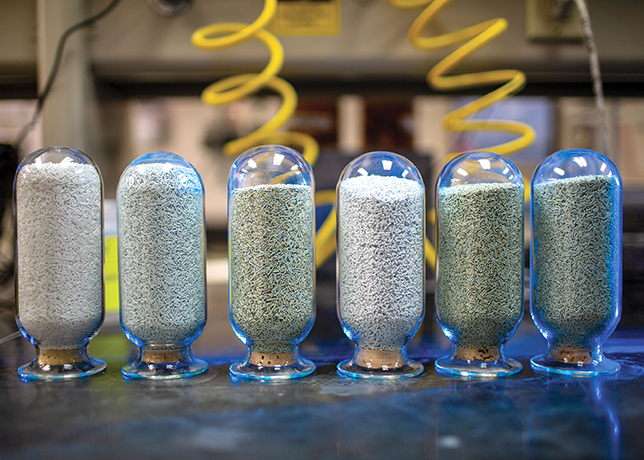
Lummus’ catalysts deliver comprehensive solutions across ethylene, petrochemical, polymer, refining, and environmental applications
THE CATALYST FOR VALUE CREATION
One of the most remarkable aspects of Vision 2030 has been watching ambition translate into execution.
As Vision 2030 has taken shape, so too have the priorities of Saudi Arabia’s industrial operators.
Lummus Technology and our joint venture Chevron Lummus Global have partnered with customers across the Kingdom for decades.
We’ve experienced those priorities evolve firsthand.
The initiative established ambitious industrial goals last decade, and the strategic plans that we witness from our customers evolved as a result.
Where projects once focused primarily on expanding capacity, today’s discussions are increasingly centred on integration, feedstock flexibility, higher-value products and long-term industrial competitiveness.
The objective has shifted to creating max value from every molecule while building out more capacity.
TECHNOLOGY CHANGES ECONOMICS
That shift in priorities has also changed the role of technology.
Technology has always improved industrial performance through process, equipment, catalyst innovation and more recently digital.
Today, it is increasingly shaping project economics.
Across Saudi Arabia’s industrial sector, advanced process technologies are helping operators convert lower-value feedstocks into higher-value products, improve yields, enhance reliability and operate assets more efficiently over decades.
Incremental improvements in conversion efficiency or product yields fundamentally improve returns over the life of a facility.
At the same time, digital technologies are giving operators greater visibility into asset performance and helping facilities operate with greater flexibility as market conditions evolve.
For Saudi Arabia, the ability to create more value from existing assets is becoming a defining competitive advantage, and technology is what makes that possible.
COMMERCIALISING INNOVATION
Of course, even the most promising technology creates little value until it reaches commercial scale.
Innovation alone will not move the industry forward.
Commercialisation is the true measure of success, which is why Lummus Technology drives innovation for application and scale.
Saudi Arabia’s industrial ambitions increasingly drive collaboration across the value chain.
Technology providers, producers, operators, engineering contractors, equipment suppliers, and industrial partners each contribute different expertise.
When those capabilities come together effectively, innovation moves beyond the laboratory and begins delivering measurable value across the supply chain.
LOOKING AHEAD
Saudi Arabia is poised to continue leading and shaping the next era of industrial leadership, even beyond 2030.
The Kingdom possesses the long-term vision, infrastructure, ambition, and global relationships to do so.
Its next opportunity is to establish the global benchmark for how hydrocarbons are transformed into higher-value products.
Having worked alongside customers and partners across the Kingdom for many years, Lummus Technology has seen firsthand the pace of this transformation, and their commitment to building an increasingly sophisticated industrial ecosystem.
Continued investment in downstream integration, advanced manufacturing and technology partnerships will only strengthen Saudi Arabia’s leadership in industrial value creation.
The future belongs to those who can turn “molecules into markets”.
Saudi Arabia has already begun showing the industry what that future looks like.