















Sancorp Africa projects worth $2bn
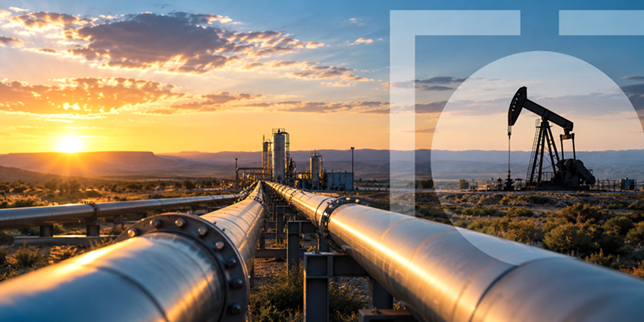
Dubai-based Sancorp Group has structured over $2 billion in oil and gas investments across the African continent.
In the Ivory Coast, it has projected annual flows exceeding $600 million across refined products, crude, LPG and fertiliser deliveries.
In July 2026, the group delivered more than 36,000 tonnes of gasoil into SIR’s Abidjan terminal.
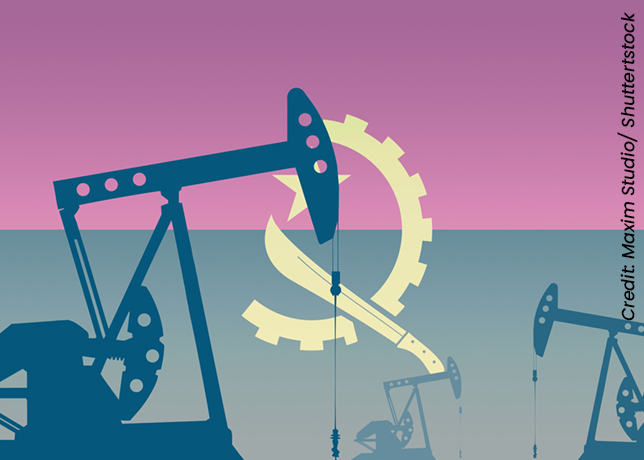
Sancorp is also expanding into Angola, where it is registered with Sonangol and in advanced discussions on minority interests in two deepwater production blocks and an equity stake in one of the country’s planned grassroots refineries.
Egypt offers 14 exploration areas
Egypt has launched its 2026 international bid round for crude oil and natural gas exploration, offering 14 new areas to international and Egyptian companies.
The bid round includes eight areas offered by the Egyptian Natural Gas Holding Company (EGAS) across the Mediterranean Sea, the Nile Delta and North Sinai. Companies have until December 14 to submit bids.
The Egyptian General Petroleum Corporation (EGPC) is offering six additional areas in the Gulf of Suez, Sinai and the Western Desert. The deadline for bids on those areas is November 11.
Major South Africa transition underway
South Africa has secured $8.5 billion for its Just Energy Transition Partnership to support investments in renewable energy, grid infrastructure, electric vehicles and green hydrogen.
While renewable energy remains central to its future power mix, gas infrastructure is expected to play an important role in providing flexibility.
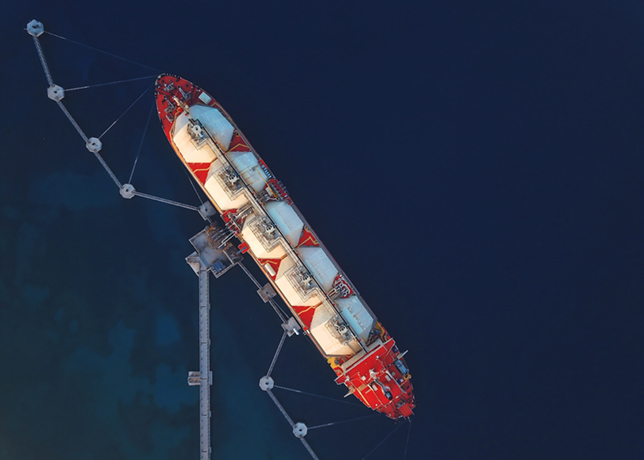
It’s advancing several major gas infrastructure projects, including Zululand Energy Terminal, South Africa’s first LNG import terminal that is expected to support Eskom’s planned 3,000 MW gas-to-power programme.
The Ngqura LNG terminal development at the Coega Special Economic Zone is also progressing as a strategic gas import and regasification hub designed to support industrial users and independent power producers.
Morocco aims for Africa’s first gigafactory
African Development Bank Group has approved a €100 million ($117 billion) loan to Gotion Power Morocco to finance the development of an integrated cathode-to-cell lithium iron phosphate (LFP) battery gigafactory in the Rabat-Sale-Kenitra Free Trade Zone.
An additional €141 million will be allocated to support the implementation of this strategic project under the New African Financial Architecture for Development (NAFAD).
The project will establish the first integrated battery manufacturing plant in Africa and the Middle East and North Africa (MENA) region, producing 10 gigawatt-hours (GWh) of battery cells and packs for electric vehicles in Phase 1, with plans to expand capacity to 100 GWh.
The project is expected to create more than 600 jobs in its first phase.
Carbon markets gain momentum
Africa's carbon markets are moving into a new phase, with governments strengthening policy, investors looking for credible projects and growing attention on how the continent can unlock more climate finance.
The African Union is rolling out the Africa Action Plan on Carbon Markets, while countries such as Ghana are developing Article 6 project pipelines and authorisation systems.
For Africa, the next challenge is turning this progress into transactions and investment.
Buyers and investors are looking more closely at quality, credible MRV, compliance readiness, transaction certainty and clear policy.
Strong projects will need to connect with the right capital, buyers, standards, infrastructure and institutional support if the market is to grow.
Africa strives to formalise ASM
African governments and industry are accelerating efforts to formalise artisanal and small-scale mining (ASM) through new regulations, digital platforms, financing mechanisms and cooperative models.
The discussion comes as artisanal mining assumes an increasingly strategic role in the global minerals industry.
ASM accounts for more than 20 per cent of global gold and critical minerals production. The sector supports the livelihoods of more than 40 million people and indirectly benefits an estimated 150 million people across sub-Saharan Africa, yet between 70 per cent and 80 per cent of operations remain informal, highlighting a significant opportunity to drive economic growth through formalization.
Egypt renewable energy advances
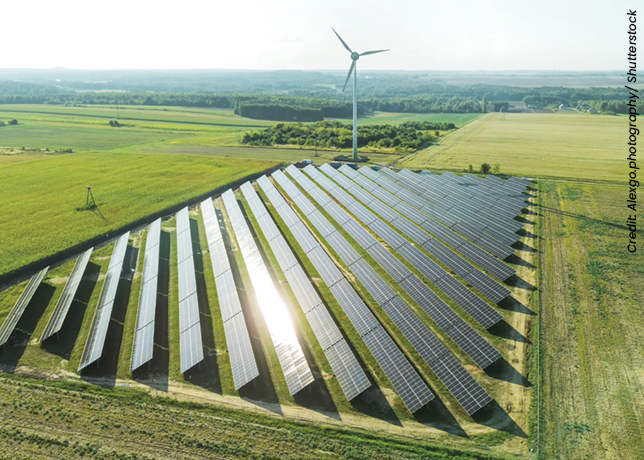
Egypt's national strategy to expand renewable and new energy projects aims to increase the share of renewable energy to 45 per cent of total generated electricity by 2028, in line with the state’s policy of relying on new and renewable energy sources as part of the energy mix.
This requires expanding the use of battery-based electricity storage technologies to secure the national grid and ensure the stability and continuity of electricity supply.
The total investments in Egypt’s electricity, new energy, and renewable energy sectors have reached approximately $98 billion since 2014.
Oando production up 16pc in H1 2026
Oando, Africa’s leading indigenous energy solutions provider, posted a 20 per cent revenue increase to $1.6 billion.
Its upstream subsidiary reported a 92 per cent facility uptime compared to 85 per cent in 2025, resulting in a 16 per cent increase in average production to 42,789 barrels of oil equivalent per day (boepd) from 36,836 boepd in H1 2025.
This production number comprises crude oil production up by 19 per cent to 12,358 boepd, gas volumes up 14 per cent to 28,497 boepd, and NGL production up 16 per cent to 1,935 boepd.
These results were underpinned by a combination of factors, including the successful drilling of new wells, the restoration of 12 previously shut-in wells, and sustained improvements in facility uptime across OMLs 60-63.
Nigerian energy investment drive highlighted
Nigeria saw renewed momentum across its upstream sector in 2026, with major international operators advancing new investments across deepwater oil and gas developments.
ExxonMobil and its partners are moving forward with a $1 billion investment in the Usan Infill Project, expected to add approximately 40,000 barrels per day (bpd) of production, while Shell continues to expand its deepwater and integrated gas portfolio through projects including Bonga North and the HI gas development.
Bonga North is expected to deliver up to 110,000 bpd day at peak production, while the HI project is designed to supply 350 million standard cu ft (mmscf) of gas per day to Nigeria LNG.
With approximately 200 trillion cu ft of proven natural gas reserves, Nigeria is seeking to accelerate gas commercialization through LNG expansion, industrial projects, gas processing and gas-to-power initiatives.