





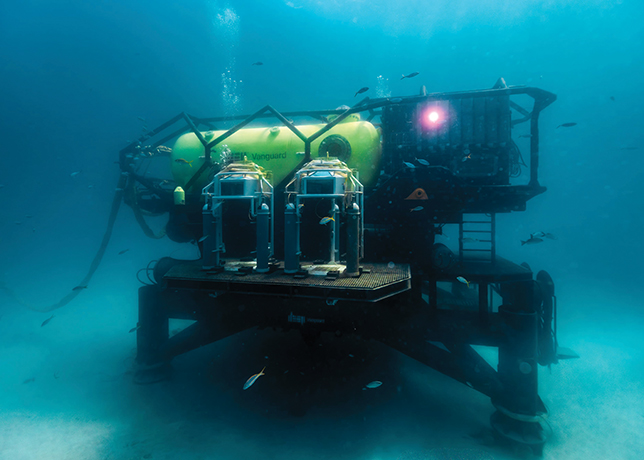
Unique Group has delivered Vanguard, the first open-ocean subsea human habitat deployed in US waters in over 40 years.
The company was responsible for the design, engineering and project management of several critical systems supporting the deployment of the project.
Developed by ocean engineering firm DEEP, the seabed habitat at Tennessee Reef within the Florida Keys National Marine Sanctuary accommodates up to four aquanauts for extended scientific and operational missions.
The engineering challenge required creating a human-rated environment certified to DNV standards with a 20-year design life capable of withstanding Category 5 hurricane conditions.
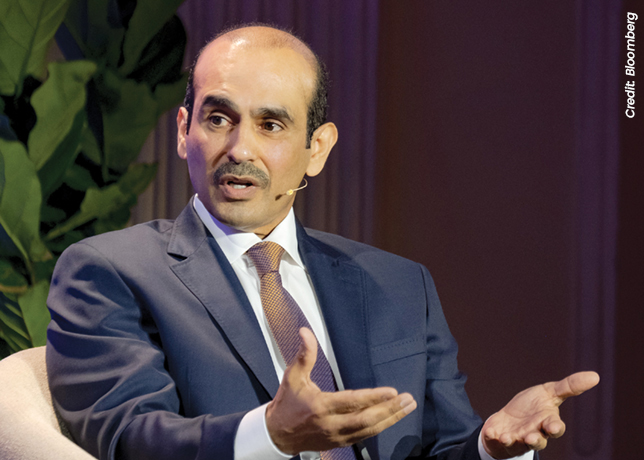
“A subsea habitat is the kind of project an engineer might see once in a career,” Dave Thompson, Group Engineering Director, Unique Group, tells OGN energy magazine in an exclusive interview.
Below are excerpts from the interview:
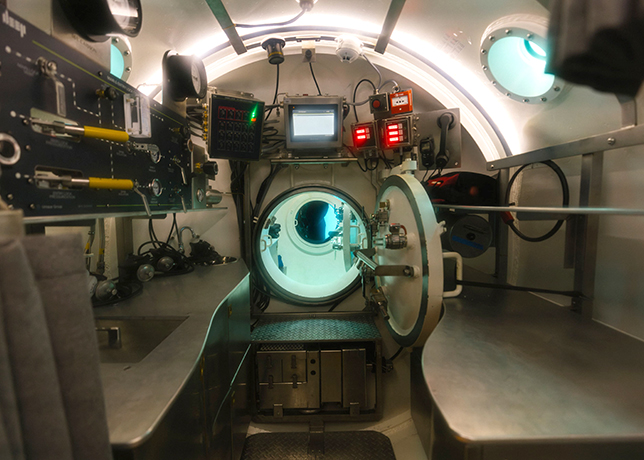
Inside the Vanguard living chamber
How does this successful deployment change the risk profile and technical baseline for future private and commercial underwater infrastructure projects globally?
Before Vanguard, no one had taken a permanently installed, human-rated habitat through DNV’s new habitat code, a US sanctuary’s consent process, and offshore fabrication, transport and installation, all on an accelerated timeline.
That’s no longer true and we now have a working template for engaging environmentally sensitive regulators without stalling delivery, and a proven execution model, including the marine warranty process, sea fastening design and sailing plan we built for the Bagwell loadout.
This means a client or investor looking at the next habitat isn’t underwriting a first-of-a-kind anymore; they’re underwriting a repeatable process with a delivered reference project behind it.
This project removes the biggest unknown, that is, whether the whole thing is achievable at all.
DEEP has shown that it is, and Vanguard shows that with the right client, the right partners and disciplined engineering, a project like this can become reality.
How much of the subsea engineering behind Vanguard relies directly on traditional offshore oil and gas IP, and which specific technologies had to be engineered entirely from scratch for this habitat?
A lot of our approach was built on proven offshore and subsea experience.
The foundation, the piles, our structural philosophy, fabrication and installation engineering all drew on established practice.
We followed recognised DNV methodologies throughout, which made sense given DNV was also the approving body for the habitat.
Where we had to think differently was the new DNV habitat code itself, which departs from the SAT diving codes traditionally used for chambers and life support.
The real engineering judgement came in the loading basis: There’s no off-the-shelf code case for a permanently installed habitat exposed to Category 5 hurricanes.
We built that case ourselves, combining DNV methodology with Gulf of Mexico offshore practice, hindcast data, a full metocean study and cyclone modelling.
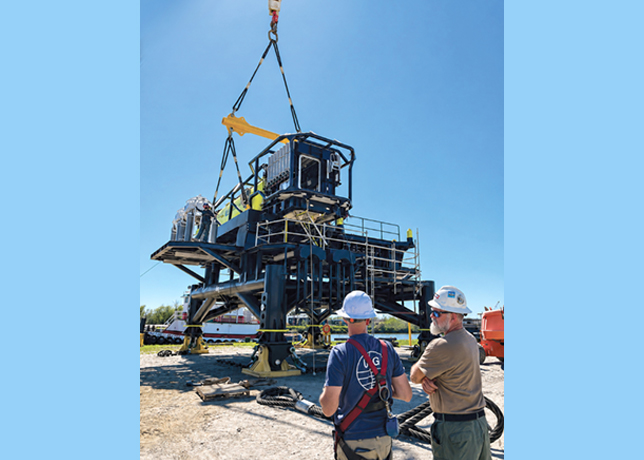
Vanguard being prepared for deployment
What were the primary engineering challenges to achieve full human-rating certification for a long-duration habitat in a protected marine sanctuary?
The habitat couldn’t be treated as a conventional diving system or a standard offshore structure, and the DNV habitat rules meant something genuinely new.
Structurally, we followed familiar DNV principles for the foundation and piles, so that package progressed with relatively little debate.
The harder conversations were around life support, including gas, air, water, monitoring, refuge and emergency systems, because those aren’t secondary services in a habitat, they’re what keeps people alive.
The second major challenge was running human safety and environmental protection as parallel, equal priorities, not just at the installed location but through transport, loadout, offshore installation and ongoing operation.
Given the fragile seabed conditions of Tennessee Reef, how did your team balance the requirement for zero environmental impact with a gravity-base foundation capable of surviving Category 5 hurricane load cases?
This was one of the defining challenges because we had to stay within prescribed distances from living reef, which shaped the engineering solution and marine operations methodology together.
Unique Group ran the full survey campaign, geophysical mapping and sub-bottom profiling, followed by a geotechnical phase with dive teams and core drilling to confirm the seabed was structurally capable coral rock rather than loose sediment.
That data was critical to proving the foundation concept.
What I’m proudest of is that DEEP, DNV, the sanctuary authorities and our engineering team found a solution satisfying operational, regulatory, environmental and structural requirements together, at pace.
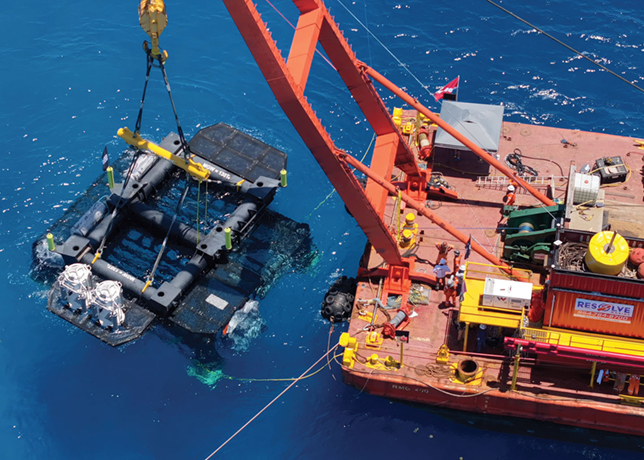
The deployment of the foundation - credit DEEP and Brendan H
What specific redundant safety systems and emergency gas control mechanisms were adapted from commercial deep-sea diving operations to guarantee aquanaut survival at depth?
Layered protection, redundancy and DNV compliance sat behind everything.
Unique Group’s scope went well beyond the baseplate; we designed, supplied and installed the gas, air and fluid systems, water tanks, refuges, the umbilical, mooring spread design and interior fit-out.
Normally the habitat is supported from a surface buoy providing power, air and water, but there are seabed stores for roughly 72 hours of essential services if that link is lost, plus two on-base emergency refuges.
Above the water, there’s a 24/7 manned forward operating base and a rescue boat with a chamber.
No single piece of equipment or support route is a point of failure.
The real engineering challenge wasn’t any one system, it was integrating gas, air, fluid, water, refuge, umbilical and buoy systems into one certifiable whole.
What technical precautions were taken during the deployment of the surface buoy umbilical spread to prevent localised seabed disturbance and ensure continuous power and communications?
The umbilical’s routing and protection under environmental loading were critical design considerations, alongside storm rating.
For higher hurricane categories, the buoy and umbilical are removed as part of storm preparation.
The habitat is unmanned and runs on onboard stores while disconnected.
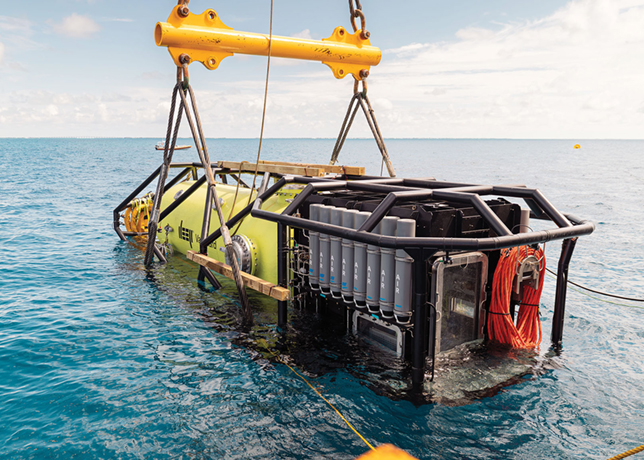
Vanguard deployment
How did Unique Group manage the operational and technical risks of executing concurrent workstreams across four global hubs on an expedited timeline?
Unique Group’s engineering department works on a shared design platform with common CAD and analysis tools, so teams worldwide work from the same models regardless of location, and our people were flexible enough with hours that we functioned as one integrated team.
DEEP’s partnership with Unique Group, Bastion Technologies and Triton Submarines worked the same way: Open, collaborative, fast to resolve issues.
The real challenge was technical uncertainty against schedule, such as progressing design before metocean and seabed data were confirmed, and starting fabrication before every detail was locked.
We managed that with conservative assumptions, continuous refinement as data matured, and tight control of interfaces.
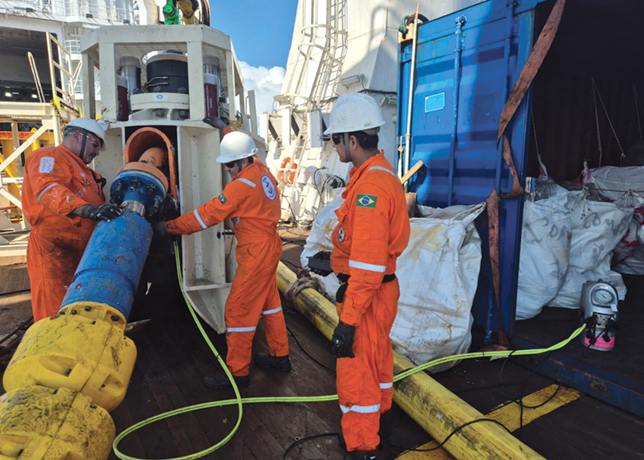
Unique’s scope also covered loadout and transport from Bagwell, including chartering a barge and tug, sea-fastening design, a 600-tonne crane, SPMTs, and Marine Warranty Survey (MWS) oversight, with the barge effectively at capacity.
To what extent is Vanguard’s foundation and interface architecture scalable for larger, modular underwater facilities in the future?
Vanguard is a prototype, and the architecture was deliberately built with scale in mind.
I wouldn’t say every component would be copied exactly for a larger facility since layouts, capacities and support methods will always evolve to fit a specific brief.
But the underlying principles, including safe human-rated environments, reliable life support, structural integrity, credible environmental loading, practical installation, certification, don’t disappear as facilities scale up.
If anything, they become more demanding.
Vanguard has given DEEP a genuine baseline of lessons across structural design, certification and marine execution that can be carried into larger, more modular habitats whenever that opportunity comes.
How can the long-duration subsea habitation technologies tested on Vanguard be leveraged to advance offshore wind foundation inspections, subsea carbon storage monitoring, or remote asset maintenance?
I’m not convinced habitats are the natural next step there, and saturation diving remains proven and highly capable for most subsea intervention work.
Vanguard’s value lies elsewhere: In enabling sustained human presence for science, and as a training environment with strong parallels to space exploration.
There may be longer-term applications too, potentially around new subsea infrastructure concepts, though commercial viability there is still an open question.
Does this landmark project signify a permanent commercial pivot for traditional subsea engineering firms into environmental research, or is the market for ocean habitats currently limited to niche applications?
I see it as an expansion of what subsea engineering can support, not a pivot away from it.
Skills from offshore oil and gas, diving and marine operations are increasingly relevant to science, environmental monitoring, training and defence.
DNV’s dedicated habitat standard matters because it gives the industry a recognised framework, but standards alone don’t build a market; you need organisations like DEEP willing to commercialise the idea.
Near-term, I see marine research and training as the strongest applications, particularly given the parallels with space travel: Isolation, life-support reliance, disciplined operations.
Vanguard changes the conversation - a lot of people doubted this would happen, and it has.