


































































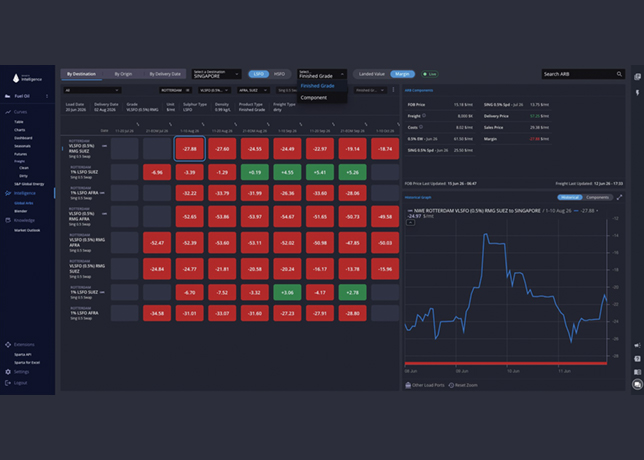
Sparta has launched Fuel Oil Arbitrage Analytics, expanding its market intelligence platform into fuel oil trading with coverage of finished grades and blending components.
The new module provides analysis across 125 finished-grade arbitrage relationships for VLSFO and HSFO, alongside 250 component arbitrage relationships across key global hubs including Singapore, ARA, Fujairah, the Mediterranean, and the Americas.
The platform is designed to address limited transparency in fuel oil markets, where pricing depends on complex interactions between finished products, blending components, feedstocks, and regional flows.
Sparta provides live data on component economics, allowing traders to assess relationships that previously required manual reconstruction.
The release also includes non-linear blend values across hubs and a Breakeven Blender tool, which enables users to evaluate blend combinations and identify potential swing-barrel opportunities.
In addition, the dataset incorporates 1,200 global delivered-at-place (DPP) freight routes, helping users maintain updated delivered economics as freight conditions change.
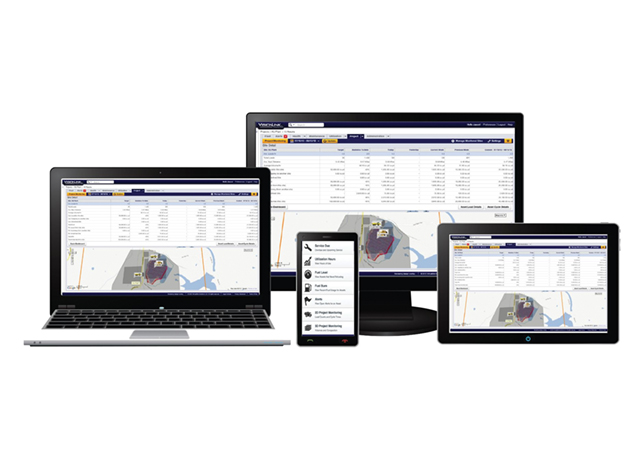
Through Sparta’s API, traders can integrate fuel oil pricing and analytics directly into their existing models and workflows.
The company said the new module provides a consolidated view of fuel oil market relationships, supporting trading decisions across global fuel oil markets.
“Fuel oil is the most opaque part of the oil barrel with an extraordinarily complex relationship between finished grades, blend components and feedstocks, and until now, that picture has been almost impossible to see in one place,” said Hoa Nguyen, Commodity Owner - Fuel Oil at Sparta. “By bringing it into a single live workflow, we’re giving traders the means to spot dislocations while they are still worth acting on.”