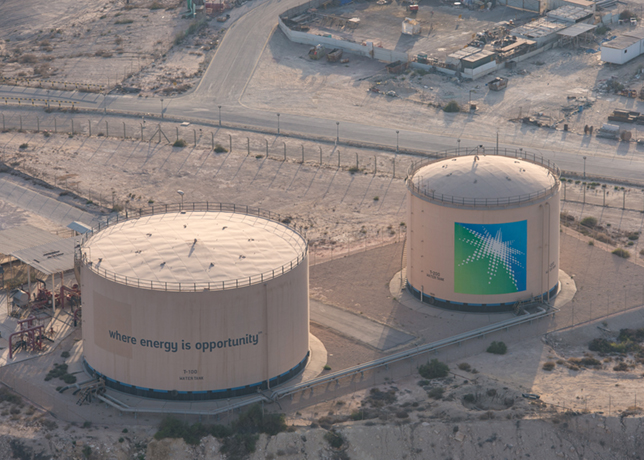






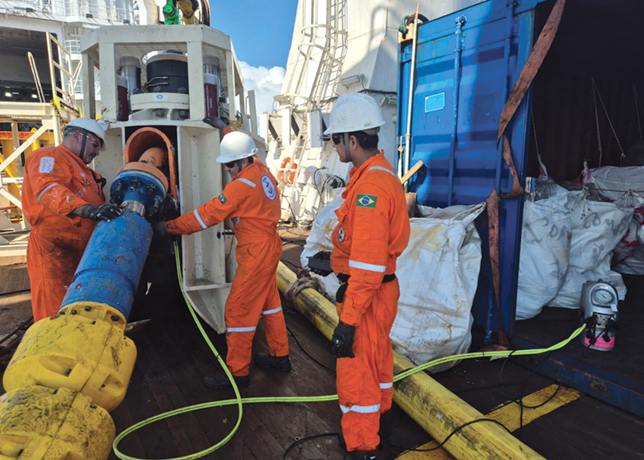














































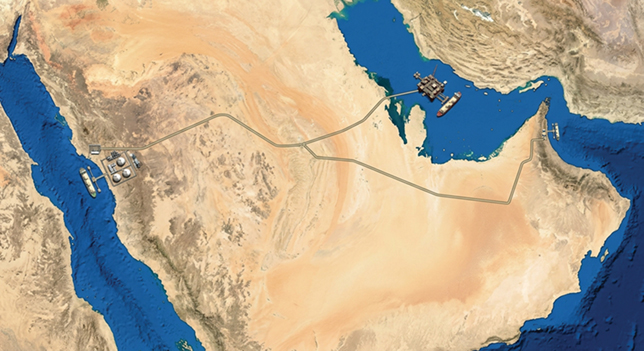

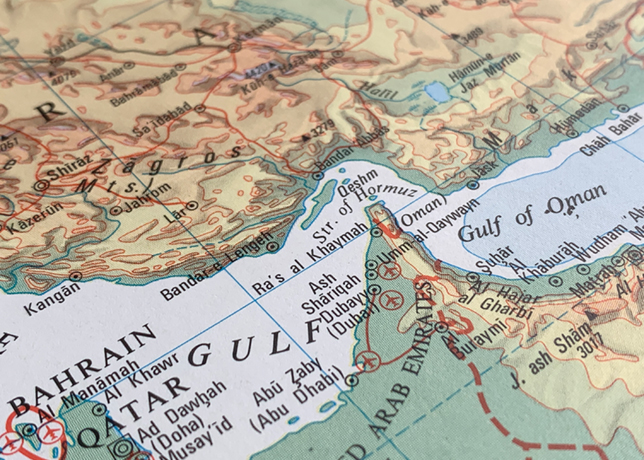

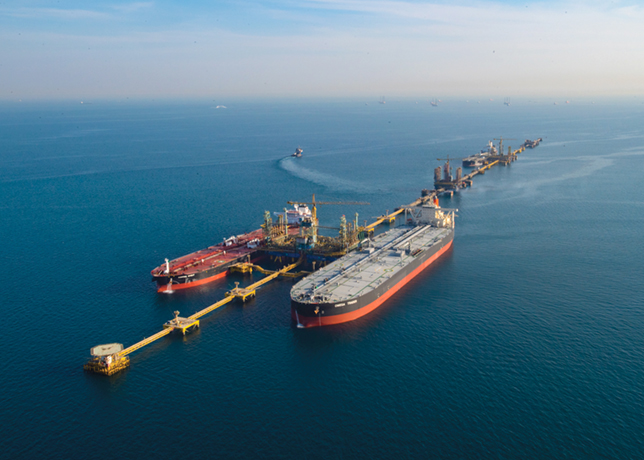
Saudi Arabia is turning a desert pipeline, a Red Sea export hub and an offshore delivery point near the UAE into a multi-route defence against the disruption of oil traffic through the Strait of Hormuz.
Saudi Aramco has redirected crude from its eastern producing heartland through its 1,200-km East-West Pipeline to Yanbu on the Red Sea.
It has also begun offering Asian buyers crude through ship-to-ship transfers off Fujairah, on the UAE’s Gulf of Oman coast, letting customers take delivery outside Hormuz.
The strategy has softened, but not eliminated, the war’s supply shock.
Aramco said the conflict had removed more than 2.6 billion barrels from global oil markets since February.
Its total hydrocarbon production fell to 9.463 million barrels of oil equivalent a day (boepd) in the second quarter, from 12.780 million boepd a year earlier and 12.614 million boepd in the first quarter.
Liquids production dropped to 7.566 million barrels per day (bpd) from 10.480 million bpd in Q2 2025.
Fewer barrels, however, have generated more cash.
Aramco’s Q2 net income rose 44 per cent year on year to $32.69 billion, while revenue and sales-related income increased to $139.1 billion from $108.6 billion. Its realised crude price surged to $108.10 a barrel from $66.70.
The East-West Pipeline, known as Petroline, remains the backbone.
It can carry up to 7 million bpd to Yanbu, although western Saudi refineries consume part of that capacity.
Aramco said it maximised pipeline throughput and export volumes from its west-coast refineries and terminals.
Yanbu loadings reached roughly 3.8 million bpd during April-June, according to Energy Aspects, before easing to about 3 million bpd after July 20 as Houthi threats intensified around Bab Al Mandeb.
Fujairah adds a more flexible workaround.
Reuters reported Aramco sold at least 4 million barrels of Arab Medium and Arab Heavy to PetroChina and Sinochem, with 2 million barrels each to load through offshore transfers near the UAE port.
The shift is strategic, but imperfect.
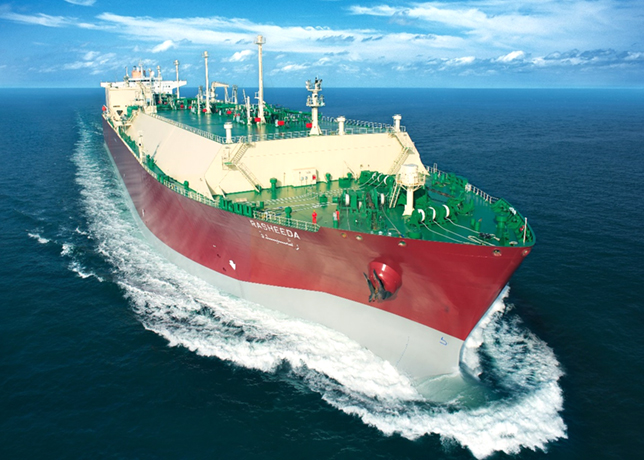
Yanbu-bound cargoes still face Red Sea danger, while Fujairah transfers depend on tankers and secure offshore logistics.
And while Saudi Arabia has not escaped the Hormuz curbs, it has found ways to reduce the impact and continues to supply to the global markets, and is in effect helping to keep oil prices within manageable levels.