


















Over the past 12 months, Saudi Aramco has maintained large-scale hydrocarbon operations while directing capital towards domestic gas, oil-capacity maintenance, refining and chemicals, digital systems, lower-carbon technologies and mineral exploration.
The period encompassed lower crude prices through 2025, then substantial regional supply disruption and higher realised prices during H1 2026.
Aramco’s disclosures show a business operating across a larger set of assets and markets, with investment and logistics capacity central to its response.
The 2025 financial year established the starting point. Revenue and other income related to sales declined 7.2 per cent to $445.7 billion, as the average realised crude price fell to $69.2 per barrel from $80.2 per barrel in 2024.
Net income declined 12.1 per cent to $93.4 billion and adjusted net income fell 5.1 per cent to $104.7 billion.
Operating cash flow nevertheless remained broadly unchanged at $136.2 billion, while free cash flow was $85.4 billion.
The company’s operational scale increased during the year, and the total hydrocarbon production rose to 12.9 million barrels of oil equivalent a day (boed), from 12.4 million boed in 2024.
Liquids production reached 10.7 million barrels per day (bpd), while gas production rose to 11.4 billion cubic feet a day (bcfd).
Net refining capacity increased to 4.2 million bpd and net chemicals production capacity to 59.3 million tonnes a year.
Capital expenditure (capex) excluding external investments was $50.8 billion, compared with $50.4 billion in 2024, including an upstream expenditure of $37.8 billion and downstream expenditure of $11.7 billion.
The company paid $84.58 billion in base dividends and $0.88 billion in performance-linked dividends, for total dividend payments of $85.5 billion.
H1 2026 brought a different market and operating environment, when Aramco reported $67.2 billion in adjusted net income, compared with $52.0 billion in H1 2025, while net income rose to $65.2 billion from $48.7 billion.
Revenue and other income related to sales increased to $263.7 billion from $223.1 billion.
The average realised crude price reached $90.1 per barrel, compared with $71.5 per barrel in the prior-year period.
The first-half results were recorded amid regional uncertainty that disrupted shipping and affected volumes sold.
Aramco reported average hydrocarbon production of 11.03 million boed for the six months, compared with 12.54 million boed in the corresponding period of 2025.
Second-quarter production was 9.46 million boed.
GAS INVESTMENT ANCHORS DOMESTIC ENERGY PROGRAMME
Aramco has set a target to increase sales-gas production capacity by approximately 80 per cent by 2030 against a 2021 baseline, subject to domestic demand.
The programme is linked to Saudi Arabia’s Liquid Fuel Displacement Programme, which targets replacement of around one million boed with gas, renewables and efficiency measures by 2030.
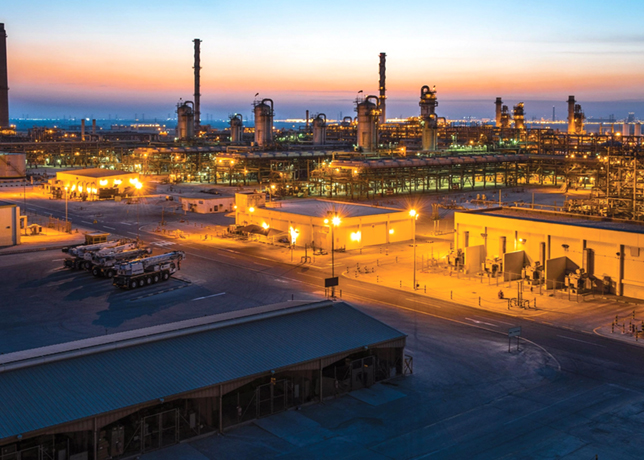
In 2025, Aramco began production from the Jafurah unconventional gas field and started operations at Tanajib Gas Plant.
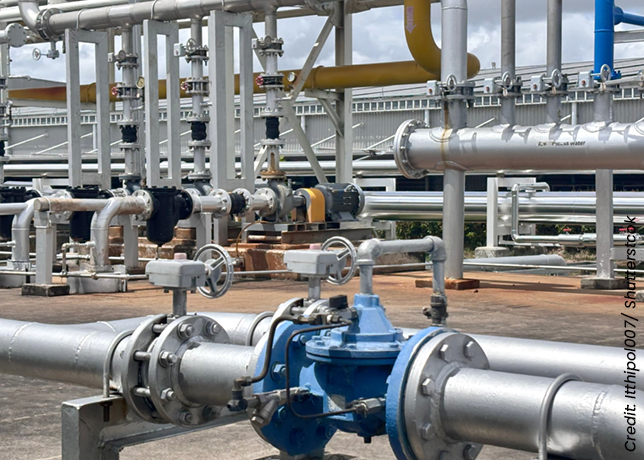
It also commissioned Marjan Gas Oil Separation Plant 4, adding 1.1 bcfd of gas-processing capacity.
Hawiyah Gas Storage reached its target to reproduce up to 2 bcfd into the Master Gas System.
During Q2 2026, Jafurah Gas Plant phase one maintained steady sales-gas and condensate production.
Phase two, including construction of the Riyas NGL Fractionation Plant, continued through procurement and construction, with completion targeted for 2027.
Aramco has stated that Jafurah is expected to reach a sustainable sales-gas rate of 2 bcfd by 2030, in addition to ethane, natural-gas liquids and condensate.
Construction also continued on the Fadhili Gas Plant expansion, targeted to add 1.5 bcfd of raw-gas processing capacity, or approximately 1.15 bcfd of sales-gas production capacity, by 2027.
The Master Gas System Phase III expansion is intended to increase supply to central and western regions, extend the network to the south and connect 11 industrial clusters.
Oil projects remained focused on maintaining the company’s maximum sustained capacity of 12 million bpd.
Aramco continued construction of the Zuluf crude-oil increment, which is expected to process 600,000 bpd through a central facility in 2026.
Engineering and construction activity also progressed on phase two of the Dammam development project, expected to add 50,000 bpd of crude-production capacity in 2027.
EXPORT INFRASTRUCTURE SUPPORTS OPERATIONAL CONTINUITY
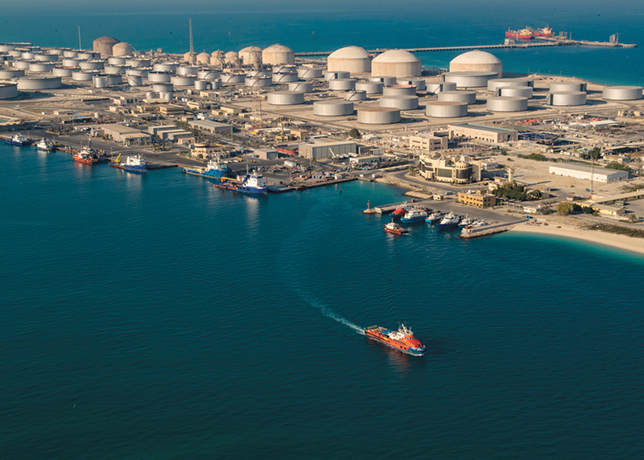
H1 2026 placed logistics infrastructure at the centre of Aramco’s operational response.
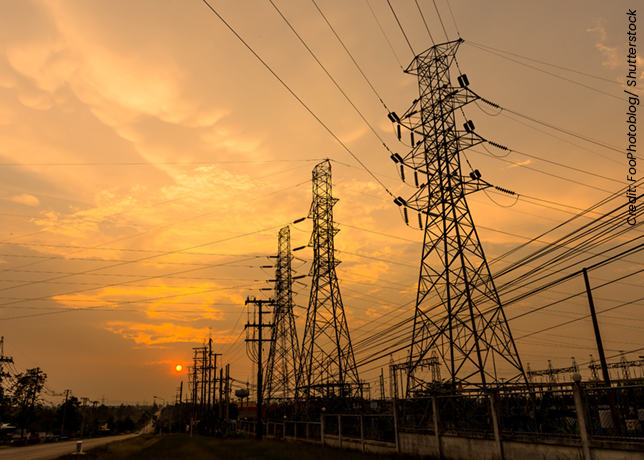
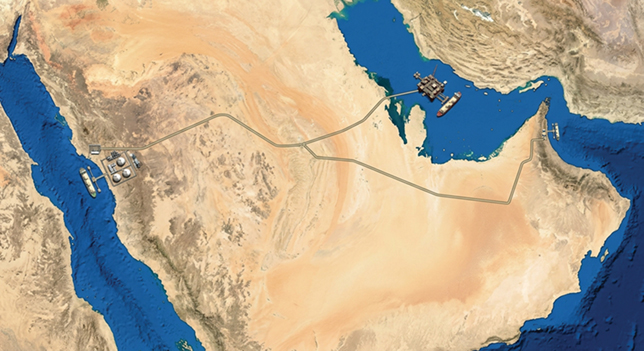
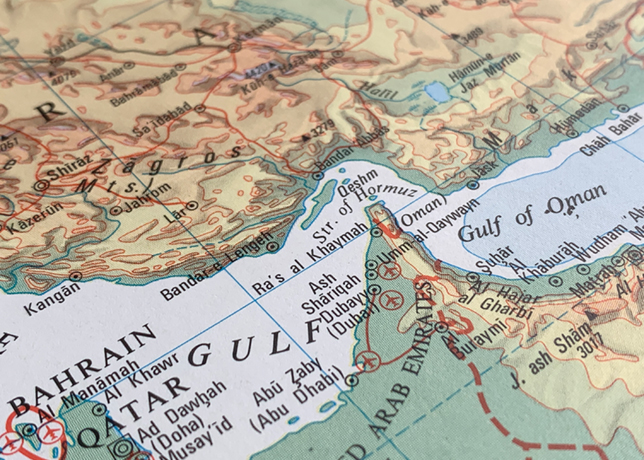
In the first quarter, the company sharply ramped the East-West Pipeline to maximum capacity of 7 million bpd, enabling higher exports through Saudi Arabia’s west coast.
It also used domestic and international storage capacity and alternative export routes.
The pipeline moves crude from eastern Saudi Arabia to Yanbu on the Red Sea coast.
In its first-half reporting, Aramco identified the Arabian Gulf, Red Sea and Mediterranean as the three routes used in its supply response.
It continued to use the East-West Pipeline and enhance west-coast export infrastructure, while repositioning the Yanbu export terminal as a strategic hub for western-region shipments.
Downstream supply reliability was 96.3 per cent in Q1 and 98.4 per cent in Q2.
Aramco said it maintained flows by optimising its integrated global network, logistics capability, storage infrastructure and alternative routes.
Downstream operations used approximately 52 per cent of Aramco crude production during the first half.
Adjusted downstream EBIT rose to $11.7 billion for H1 2026, from $4.8 billion in H1 2025.
Capex was $4.49 billion, down 12.1 per cent year on year, which Aramco attributed to the phasing of spending and portfolio-wide optimisation.
In May, Aramco agreed to sell its entire equity interest in PRefChem to Petronas, subject to customary closing conditions.
During Q2, Aramco Lubricants and Retail Company completed the acquisition of TotalEnergies’ 50 per cent interest in Tas’helat Marketing Company, which operates more than 180 service stations in the Kingdom.
CAPITAL ALLOCATION EXTENDS TO TECHNOLOGY & CARBON MANAGEMENT
Aramco’s capex was $25.3 billion in H1 2026, compared with $24.9 billion in H1 2025.
Free cash flow was $30.9 billion, affected by changes in working capital, including amounts due from the government and inventories.
The company paid $43.8 billion in base dividends during the six months, while gearing increased to 6.2 per cent at 30 June from 3.8 per cent at the end of 2025. The company also completed a $4 billion international bond issue in February 2026.
By June 30, 2026, it had repurchased 83.8 million ordinary shares for $0.61 billion under a board-authorised programme of up to 350 million shares and a maximum $3 billion expenditure over 18 months.
The company said the repurchased shares would be used for employee share plans.
The 2025 Sustainability Report placed carbon management within a five-part programme comprising energy efficiency, methane and flaring reduction, carbon capture and storage, renewable expansion, and natural climate solutions and offsets.
Aramco reported 72 million tonnes of market-based Scope 1 and 2 emissions in 2025, up from 68.5 million tonnes in 2024.
Upstream carbon intensity increased to 10.0 kgCO2 e/boe from 9.7 kgCO2e/boe.
Aramco said the rise reflected expanded gas production, storage and new projects.
It reported 0.04 per cent upstream methane intensity and 24,548 tonnes of methane emissions, while satellite monitoring expanded from 30 to 45 facilities.
Installed operational renewable capacity reached 1.28 GW, while cumulative equity investments in renewable projects reached 7.78 GW.
In 2026, Aramco and Repsol continued construction of a synthetic lower-carbon e-fuels demonstration plant in Bilbao, Spain, targeted for completion by year-end.
It is intended to evaluate the conversion of captured carbon dioxide and renewable hydrogen into sustainable aviation fuel, diesel and naphtha.
Aramco also completed pre-commissioning of a one-step crude-to-chemicals pilot plant and advanced testing of materials for direct-air carbon-dioxide capture.
MINERALS AGREEMENT BROADENS SUBSURFACE ACTIVITY
The most recent strategic development came on August 18, 2026, when Aramco and Maaden signed a shareholders’ agreement to form a mineral-exploration and hard-rock-mining joint venture in Saudi Arabia.
Maaden is expected to hold 51 per cent and Aramco 49 per cent, subject to corporate, regulatory and antitrust approvals.
The proposed venture would explore approximately 182,000 sq km of Zone 4, known as the Transition Zone, within the Arabian Platform.
The area represents nearly 10 per cent of Saudi Arabia’s land area and runs parallel to the Arabian Shield in a zone around 100 km wide.
Copper is the principal stated target, alongside zinc, lead and rare earth elements.
Aramco plans to contribute geological and geophysical information, artificial-intelligence tools and high-performance computing, while Maaden will contribute mineral-exploration and mining expertise.