







































Aramco's upstream carbon intensity increased to 10kg of carbon dioxide equivalent (CO2e) per barrel of oil equivalent (boe) in 2025, from 9.7 kg in 2024, as Saudi Arabia expanded domestic gas production and associated infrastructure.
The company’s total market-based Scope 1 and 2 emissions reached 72 million tonnes of CO2e, compared with 68.5 million tonnes a year earlier.
The increase places the operational metrics at the centre of Aramco’s stated strategy to reach net-zero Scope 1 and 2 greenhouse-gas (GHG) emissions across wholly owned operated assets by 2050.
Its interim targets are to reduce upstream carbon intensity to 8.6 kg CO2e/boe or lower by 2030 and to 7.7 kg CO2e/boe or lower by 2035, representing a 15 per cent reduction against the 2018 baseline of 9.1 kg CO2e/boe.
Aramco defines upstream carbon intensity as total upstream Scope 1 and 2 emissions divided by marketed hydrocarbon production.
Its reporting perimeter covers facilities under operational control, including in-Kingdom wholly owned operating assets, Sasref, Motiva and Arlanxeo.
GAS EXPANSION RESHAPES OPERATIONAL METRICS
Scope 1 emissions increased 3.4 per cent in 2025, driven principally by higher production volumes, new projects, expanded operations, and increased gas production and storage.
Scope 2 emissions increased 12.9 per cent, primarily because new projects increased electricity demand. Internal electricity consumption rose to approximately 4.5 gigawatt (GW) from 4.3 GW in 2024.
The company attributed the 3 per cent increase in upstream carbon intensity primarily to a greater share of emission-intensive gas production in its hydrocarbon mix.
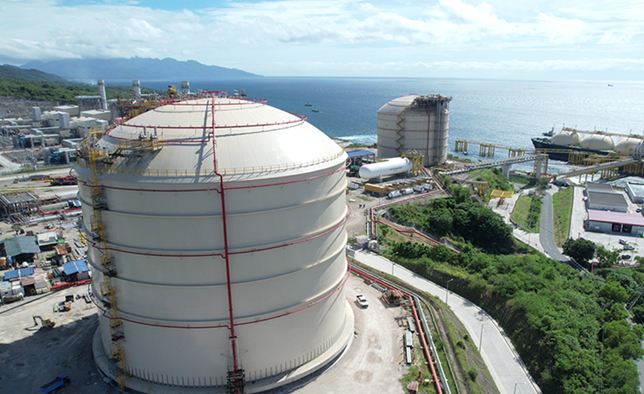
It also stated that gas storage affects the calculation because stored gas is excluded from marketed hydrocarbon volumes, raising the reported intensity metric.
The gas programme is central to Saudi Arabia’s broader fuel-switching plan.
Aramco has increased its target for sales-gas production to approximately 80 per cent above its 2021 baseline, replacing an earlier target of 60 per cent.
The Kingdom’s liquid fuel displacement programme aims to substitute around 1 million barrel of oil equivalent a day (boed) with natural gas, renewables and efficiency measures by 2030.
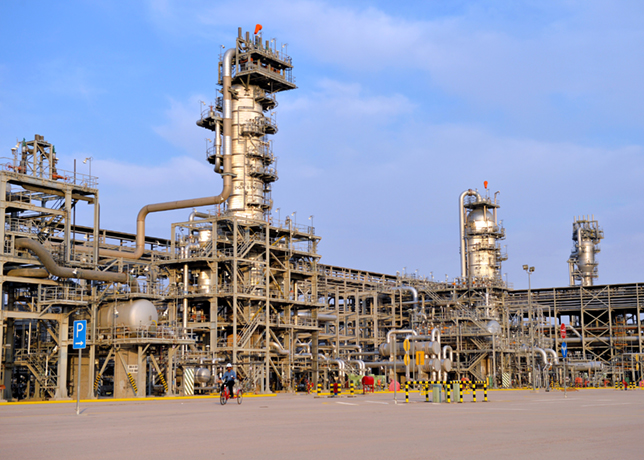
In 2025, Marjan Gas Oil Separation Plant 4 was commissioned with gas-processing capacity of 1.1 billion cu ft a day (bcfd).
Hawiyah Gas Storage reached its target to reproduce up to 2 bcfd into the Master Gas System.
Aramco generated 6.3 GW through captive power plants during the year, with 4.5 GW used for internal demand.
Operational indicators also moved higher, with energy consumption having increased 4.4 per cent to 91,940 million British thermal units (BTU) an hour, while energy intensity rose 0.9 per cent to 164.3 thousand BTU/boe.
Flaring intensity increased from 6.07 to 6.65 scf/boe, with flared gas reaching 32,587 million scf, compared with 28,846 million scf in 2024.
Aramco cited increased gas operations and pipeline maintenance activities.
MITIGATION PROGRAMME EXPANDS ACROSS FIVE LEVERS
Aramco’s emissions programme combines energy efficiency, methane and flaring reduction, carbon capture and storage, renewable-energy expansion, and natural climate solutions and offsets.
The company reported 138 energy-saving initiatives in 2025, delivering savings of 3,192 million BTU an hour and avoiding 1.57 million tonnes of CO2e.
Methane intensity remained at 0.04 per cent, while upstream methane emissions declined to 24,548 tonnes from 26,237 tonnes in 2024.
The company expanded satellite coverage of operational facilities under its methane programme from 30 to 45 sites, and reported that major methane emissions detected by the programme halved year on year.
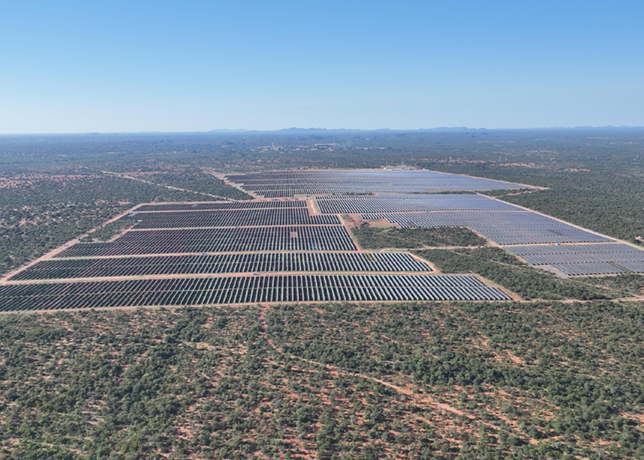
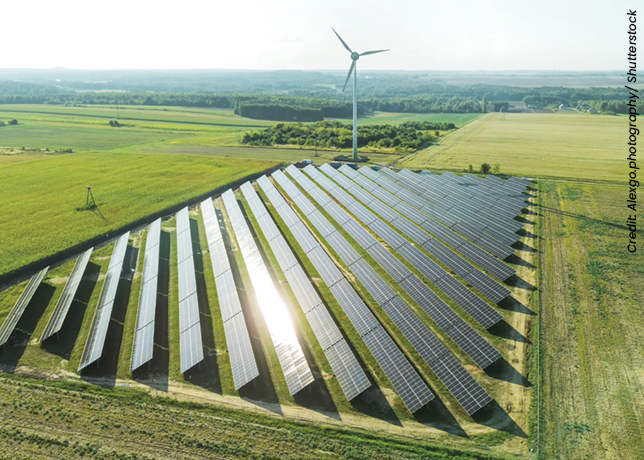
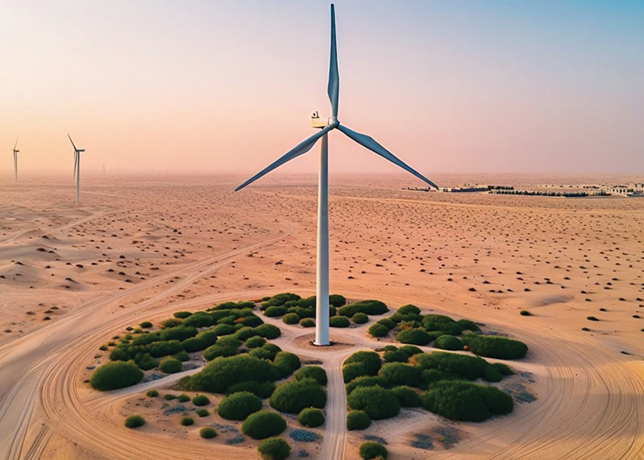
Aramco reported 1.28 GW of installed operational renewable capacity and cumulative equity investments in renewable projects amounting to 7.78 GW.
Financial close was achieved during 2025 for five solar schemes totalling 12 GW and two wind projects totalling 3 GW, as well as two additional solar projects with combined capacity of 1.4 GW.
The company said its mitigation roadmap continues to target 52 million tonnes of CO2e annually by 2035 against its business-as-usual forecast.
It revised the expected contribution of individual levers, increasing the role of renewables because of lower anticipated costs and faster Saudi deployment, while reducing the planned contribution from carbon capture and storage because of slower technology development, higher deployment costs, and lower hydrogen and ammonia demand.
The 2025 results, therefore, establish the immediate reporting baseline for Aramco’s interim intensity targets while documenting the operational effects of the Kingdom’s gas expansion, new project activity and electricity demand.