


































































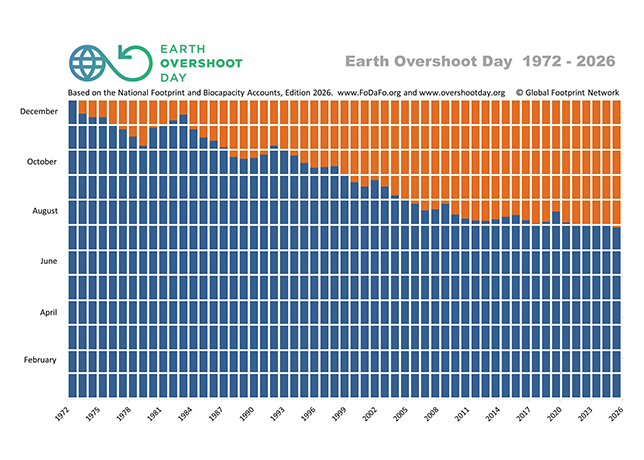
Humanity is currently consuming natural resources 73 per cent faster than Earth’s ecosystems can regenerate, effectively operating the global economy as if living off 1.73 Earths.
According to Earth Overshoot Day calculations, this year’s overshoot fell July 30, marking the precise calendar threshold where human demand on nature outpaces ecological replenishment.
Although this date falls six days later than in 2025, the shift stems from scientific model recalibration rather than actual resource conservation.
Specifically, an upward revision of the ocean’s carbon absorption capacity, alongside minor methodological recalibrations, moved the calculated date eight days later, while real-world growth in ecological demand pulled the date two days earlier.
Evaluated on a consistent baseline data set, the current ecological deficit represents the highest level of overshoot ever recorded.
Systemic overuse is eroding fundamental natural capital across every major biome, directly imperilling global macroeconomic stability.
Vehicles, power stations, and industrial facilities continuously release carbon dioxide at rates exceeding biosphere absorption capacities, while freshwater consumption routinely outstrips natural aquifer recharge.
Simultaneously, industrial timber harvesting outpaces forest regrowth, and commercial fishing fleets deplete marine stocks beyond natural replenishment limits.
Despite the acceleration of global resource exhaustion, national economic planners maintain a pervasive blind spot regarding physical carrying capacity, as detailed in the special report, “Prepared for the Predictable? Overshoot and the Failure of Countries to Ready Themselves” produced by Global Footprint Network and Greenings.
Although ecological overshoot actively drives global stagflation, food and energy insecurity, public health crises, and geopolitical conflict, national governments continue to exclude biocapacity limits from macro-prudential governance.
Humanity’s aggregate demand has consistently outstripped the planet’s regenerative baseline since the early 1970s (Figure 1).
Because gross domestic product (GDP) measures monetary exchanges while ignoring physical natural stock drawdown, traditional economic metrics create a dangerous disconnect between perceived financial growth and underlying biophysical solvency.
Asset owners, pension funds, insurers, and central banks are increasingly discovering that fiduciary responsibility carries an inescapable biophysical dimension, as physical resource limits dictate long-term economic stability.
STRUCTURAL DIVERGENCE ACROSS REGIONAL STRATEGIC FRAMEWORKS
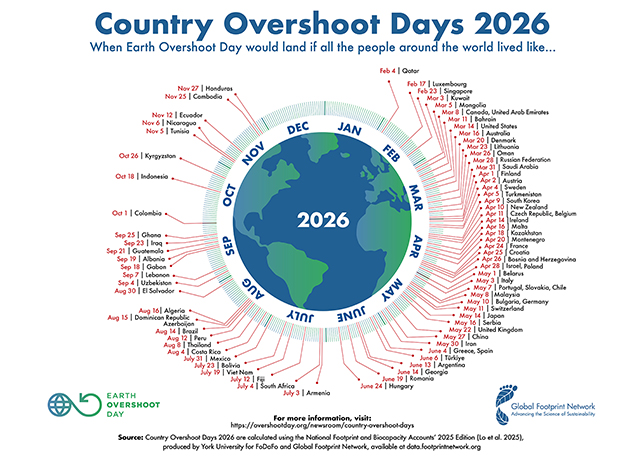
An examination of national policy frameworks demonstrates that sovereign governments across major geographical regions remain vastly unprepared for resource constraints, exhibiting a stark failure to align economic planning with biophysical limits.
In North America, primary strategy documents illustrate a systemic disregard for physical carrying capacity.
The Canadian Spring Economic Update 2026 and the US National Security Strategy rank low in biophysical risk recognition, failing to link national fiscal continuity to ecological carrying capacity or resource availability.
In Latin America, strategic planning reflects severe internal contradictions; Argentina exhibits total blindness to biophysical limits across its central governance instruments, including the Ley de Bases, the 2025 State of the Nation Address, and the May Pact.
Argentine policy explicitly treats economic growth as an unconditional objective without ecological qualification, rejecting environmental safeguards as prejudices while codifying thirty-year firm rights for liquefied natural gas exports, thirty-five-year hydrocarbon concessions, and tax stability for large-scale mining projects via the RIGI regime.
Conversely, regional peers, such as Brazil, through Nova Industria Brazil, and Chile, via its National Productive Development Policy, attempt to integrate sectoral industrial transformations, though execution mechanisms remain variable.
Across European jurisdictions, national strategies reveal significant policy siloing and institutional fragmentation.
Switzerland presents a pronounced internal discrepancy across its executive documents.
While the 2030 Sustainable Development Strategy demonstrates high biophysical recognition by setting quantified targets such as a 43 per cent reduction in per-capita energy consumption, its Action Plan 2024–2027 relies entirely on voluntary measures lacking statutory penalties or dedicated capital allocation.
Concurrently, the Swiss Security Policy Strategy 2026 remains insulated from biophysical realities, treating environmental change merely as a secondary background item.
Across the European Union (EU), strategy scores remain unexpectedly low despite high-profile initiatives like the New Green Deal and mandatory sustainability reporting under the Corporate Sustainability Reporting Directive, confirming a deep structural rift between corporate reporting mandates and binding national economic governance.
In Asia, national strategies vary widely between comprehensive planning and sectoral fragmentation.
Vietnam’s Resolution on the National Master Plan shows significant divergence when evaluated alongside its lower-tier administrative strategies.
China’s 15th Five-Year Plan scores closest to recognising and responding to ecological overshoot among all global documents evaluated.
China embeds the narrative of “Ecological Civilisation” throughout its development framework, establishing “ecological protection red lines”, strict urban growth boundaries, and a rigid water constraint system.
Furthermore, China enforces binding statutory targets for resource intensity, carbon reductions, renewable energy expansion, forest cover, and grain production capacity through administrative accountability reviews.
However, China’s strategic trajectory retains a mixed model, as green targets coexist with statutory baselines mandating domestic crude oil production at two hundred million tons annually, preserving a structural lock-in to high-throughput fossil infrastructure.
CAPITAL ALLOCATION & PHYSICAL SUPPLY DISRUPTIONS
Global trade interdependence amplifies underlying ecological vulnerabilities, ensuring that localised supply disruptions rapidly escalate into systemic international economic shocks.
This structural fragility has been repeatedly demonstrated across recent macroeconomic crises. International supply chains suffered severe disruption during COVID-19 lockdowns, while Russia’s invasion of Ukraine impaired agricultural production and forced rapid energy reconfigurations.
Most recently, the closure of the Strait of Hormuz following strikes on Iran eliminated 20 per cent of global oil shipping overnight, triggering immediate global economic reverberations.
Rather than implementing systemic resource security, high-income nations rely predominantly on short-term emergency stockpiles.
Switzerland maintains strategic reserves covering up to six months of fossil fuel consumption and four months of food supplies.
The EU requires member states to hold two to three months of emergency oil stocks, while China holds over half of global grain reserves.
However, emergency reserves merely address temporary operational shocks; they do not alter the structural baseline of mounting ecological debt and contracting resource availability.
A prevailing assumption among economic planners holds that nations blessed with domestic biocapacity reserves naturally prioritise resource security.
But empirical evaluation reveals the exact opposite pattern: Nations holding domestic biocapacity reserves pay even less attention to ecological overshoot in their national strategic planning than countries operating in severe biocapacity deficits.
Instead of leveraging natural capital reserves to construct long-term resilience, resource-rich states frequently operate under a false sense of security, accelerating resource drawdown and deepening global economic vulnerability.
INSTITUTIONAL MECHANISMS FOR SYSTEMIC RESILIENCE
Because physical infrastructure, agricultural systems, urban centres, and energy grids require decades to reconfigure, nations that delay adaptation face severe structural disadvantages as global resource constraints tighten.
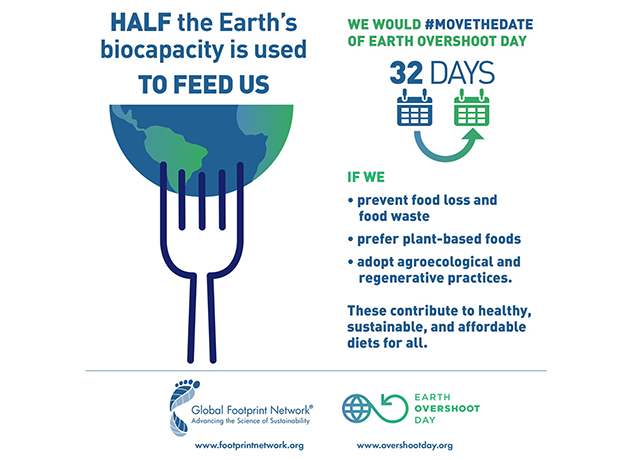
Fossil fuel inputs currently account for over 60 per cent of humanity’s total demand on biocapacity, serving as the dominant driver of global overshoot.
Eliminating fossil fuel reliance without shifting ecological burdens onto biological resources requires immediate, coordinated capital realignment.
To bridge this governance gap, national governments must establish cross-partisan task forces or parliamentary commissions dedicated to mapping biophysical dependencies, evaluating financial exposures, and building structural resilience before the next resource shock occurs.
These bodies must conduct comprehensive audits of national resource metabolisms, quantify financial flows tied to resource imports and exports, evaluate material substitutability, and strengthen the reliability of underlying biophysical data.
Furthermore, these task forces must identify how overshoot manifests as a systemic market failure, formulating legal, legislative, and industrial policies to protect sovereign economic stability.
Effective execution requires close coordination between state task forces, systemic financial regulators, and institutional asset managers.
Central banks, finance ministries, securities commissions, multilateral development banks, and the Bank for International Settlements must integrate biophysical risk into macro-prudential supervision.
Simultaneously, institutional asset owners with long-term fiduciary mandates, including pension funds, insurance companies, sovereign wealth funds, and family offices, must account for underlying natural capital risks rather than relying purely on surface financial metrics.
The launch of ISO 32212 provides crucial net-zero transition planning guidance for financial institutions, helping bridge the transition valuation gap across key real-economy sectors including agriculture, construction, transportation, manufacturing, and power generation.
Because global ecological overshoot will inevitably end, either by proactive structural design or by unmanaged environmental disaster, nations that act early to secure their resource metabolism will protect their populations and capture decisive competitive advantages in an increasingly resource-constrained global economy.