












































The global coal market is showing clear signs of slowing, yet coal mine expansion plans continue to grow.
The proposed increase to global coal mine capacity is at odds with a market expecting demand to flatten by the end of the decade, in part as coal-fired electricity is increasingly replaced by clean energy.
Data from Global Energy Monitor’s Global Coal Mine Tracker show that new coal mining capacity entering operation fell to a new decade low in 2025, with approximately 113 million tonnes per annum (mtpa) entering into operation, representing a nearly 40 per cent decline from the 185 mtpa recorded in 2024.
This slowdown mirrored broader international trends. According to the International Energy Agency (IEA), global coal demand grew by less than 0.5 per cent in 2025 and is expected to plateau through 2030.
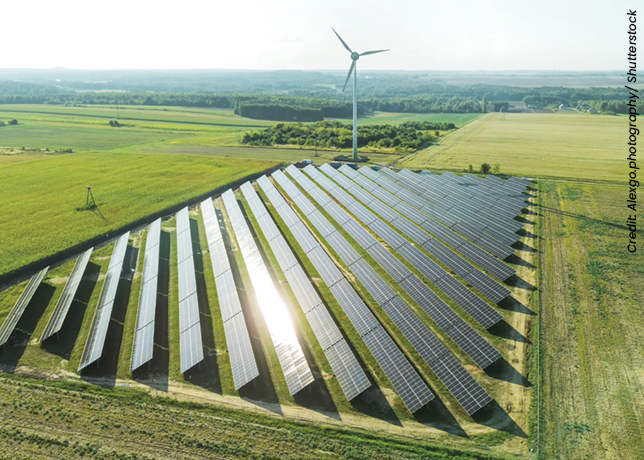
Simultaneously, competitive wind and solar power overtook coal in global electricity generation for the first time in 2025, driving down coal-fired electricity generation by 0.6 per cent.
Despite these market signals, the global coal mine pipeline expanded by nearly 11 per cent over the past year to 2,521 mtpa across 834 proposed projects.
According to the GEM ‘Still Digging 2026’ report, development activity is becoming increasingly concentrated.
Just five countries, comprising China, India, Australia, Russia, and South Africa, account for nearly 92 per cent of proposed capacity, or 2,314 mtpa, up from 89 per cent in 2024.
China leads globally with 1,321 mtpa in development, exceeding all other countries combined.
India follows with 638 mtpa, where proposed capacity nearly doubled from 329 mtpa in 2024.
Australia ranks third with 187 mtpa, while Russia holds 96 mtpa and South Africa maintains 72 mtpa.
Across other regions, proposed capacity includes Canada at 31 mtpa, Mozambique at 28 mtpa, Mongolia at 20 mtpa, Bangladesh at 11 mtpa, Indonesia at 11 mtpa, Botswana at 5 mtpa, Tanzania at 5 mtpa, and the US at 9 mtpa.
REGIONAL DIVERGENCE IN DEVELOPMENT PIPELINES
The global landscape reflects stark regional variations in mine development, commissioning, and policy environments.
In 2025, the drop in newly commissioned capacity was driven by China and Australia, where capacity additions fell by 44 per cent and 96 per cent, respectively.
China’s decline stems from solar and wind growth, alongside National Energy Administration safety inspections, tightened approvals, and measures curbing excess production.
China’s proposed development remains concentrated in Inner Mongolia, Shaanxi, Xinjiang, Guizhou, and Shanxi, with Inner Mongolia representing a third of its total.
In India, the surge to 638 mtpa was driven by Jharkhand and Odisha, aligned with the Ministry of Coal targeting 1.15 billion tonnes of raw coal production for the 2025-2026 fiscal year by operationalising over 20 new mines adding more than 80 mtpa.
Australia’s expansion focuses primarily on metallurgical coal exports, such as the Corvus project.
However, New South Wales introduced the Coal Industry 2026–2050 policy in April 2026, banning applications for new greenfield coal mines and favouring open-cut extensions over underground projects.
In Russia, proposed capacity plateaued near 100 mtpa due to labour shortages, logistical bottlenecks, Western sanctions, and weakening global demand following the 2022 invasion of Ukraine.
South Africa’s pipeline stabilised at 72 mtpa amid a 127 billion US dollar energy transition plan.
In North America, Canadian proposals sit at 31 mtpa, with nearly 60 per cent located in British Columbia focused on export metallurgical coal.
In the US, fast-tracked approvals in early 2025 allowed the recovery of 245 million short tonnes, or 222 million tonnes, from expansions like Bull Mountains Mine No 1 and Blue Creek Mine No 1, though its broader pipeline remained stable at 9 mtpa.
The structural disconnect between active production and planned retirements remains severe.
Globally, 1,863 mtpa of operating capacity is idled or mothballed.
The US accounts for 1,399 mtpa across 168 idled mines, nearly three times its 2025 production of 484 million tonnes, with 87 per cent concentrated in Appalachia across West Virginia, Pennsylvania, Kentucky, and Virginia.
China holds 184 mtpa of mothballed capacity across 190 mines, with over 90 per cent in Inner Mongolia, Shanxi, and Guizhou. South Africa holds 68 mtpa.
Over the next decade from 2026 to 2035, only 1,145 mtpa of operating capacity is scheduled to retire, representing 12 per cent of active production and less than half of proposed additions.
About two-thirds of scheduled retirements, or 743 mtpa, will occur by 2030.
Indonesia accounts for 760 mtpa of these scheduled end-of-life closures, and Australia accounts for 216 mtpa, whereas China and India report minimal scheduled retirements.
Norway permanently completed its domestic coal phaseout in July 2025 by closing Store Norske’s Mine 7 on Svalbard, following Spain’s exit in 2024.
STRUCTURAL PROJECT DYNAMICS & NON-MARKET EXPANSION DRIVERS
The structural breakdown of the 2,521 mtpa global pipeline demonstrates that greenfield developments dominate.
Greenfield projects account for roughly three-quarters of proposed capacity globally, while mine expansions represent 20 per cent, resource consolidation and restructuring account for 5 per cent, and extensions make up 2 per cent.
Greenfield projects represent 87 per cent of proposed capacity in Canada, 82 per cent in China, 80 per cent in India, and 76 per cent in South Africa.
Conversely, expansions constitute 70 per cent of Russia’s pipeline, while Australia holds 25 mtpa of extension capacity, representing over half of global extension proposals.
China also holds 130 mtpa in consolidation projects across Guizhou, Shanxi, and Shaanxi, originating from Shanxi’s 2009 consolidation reforms.
By end-use, thermal coal for power generation totals at least 1,927 mtpa, representing 76 per cent of the global pipeline.
Metallurgical coal for steelmaking accounts for 370 mtpa, or 15 per cent.
Chemical coal accounts for 194 mtpa, or less than 8 per cent.
Thermal proposals are heavily concentrated in Asia, led by China with 941 mtpa, India with 603 mtpa, and Australia with 105 mtpa, collectively making up 86 per cent of the global thermal pipeline.
Metallurgical proposals are led by China with 157 mtpa, Australia with 82 mtpa, and India with 39 mtpa.
The push for new coal mines despite flattening demand suggests that the global coal mine pipeline is increasingly being driven by factors beyond market demand, as governments support new coal production as a hedge against geopolitical risks and, in some countries, as feedstock for industries such as coal-to-chemicals.
In China, where 2025 chemical sector coal consumption rose 10.2 per cent to 430 million tonnes, 15 per cent of proposed mine capacity, or 194 mtpa, is tied to coal-to-chemicals projects, with 47 per cent located in Xinjiang.
Policies from 2022, 2024, and the June 2026 15th Five-Year Plan support coal as an industrial feedstock to replace imported oil and gas.
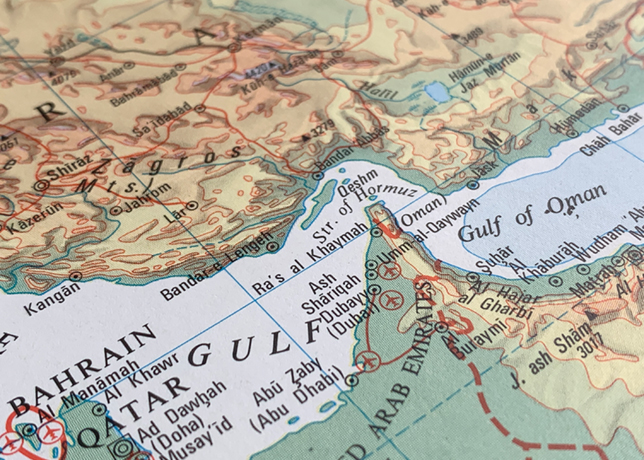
Similarly, India launched its National Coal Gasification Mission to gasify 100 mtpa by 2030, supported by a May 2026 scheme approving $3.9 billion to incentivise gasifying 75 million tonnes following energy supply disruptions in the Strait of Hormuz during the 2026 Iran conflict.
STRATEGIC CHOICES & POLICY OPTIONS FOR PHASEOUT EXECUTION
As low-cost clean energy continues to displace coal, the economic rationale for expanding coal mining becomes progressively weaker.
Pushing forward with additional mine capacity risks creating long-lived assets that become uneconomic, exposing governments and investors to stranded assets and excess supply volatility.
Rather than locking in decades of additional coal production, governments have an opportunity to cancel projects that remain in the development pipeline before they advance to construction.
Currently, 1,297 mtpa of proposed capacity remains pre-permitted, and 443 mtpa is permitted but unbuilt, meaning nearly 70 per cent of the global pipeline has not yet broken ground.
Only 781 mtpa is under construction or trial operation, of which 71 per cent, or 557 mtpa, is in China and 13 per cent, or 101 mtpa, is in India.
Furthermore, 81 per cent of China’s late-stage capacity consists of long-timeline underground mines, such as the Baiyanghe mine which began construction in 2020, whereas 90 per cent of India’s late-stage pipeline comprises faster-to-build surface mines.
An alternative path for energy security exists in mitigating coal mine methane.
The IEA identifies 4,481 kilotonnes of methane that can be recovered annually from coal mines at negative net cost, equivalent to 6.6 billion cu m of gas.
However, global oversight remains fragmented. No country requires direct methane monitoring for surface mines, despite operations like Australia’s Hail Creek mine emitting 122 kilotonnes annually, or 14 per cent of Australia’s reported coal mine methane.
Underground mine monitoring is mandated in only three major producing nations, Australia, Poland, and the US, covering just 236 of the world’s 2,448 underground mines.
Furthermore, the US has proposed permanently eliminating its Greenhouse Gas Reporting Program obligations after 2024.
Regulatory standards also vary, ranging from unabated venting during construction in India to strict monitoring and drainage utilisation standards under the EU’s 2024 methane regulations.
Capturing these emissions provides immediate energy supplies without committing capital to new mining infrastructure.