












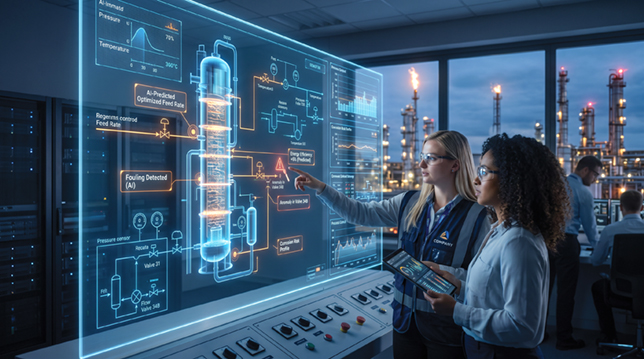

Industrial energy landscapes are undergoing a profound transformation as autonomous System of Systems (SoS) architectures replace isolated control platforms to orchestrate multi-company hubs.
By acting as a macro-orchestrator across regional industrial ecosystems, this advanced framework integrates independent systems to generate emergent operational value and cross-enterprise synergies that individual assets cannot achieve independently.
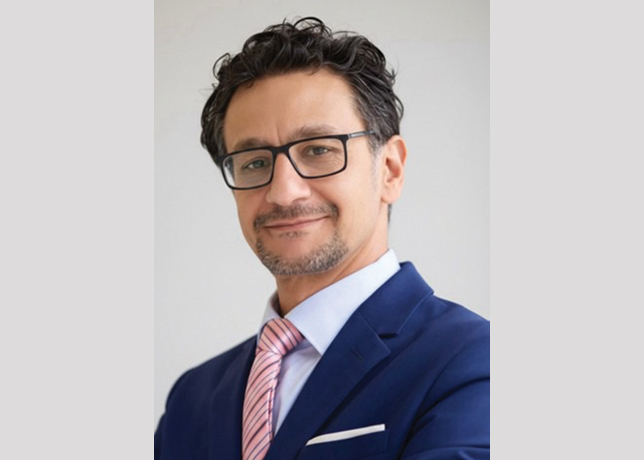
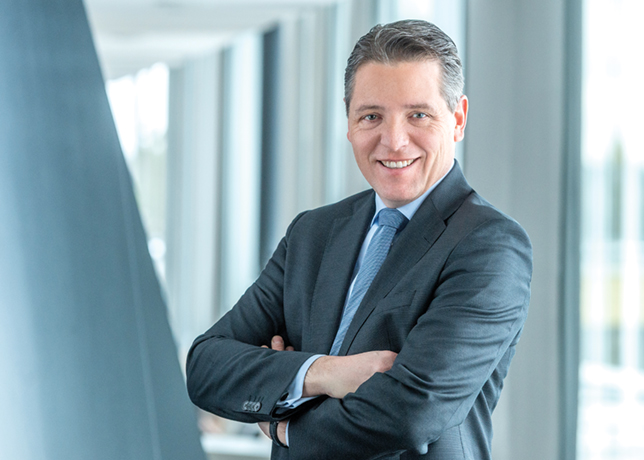
In an exclusive interview with OGN energy magazine, Dr Darius Ngo, Senior Vice-President and Fellow, Yokogawa, says: “Yokogawa’s SoS acts as the macro-orchestrator that can integrate multiple, independent digital twins to synchronise operations across a broader economic or regional landscape, unlocking value that a localised digital twin cannot access alone.”
Deploying agile overlay architectures enables operators to bypass legacy infrastructure constraints and reconcile real-time data integration across sprawling Middle Eastern clusters.
Below are excerpts from the interview:
How does Yokogawa define a ‘System of Systems’ (SoS) architecture, and how does it fundamentally differ from traditional enterprise control systems or standard digital twin platforms?
The System of Systems (SoS) is a collection of independently operated and managed systems that are connected to form a larger, cohesive ecosystem.
These connected systems—spanning plants, enterprises and supply chains—interact to deliver synergies and “emergent value” that none of the individual systems could achieve on their own.
Traditional enterprise control systems are highly localised and bounded. They focus on decentralising control by assigning controllers to specific pieces of equipment within a single facility to ensure fault isolation, process safety, and continuous operation.
Whereas a standard digital twin relies on first-principle mathematical models and real-time sensor data to simulate a specific physical asset or process at the operational level.
It is designed to answer specific predictive questions: “What if?”, “What is next?”, and “What is best?” for that particular asset.
Yokogawa defined SoS acts as the macro-orchestrator. It can integrate multiple, independent digital twins (for example, combining a plant's process twin with a regional energy utility's grid model and a supplier's logistics system) to synchronise operations across a broader economic or regional landscape, unlocking value that a localised digital twin cannot access alone.
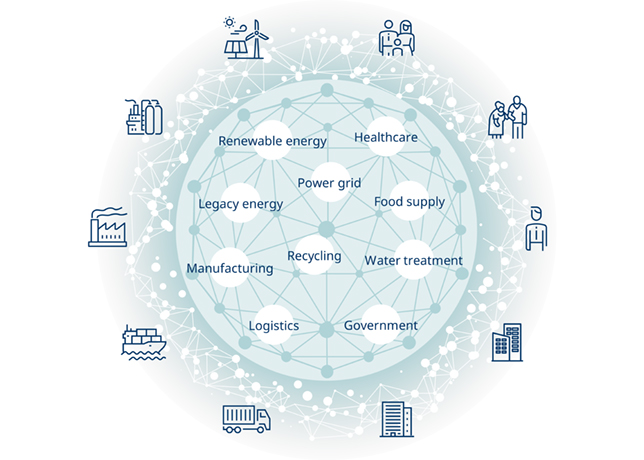
Yokogawa’s SoS connects independently operated and managed systems to deliver synergies to all stakeholders in an ecosystem
How do you reconcile the push for cross-enterprise SoS integration across mega-hubs like Jubail, Ruwais, or Sohar with the reality that many regional upstream and refining assets still operate on isolated legacy control infrastructure?
Yokogawa reconciles the ambition of cross-enterprise SoS integration with the reality of isolated, legacy infrastructure by deploying agile overlay architectures—primarily through Collaborative Information Server (CI Server)—that extract and normalise operational data without requiring an immediate “rip-and-replace” of existing assets.
In sprawling industrial clusters like Jubail, Ruwais, or Sohar, achieving macro-level goals, such as region-wide decarbonisation and energy efficiency, requires data fluidity that legacy systems inherently resist.
Rather than waiting for complete infrastructural modernisation, Yokogawa bridges this gap to accelerate the transition toward industrial autonomy.
Given that joint venture partners and independent operators within Middle Eastern industrial cities are often fierce commercial competitors, what specific commercial and data-governance models are needed to convince them to share real-time operational data across an SoS platform?
Convincing a partner to share operational data is difficult because it requires shifting from centralised data pooling.
Yokogawa and operators use decentralised frameworks where data is treated carefully. To integrate systems without risking intellectual property, industrial clusters use specific models:
• The “Trusted Partner” Model has a neutral provider manage data sharing, ensuring it's used for shared benefits while keeping competition safe.
• Federated Data Architecture keeps data local, allowing only necessary insights to be shared.
• Data Abstraction protects secrets by sharing only summaries, like “surplus steam capacity,” rather than exact figures.
• Smart Contracts automate financial transactions tied to data sharing, creating a reliable commercial model.
With Middle Eastern critical energy infrastructure facing persistent geopolitical cyber threats, who carries legal and financial liability when an autonomous optimisation decision across an interconnected multi-company cluster triggers an unplanned plant shutdown?
In a cross-enterprise SoS, liability for an autonomous shutdown is shared among asset owners, platform orchestrators, and insurance systems, depending on where the system fails.
Industrial clusters manage risk from cyber threats using structured liability models.
Each plant retains control over its operations, even with federated data. If a harmful command from the core network reaches a local plant and is not stopped by its safety systems, the asset owner may face significant liability for not maintaining strong operational boundaries.
Liability for data trustees and technology providers connects to the integrity of algorithms and security.
If an autonomous shutdown results from software defects or negligence, technology providers can be financially responsible under service level agreements or product liability laws.
Geopolitical threats can change how liability is assessed; cyber intrusions can lead to events classified as force majeure, shifting financial responsibility to insurance policies or government support.
To avoid lengthy litigations, liability definitions are embedded in blockchain-based smart contracts, providing automatic financial penalties when a company's negligence leads to shutdowns, ensuring quick resolutions and financial stability.
How does your architecture resolve conflicting operational priorities when balancing dynamic, intermittent renewable power against continuous synthesis in regional hydrogen corridors or multi-source CCUS networks involving different asset owners?
Yokogawa’s SoS architecture resolves the inherent conflict between intermittent renewable generation (solar/wind) and the strict, continuous demand of chemical synthesis (hydrogen production or CCUS compression) by acting as an algorithmic arbitrator and macro-orchestrator.
When operating across regional corridors involving multiple asset owners, the architecture relies on advanced dynamic optimisation, intelligent buffering, and rule-based commercial logic to keep the ecosystem balanced.
What has been the single biggest technical or organisational roadblock encountered when trying to execute complex, cluster-wide digital integration projects in Middle Eastern energy hubs, and how was it overcome?
The main challenge in achieving digital integration in energy hubs is overcoming the strict “air-gap” mentality while ensuring cybersecurity.
For years, operators kept their high-risk operational technology (OT) isolated from external networks to protect against cyber threats.
However, integrating these systems into a unified structure requires sharing OT data with information technology (IT) layers.
To address this, Yokogawa and regional organisations implemented zero-trust edge architectures and hardware-enforced data diodes, allowing unidirectional data flow from legacy plants to a regional digital model without enabling reverse communication.
This method ensures safety and control by pushing optimisation targets to secure gateways, allowing real-time data use while maintaining control network security.
Yokogawa is exhibiting at Stand 12710, Hall 12.