










South Sudan, UAE sign oil deal
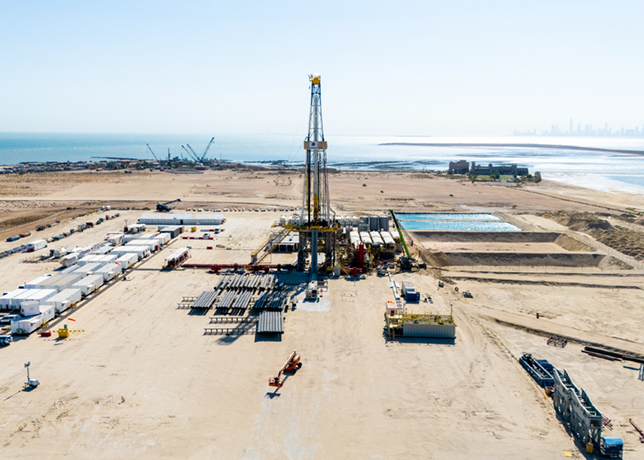
South Sudan’s Ministry of Petroleum has signed an investment memorandum with UAE-based Bianchi Gold Trading Investment Company to support oil and gas exploration, infrastructure, refining and distribution.
The agreement aims to attract financing, technology and technical expertise. South Sudan has 14 open concession blocks and 3.5 billion barrels of proven oil reserves, with the government targeting production growth to 230,000 barrels per day in the short term.
Ivory Coast seeks $10bn investment
Ivory Coast is targeting more than $10 billion in energy investment by 2030, with state-owned Petroci Holding seeking partners for upstream projects, exploration, gas infrastructure and refining.
Key developments include the $4 billion Baleine field expansion, targeting 150,000 barrels of oil daily, and a proposed $5 billion-$7 billion refinery in San Pedro.
Investments in petroleum storage and distribution also aim to strengthen domestic supply, reduce logistics costs and expand fuel exports to neighbouring markets.
Africa Energy Bank targets 2027 launch
THE Africa Energy Bank (AEB) is expected to become operational within weeks and begin financing projects in early 2027, Farid Ghezali, APPO Secretary General said.
Launched by APPO and Afreximbank, the bank will prioritise export infrastructure, domestic gas supply, clean cooking and power.
Industry experts estimate Africa will require at least $1 trillion over 30 years to develop its gas resources, while regional cooperation is needed to accelerate pipelines and cross-border energy infrastructure.
Ghana oil production rises 30pc
Ghana’s crude oil production has risen 30 per cent, reversing five years of decline, Energy Minister John Abdulai Jinapor announced.
The increase follows a $2 billion agreement with Kosmos Energy covering Jubilee and TEN licence extensions to 2040.
The partnership includes plans for additional drilling and increased domestic gas supply.
Ghana is also pursuing agreements with Chevron, Shell and CNOOC while reforming its fiscal regime to attract further upstream investment.
Moagi leads APPO Forum
Godfrey Moagi, South African National Petroleum Company CEO, has been appointed chairman of the African Petroleum Producers’ Organisation’s NOCs CEOs Forum, succeeding Ghana’s Kwame Ntow Amoah.
Moagi outlined three priorities: developing viable refining capacity, accelerating the Africa Energy Bank to finance strategic infrastructure, and strengthening cooperation among African national oil companies to build technical skills and local expertise across the continent’s energy value chain.
Zambia exceeds 1,000 MW solar target
Zambia has exceeded its 1,000 MW solar target for 2026, with capacity reaching 1,027 MW, President Hakainde Hichilema announced.
Total installed electricity capacity has risen to 4,722 MW from 3,777 MW in 2024.
The government aims to reach 10,000 MW by 2031, prioritising grid infrastructure and private investment.
Hichilema also called for stronger regional cooperation, while Zambia and Zimbabwe are developing an electricity interconnector to strengthen cross-border energy security and support economic growth.
Guinea-Bissau boosts climate resilience
Guinea-Bissau has launched the RESIslands initiative to strengthen climate risk assessments and develop investment proposals to protect vulnerable communities and ecosystems.
Funded by the Green Climate Fund and implemented by the UN Economic Commission for Africa, the 30-month programme supports nine African island states.
Guinea-Bissau has identified 10 preliminary project ideas covering coastal resilience, agriculture, water security, fisheries, early warning systems and renewable energy, subject to national validation and further development.
Lesotho targets universal power
Lesotho aims to achieve universal electricity access by 2030 through the Mission 300 and Accelerating Sustainable and Clean Energy Access Transformation (ASCENT) programmes, Energy and Mining Minister Lejone Mpotjoane said.
The four-year, M800 million initiative is expected to benefit about 14,000 households through grid extensions, mini-grids and solar systems.
The government is also introducing a new contractor category for qualified young people to create employment opportunities while expanding electricity connections across the country.
Nigeria expands local solar production
Nigeria’s Rural Electrification Agency plans annual procurement of 200 MW of locally manufactured solar panels and 200 MWh of battery storage products to boost domestic manufacturing and reduce imports.
The initiative could support local assembly and improve energy access, as more than 85 million Nigerians lack reliable grid electricity.
However, implementation depends on factory comwmissioning, quality certification, foreign-exchange availability and securing firm purchase commitments to attract financing.
Ghana targets gas-only power by 2027
Ghana expects to stop using imported liquid fuels for power generation by 2027, Energy Minister John Jinapor said, citing increased domestic gas use and imports from Nigeria.
The shift has saved about $500 million annually, while gas demand continues to grow. Senegal is targeting domestic gas supply of 150 million cubic feet per day by 2030.
Regional cooperation and cross-border infrastructure remain key to expanding Africa’s gas markets and strengthening energy security.