































Private companies and governments have invested $17 trillion in sustainable technologies over the past decade, but progress has been uneven and could diverge further, according to Bain & Company’s fourth edition of the Visionary CEO’s Guide to Sustainability.
Sustainability investment reached a record $2.4 trillion in
2025, but 90 per cent was concentrated in green energy, buildings and mobility.
Meanwhile, agriculture, manufacturing and materials, and
natural capital received less than 10 per cent of investment despite accounting
for around 37 per cent of global greenhouse gas emissions.
Bain’s Green Technology Performance Index found that only
three of 37 sustainable technologies, solar, batteries and electric vehicles, have
outperformed forecasts made a decade ago, while 29 fell short.
"Ten years after the Paris Agreement, only three of the
37 technologies we track are ahead of where forecasts put them. Solar,
batteries and EVs are scaling fast. Most of the rest are behind," said
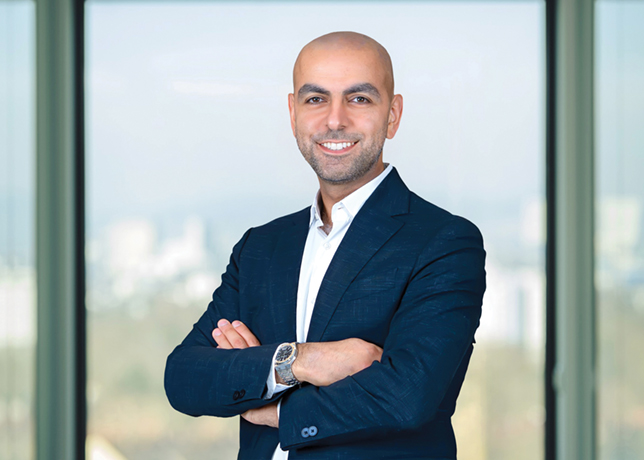
Wissam Yassine, Partner and Middle East Sustainability practice leader at Bain
& Company. "The opportunity is to concentrate capital where
technology, policy and consumer behaviour have lined up, and to be realistic
about how long the rest will take."
Consumer concern about sustainability is also rising. Bain
found that 85 per cent of 7,500 consumers surveyed across the US, UK, Italy,
Brazil and Indonesia are concerned about environmental sustainability, up from
79 per cent last year.
Meanwhile, 83 per cent have adopted at least three
sustainable lifestyle habits, compared with 73 per cent in 2023.
Consumers are also willing to pay an average 18 per cent
premium for sustainable products, rising to 24 per cent when products offer
health benefits.
Extreme weather remains their biggest environmental concern.
The report also highlights a significant gap between
perceptions and the actual energy impact of artificial intelligence.
Executives expect AI to account for around 11 per cent of
global energy consumption within three years, while consumers estimate 19 per
cent. Bain’s modelling forecasts a much smaller share of 0.7 per cent.
“AI’s sustainability impact is increasingly becoming part of
the consumer conversation, but there is a significant gap between perception
and reality,” Yassine said. “Consumers overestimate AI’s share of global energy
consumption by nearly 30 times, and those concerns are already influencing how
they use AI. For companies, the imperative is to demonstrate the value AI can
create while managing its environmental footprint and wider risks responsibly.
Those that get this balance right will be better positioned to scale AI and
build trust.”
Bain identified growing differences among companies in their
approach to sustainable AI.
Among leading “shapers”, 90 per cent see AI as a major
opportunity to advance sustainability goals, compared with 41 per cent of
lagging companies.
The report also found differences between business and
sustainability leaders over investment priorities, with executives focusing
more heavily on financial returns while sustainability professionals prioritize
regulatory compliance and risk management.
“The sustainable AI conversation needs to move beyond energy
consumption to where AI can create tangible business and sustainability value,”
Yassine said. “The companies leading today are using AI to improve operational
and energy efficiency, sell better by turning sustainability into commercial
advantage, and protect better by identifying and managing climate risks. The
opportunity for leaders, is to bring business, technology and sustainability
teams together around a shared definition of value, so they can scale the use
cases that deliver both financial and sustainability outcomes.”
Bain said businesses that can identify where technology, policy and consumer behaviour align, while strengthening resilience to climate risks, will be better positioned to capture future opportunities. -OGN/TradeArabia News Service