





























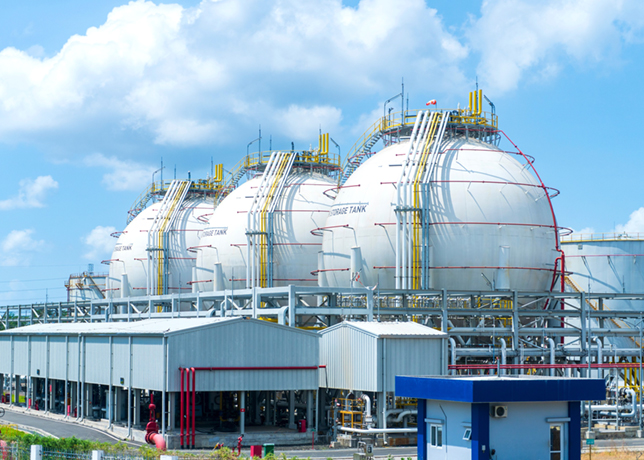

















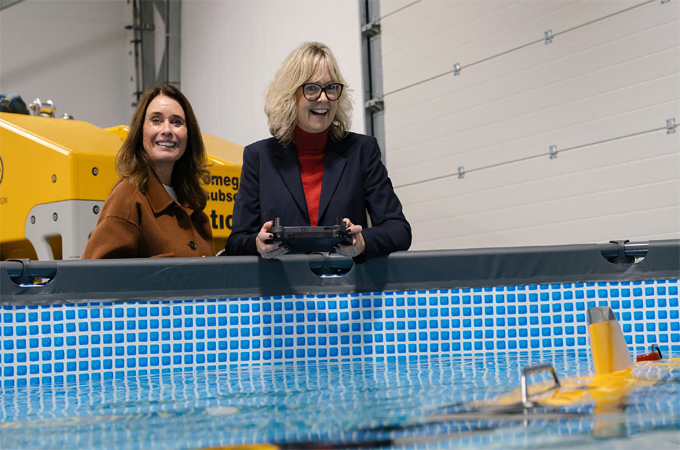
Equinor has opened a new marine robotics testing and development facility at its Kårstø processing plant in Tysvær, Norway, aimed at accelerating innovation, improving offshore safety and reducing operational costs across the energy industry.
The K-lab Marine Robotics Centre (KNARR), inaugurated on 28
October by Minister of Research and Higher Education Eileen Fugelsnes, will
provide a dedicated environment for testing, qualifying and developing marine
robotic technologies.
The facility is among the first of its kind globally to be
connected to an operational industrial site, allowing companies and researchers
to develop and test technologies under real operating conditions.
KNARR will be accessible to multiple maritime industries,
supporting the development of solutions for offshore inspections, autonomous
operations, environmental monitoring, and the security and maintenance of
offshore installations.
“The Norwegian continental shelf is important for a reliable
and secure supply of oil and gas to Europe, and technology is crucial for
maintaining oil and gas production and getting more value out of existing
fields and infrastructure. At the KNARR centre, we can test and mature
technology that makes offshore operations safer, more efficient and more data
driven. This is done in close collaboration with suppliers, research
communities and industry partners,” says Hege Skryseth, executive vice
president for Technology, Digitalisation and Innovation at Equinor.
The centre builds on Norway’s established technology-testing
infrastructure and includes three designated subsea test areas at water depths
of 25, 140 and 250 metres.
Approximately three kilometres of subsea cables and
associated electronics have been installed to enable long-term testing of
sensor technologies. Combined with existing power cables, export pipelines and
subsea structures, the infrastructure will also support testing of distributed
acoustic sensing (DAS) technology.
Equinor and gas transport operator Gassco have invested
NOK16 million in establishing the facility, with opportunities to expand its
capabilities and introduce additional functionality in the future.
Equinor expects underwater robots and autonomous vessels to
deliver potential annual cost savings of several hundred million Norwegian
kroner in the coming years.
“We have set a goal of reducing operational costs
significantly by 2035. By using underwater drones for smaller tasks, we can
work more efficiently and use the larger vessels where they provide the
greatest value,” says Skryseth.
Marine robotics is expected to play an increasingly
important role in inspecting, monitoring and maintaining offshore
infrastructure. The technologies can reduce employees’ exposure to operational
risks, improve efficiency and provide better data for decision-making.
“The strong environments we have in advanced robotics and
digital technology in Norway are among the strategic advantages that will be
able to strengthen our competitiveness in the decades to come. We have a long
coast, and a rich maritime industrial history that we want to strengthen
through good cooperation across industries such as aquaculture, oil and gas
extraction, wind power, shipping and the defence industry”, says Skryseth.
KNARR is intended to strengthen collaboration between industry, suppliers and research institutions while supporting productivity, resource utilisation and the long-term competitiveness of Norway’s offshore energy sector. -OGN/TradeArabia News Service