

























































Oil prices climbed towards $100 a barrel on Thursday as fresh attacks on commercial shipping in and around the Strait of Hormuz underscored the continuing threat to global energy supplies, despite growing expectations that the US midterm election results could push President Donald Trump towards ending the war with Iran.
Brent crude rose $1.62 to $99.91 a barrel, while US West Texas Intermediate gained $1.14 to $91.66. Both benchmarks recovered some of the heavy losses suffered on Wednesday, when markets reacted to the Democrats' sweeping victory in the US midterm elections.
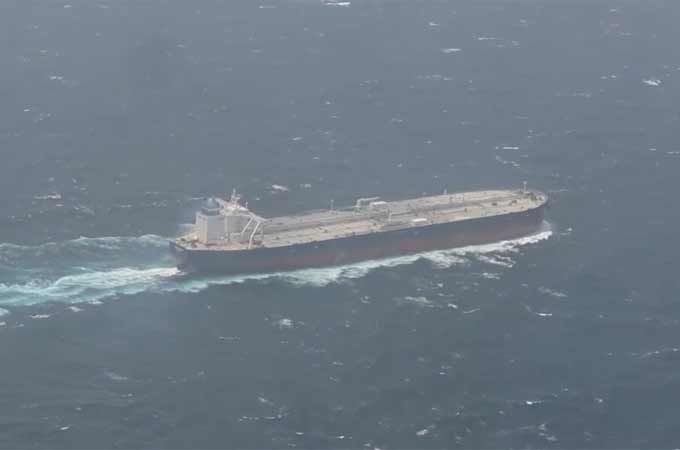
The rebound came as Iran reported that three more tankers had been damaged in the Gulf on Thursday, highlighting the risks to maritime traffic as the eight-month conflict continued without a breakthrough in diplomatic efforts.
Iran's Islamic Revolutionary Guard Corps (IRGC) said two tankers had struck naval mines and another had caught fire. The incidents came after the UK Maritime Trade Operations (UKMTO) agency reported that a vessel had been hit by two unidentified projectiles late on Wednesday.
The latest incidents reinforce concerns that commercial shipping will remain exposed to attacks for as long as the conflict remains unresolved, regardless of the political pressure on Washington to bring the war to an end.
Election defeat raises pressure on Trump
Oil prices had plunged by more than $20 a barrel from the previous week's levels as traders interpreted the Democratic victory as a potential turning point in the conflict.
The Republicans' loss of control of both chambers of Congress has intensified scrutiny of Trump's decision to launch the war alongside Israel under Operation Epic Fury in February.
Vice President JD Vance publicly blamed the conflict for the Republicans' electoral defeat, saying in a social media post on Wednesday that the war was a principal reason voters turned against the party.
Vance's intervention has added to speculation that the administration could face growing pressure to seek an agreement rather than resume large-scale military operations.
Trump, however, has defended the decision to go to war, arguing that it prevented Iran from acquiring nuclear weapons. He has also not ruled out further military action.
Diplomatic efforts remain stalled
Iranian officials have been meeting Qatari mediators since last week to discuss proposals for ending the hostilities, but there has been no publicly announced breakthrough on the major issues separating Washington and Tehran.
A senior Iranian official told Reuters on Thursday that Tehran had sent a nuclear proposal to the US through Qatar. The official said further discussions would depend on Washington meeting seven Iranian demands, including lifting sanctions, releasing frozen assets and paying war reparations.
Iranian officials have also insisted that the Strait of Hormuz will not be reopened without their conditions being met.
Washington, meanwhile, maintains that Iran's nuclear programme must form part of any initial negotiations.
The competing demands leave a significant gap between the two sides, even as diplomatic efforts continue to prevent a return to full-scale fighting.