




















































Norway’s position as northern Europe’s ‘green battery’ is facing growing pressure as rising electricity demand threatens its traditional power surplus, highlighting the need for faster wind energy development and grid investment, according to GlobalData.
The country’s reservoir-based hydropower system provides
flexibility to balance renewable electricity generation across Europe, making
Norway a major structural net electricity exporter.
However, increasing demand from energy-intensive industries,
data centers, electric transport, and the electrification of offshore oil and
gas operations is gradually reducing its export capacity.
GlobalData’s report, “Norway Power Market Trends and
Analysis by Capacity, Generation, Transmission, Distribution, Regulations, Key
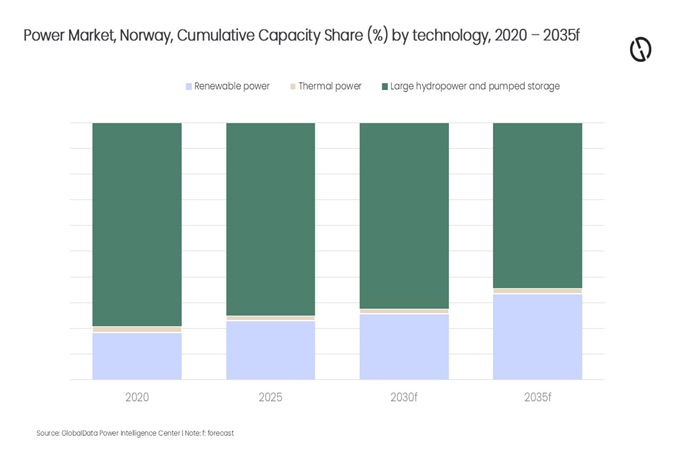
Players and Forecast to 2035,” projects that Norway’s installed power capacity
will increase from 41.7 GW in 2025 to 50.8 GW by 2035, representing a compound annual
growth rate (CAGR) of 2 per cent.
Renewables, excluding large hydropower, are expected to
increase their share of installed capacity from 22.9 per cent to 33.4 per cent,
driven by onshore wind, offshore wind and solar PV.
Attaurrahman Ojindaram Saibasan, Power Analyst at
GlobalData, said: “Norway’s strength lies in flexibility rather than raw
capacity. With roughly 87TWh of reservoir storage, its hydropower fleet can
store seasonal inflows and ramp output up or down to balance wind across
northern Europe. That role is becoming more valuable as Europe adds variable
renewables, but it depends on Norway maintaining a surplus available for
export.”
Electricity demand is forecast to rise from 130.1 TWh in
2025 to 153.3 TWh by 2035.
In 2025, Norway exported 34.3 TWh and imported 11.5 TWh,
resulting in net exports of approximately 22.8 TWh.
However, Statnett has warned that limited generation
additions and growing consumption are steadily eroding the surplus.
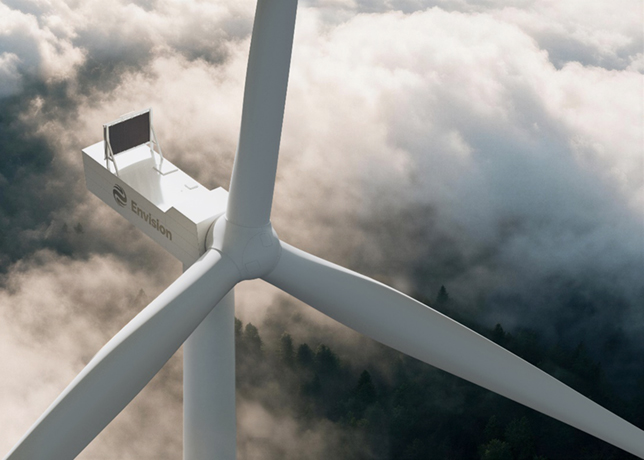
Onshore wind development remains constrained by licensing
delays, local opposition and the resource rent tax introduced in 2024.
New grid-connected capacity reached only around 1 MW in
2025.
Proposed licensing reforms announced in September 2026 aim
to accelerate approvals through two-year deadlines and the removal of state
objection rights.
Saibasan said: “Onshore wind growth in the country has
nearly stalled. Following the 2019–2022 licensing pause, local opposition and
the resource rent tax on onshore wind introduced in 2024 limited new
grid-connected capacity to around 1 MW in 2025. The licensing reforms proposed
in September 2026, which set two-year deadlines and remove state objection
rights, are an important step, but their impact will depend on municipal
consent and grid access.”
Offshore wind capacity is expected to increase from 0.1 GW
in 2025 to 1.9 GW by 2035, supported by the Sørlige Nordsjø II and Utsira Nord
projects.
However, rising costs and grid constraints continue to delay
development.
GlobalData estimates that Norway will attract approximately
$6 billion in new power-generation investment between 2026 and 2030.
Wind is expected to account for 50.1 per cent of investment,
followed by hydropower at 33.9 per cent and solar PV at 16 per cent.
Saibasan concluded: “Norway’s challenge is to expand its clean power supply fast enough to serve new industry at home while preserving its role as Europe’s flexible balancing partner. Faster grid and wind licensing, a stable fiscal framework for new renewables, and progress on offshore wind will determine whether the country can protect its power surplus and keep domestic prices competitive.” -OGN/TradeArabia News Service