

































Rising regulatory enforcement and asset maturity are positioning offshore decommissioning as one of the energy sector’s fastest-growing technical markets despite high costs and complex execution risks
The global offshore decommissioning sector is entering a structurally driven growth cycle as ageing infrastructure, regulatory enforcement, and shifting operator investment strategies converge to accelerate asset retirements worldwide.
The global offshore decommissioning market was valued at $8.52 billion in 2025 and, according to Fortune Business Insights, is projected to reach $16.73 billion by 2034, expanding at a compound annual growth rate of 7.96 per cent.
The market value is expected to rise from $9.07 billion in 2026 as removal programmes gain momentum across mature offshore basins.
Europe accounted for the largest regional share in 2025 with 49.65 per cent of global revenues, reflecting the region’s concentration of ageing offshore assets and strict regulatory frameworks.
The fundamental force behind this expansion is the maturation of offshore infrastructure rather than broader energy-transition policy narratives.
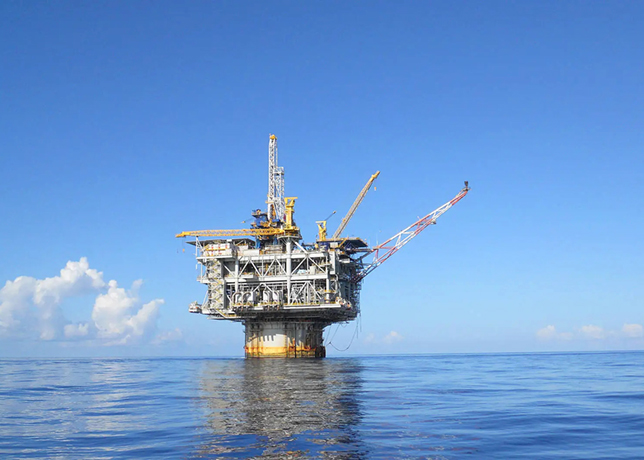
A large proportion of offshore platforms, subsea systems, and wells scheduled for removal were installed between the late 1970s and early 1990s.
These installations were originally engineered for operational lifetimes of 20 to 30 years but have frequently remained in service for 40 to 50 years through incremental life extensions.
As these assets age, operators face rising integrity risks, increasing inspection failures, and disproportionate operating costs that make continued production economically unjustifiable.
Common degradation issues include advanced corrosion in jackets and conductors, fatigue cracking in welded joints, obsolete control systems, and declining well integrity.
Insurers and regulators are tightening acceptance criteria for late-life operations, which reduces the financial attractiveness of extending production.
Once output falls below economic thresholds, decommissioning becomes the only viable compliance pathway.
Regulatory pressure is intensifying globally as governments close loopholes that previously allowed companies to delay abandonment obligations.
Authorities now increasingly require full financial assurance for decommissioning liabilities before approving continued operation.
In mature basins, licence extensions may be denied unless removal programmes are fully funded and scheduled for completion.
This tightening enforcement environment is illustrated by a December 2025 action identifying 13 operators behind schedule on decommissioning obligations in the UK North Sea.
REGULATION TIGHTENS GLOBALLY
Portfolio rationalisation by major energy companies is reinforcing the same trend.
 |
High capital intensity remains one of the decommissioning industry’s most significant constraints |
Large operators are divesting marginal offshore assets in order to redirect capital toward higher-return opportunities such as LNG projects, deepwater developments, and low-carbon investments.
Asset transfers often shift decommissioning liabilities to specialist firms that move quickly to execute removal programmes.
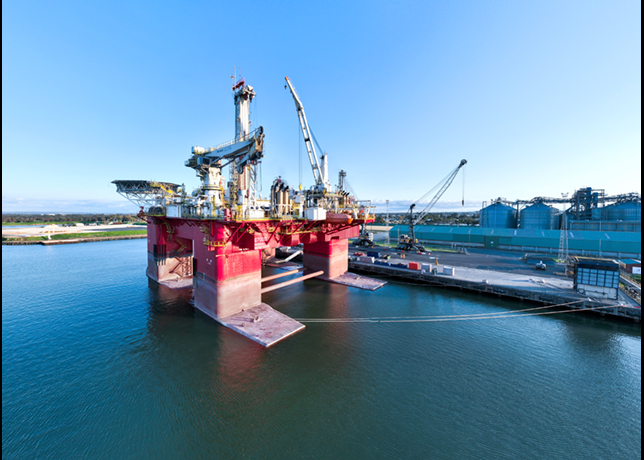
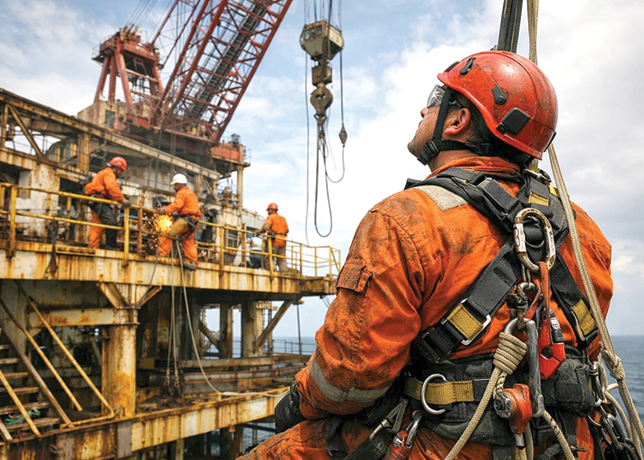
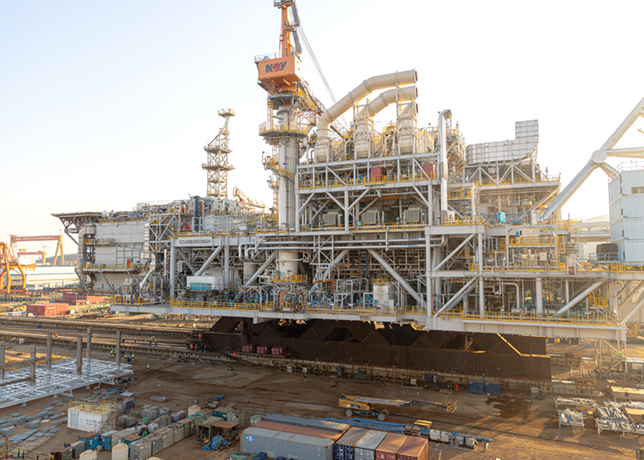
Operationally, platform preparation involves isolating systems, removing hazardous materials, and preparing structures for safe dismantling and transport.
Safety requirements prioritise risk reduction for personnel, while environmental standards focus on preventing pollution and ecological damage during removal.
Technological capability is becoming a decisive competitive factor among contractors as projects grow in scale and complexity.
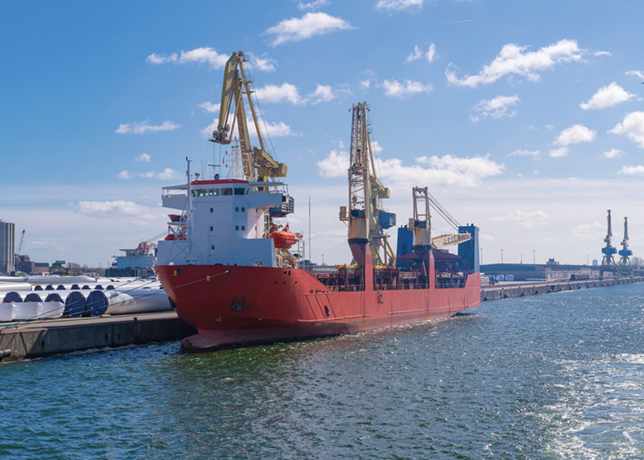
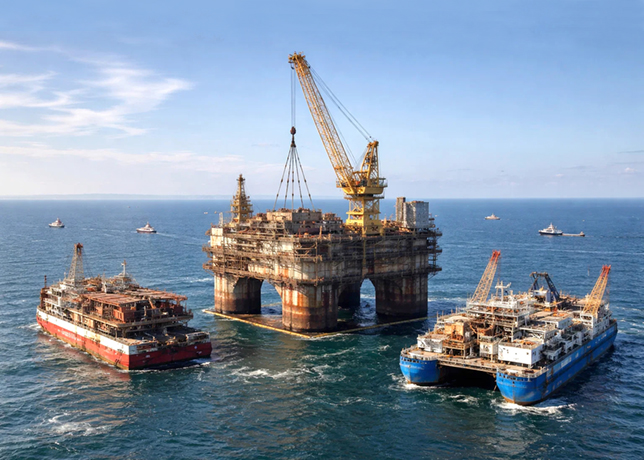
Ultra-heavy-lift vessels capable of removing entire offshore platforms in single lifts can significantly reduce project timelines, offshore exposure, and overall costs.
A major structural shift is occurring in contracting strategy across the sector.
Historically, offshore decommissioning projects were divided among multiple contractors handling separate scopes such as well plugging, topside removal, subsea recovery, and dismantling.
This fragmented model often created interface risks, duplicated mobilisation costs, schedule overruns, and liability disputes.
Operators are increasingly adopting integrated single-contract execution structures that assign full lifecycle responsibility to one lead contractor or consortium.
Such arrangements allow costs to be locked in earlier, execution risk to be transferred, and regulatory compliance to be simplified through a single accountable entity.
Contractors offering combined capabilities including heavy-lift removal, subsea services, well abandonment coordination, and certified recycling access are gaining competitive advantage.
Water depth also influences market dynamics because shallow-water projects generally involve easier access and lower lifting complexity than deepwater operations.
Despite strong growth drivers, high capital intensity remains one of the industry’s most significant constraints.
Decommissioning expenditures are heavily front-loaded and require substantial upfront funding for well plugging heavy-lift mobilisation, subsea clearance, and dismantling.
Operators managing multiple late-life assets must balance these costs against ongoing capital expenditure priorities, which can delay full execution.
Cost uncertainty adds further complexity because subsurface conditions and incomplete documentation frequently create scope changes during projects.
Undocumented well modifications, unknown cement quality, and gaps in legacy infrastructure records are common in older offshore developments.
Harsh offshore weather conditions can also disrupt vessel schedules, leading to overruns that escalate budgets beyond initial estimates.
At the same time, several structural opportunities are emerging that support long-term industry expansion.
EMERGING COMMERCIAL OPPORTUNITIES
Operators are increasingly bundling multiple platforms, wells, and subsea assets into basin-wide or multi-field programmes.
Project aggregation enables contractors to secure long-term framework agreements that improve fleet utilisation and create repeatable execution efficiencies.
Another growth avenue is the rise of specialist firms acquiring end-of-life offshore assets specifically to carry out decommissioning using lean operating models.
This shift is expanding demand for advisory, engineering, and execution partners with deep technical expertise in removal operations.
Execution complexity remains a defining operational challenge because many offshore fields were developed decades ago before standardised digital asset management existed.
Incomplete as-built drawings, inconsistent modification records, and missing historical data increase uncertainty during planning.
Such gaps raise the risk of encountering unknown well conditions, undocumented tie-ins, or degraded materials during removal.
By service type, well decommissioning represented the largest share of the global market in 2025 because it is both cost-intensive and volume-driven.
Well plugging and abandonment typically accounts for between 45 and 60 per cent of total offshore decommissioning expenditure depending on basin maturity and complexity.
Regulators estimate that more than 7,500 offshore wells in the UK North Sea alone will require permanent abandonment during the next three decades.
The well decommissioning segment is projected to grow at a compound annual rate of 8.92 per cent, making it the fastest-expanding service category.
By infrastructure category, wells also dominated the market in 2025 because every offshore field contains multiple wells that must be permanently plugged and abandoned.
Abandonment is a mandatory legal requirement, unlike topsides or subsea structures that may sometimes be partially left in place.
High well counts across mature basins reinforce this structural dominance.
Many older wells were drilled before modern barrier and cementing standards were introduced, which increases technical complexity during closure.
The topsides infrastructure segment is expected to expand at a compound annual growth rate of 7.35 per cent.
By water depth, ultra-deepwater projects dominated the market in 2025 because they combine the highest capital intensity, regulatory exposure, and well complexity.
Such developments rely heavily on subsea architectures with long tiebacks and high well counts, leaving wells as the primary decommissioning liability once host facilities are retired.
The shallow-water segment is forecast to grow at a compound annual rate of 7.77 per cent as ageing platforms approach retirement thresholds.
REGIONAL MARKET LANDSCAPE
North America is projected to record growth of 7.06 per cent, driven largely by the maturity and scale of the US Gulf of Mexico.
Offshore development there dates back to the 1940s, creating one of the world’s oldest producing offshore basins.
The basin contains more than 14,000 inactive offshore wells and over 2,000 decommissioned platforms, ensuring a continuous pipeline of removal work.
The United States alone accounted for approximately 26.49 per cent of global offshore decommissioning revenues in 2025.
Europe’s market reached $4.23 billion in 2025 and maintained leadership in 2026 with $4.52 billion.
More than 600 fixed platforms and over 10,000 offshore wells in the North Sea are scheduled for removal over coming decades, forming one of the world’s largest predictable project pipelines.
Asia Pacific ranked as the third-largest regional market at $1.48 billion in 2025 as ageing infrastructure and tightening regulation drive activity.
Australia recorded approximately $0.77 billion in revenues that year, while Malaysia accounted for about $0.28 billion and Indonesia for roughly $0.15 billion.
Many offshore fields across Southeast Asia and Australia were developed between the late 1970s and 1990s using fixed platforms that are now approaching or exceeding economic life.
Declining production and rising integrity issues are forcing operators in these regions to initiate abandonment programmes.
The market in the rest of the world is projected to reach $0.51 billion in 2025, reflecting moderate but uneven growth across Latin America, the Middle East, and Africa.
Ageing first-generation offshore assets are creating demand in these regions, although limited local execution capacity and delayed enforcement constrain progress.
The competitive landscape is fragmented, with contractors pursuing partnerships, regulatory approvals, and technological advancement to increase market share.
Major industry players include Allseas Group, Heerema Marine Contractors, Boskalis Westminster, DEME Offshore, Saipem, Subsea7, TechnipFMC, Aker Solutions, AF Gruppen, and DeepOcean.
Some recent contract awards also illustrate the scale of ongoing activity.
• In January 2026, a contract covering dismantling and recycling of a floating production platform weighing about 23,000 metric tonnes was valued between NOK 225 million and NOK 275 million.
• An October 2025 award covered engineering, preparation, and removal of a North Sea platform topside and jacket.
• A December 2025 contract involved subsea pipeline flushing, seabed clearance, and engineering for decommissioning floating facilities, with offshore work scheduled to begin in 2026.
• A February 2025 project involving survey and preparation for removal of three bridge-linked platforms on the UK Continental Shelf was valued between $10.5 and $13 million.
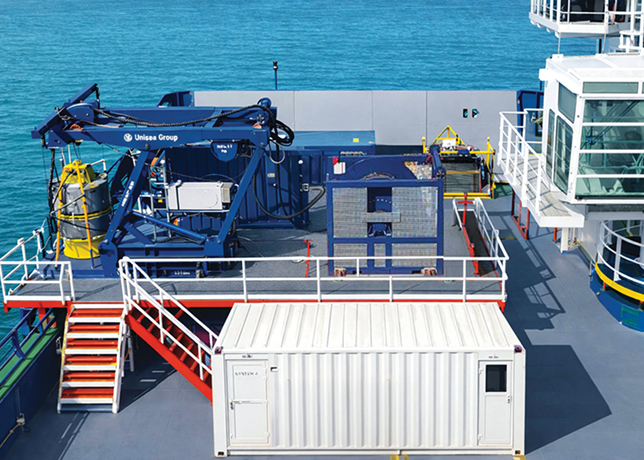
Meanwhile, advanced intervention technologies and digital monitoring systems are strengthening contractor positioning in competitive tenders.
Overall, the convergence of ageing assets, regulatory enforcement, capital allocation priorities, and technological capability is defining the long-term trajectory of the offshore decommissioning industry through 2034.