

























Vision 2030 places industrial diversification and operational excellence at the heart of Saudi Arabia’s economic future.
For high-capacity operators such as SABIC, one of the world’s largest diversified chemical companies and a key Vision 2030 enabler, performance reliability, safety and operational efficiency are not abstract priorities.
They translate every day into the availability of the rotating equipment, electrical infrastructure and supporting systems on which the wider business depends.
That challenge is increasingly urgent across the Kingdom. As Saudi Arabia accelerates industrial diversification under Vision 2030, operators are raising the bar for asset uptime, lowering their tolerance for surprise outages and seeking ways to extract greater confidence from the data their monitoring systems already produce — all against a tightening talent backdrop.
Saudi Arabia is projected to face a skilled-worker shortage of 663,000 by 2030, according to Korn Ferry, with unrealised revenue running into hundreds of billions of dollars.
The reliability question is no longer whether condition data exists, but whether organisations can turn it into decisions quickly enough to matter, sufficiently validated to act on and without being held back by a shortage of the specialist engineering expertise required to interpret it.
THE RELIABILITY GAP
Conventional approaches to rotating-asset monitoring rely heavily on vibration analysis, and rightly so: Vibration data is one of the most dependable early warning signals for mechanical faults such as imbalance, misalignment and bearing degradation.
But it’s only part of the picture, and a significant share of motor failures originates on the electrical side, including insulation degradation, stator faults, supply quality issues.
Such issues do not always announce themselves in a vibration signature until well advanced.
Two further problems persist even where the data points are comprehensive.
The first is signal-to-noise: modern platforms can flood maintenance teams with alerts, many of them false positives, leaving genuine issues hidden under routine notifications.
The second is interpretation, as sensor data becomes useful only when someone with the right experience can translate it into a confident maintenance decision.
A CO-ENGINEERED MODEL
Megger Industrial Reliability (MIR) is built around a deliberately different proposition.
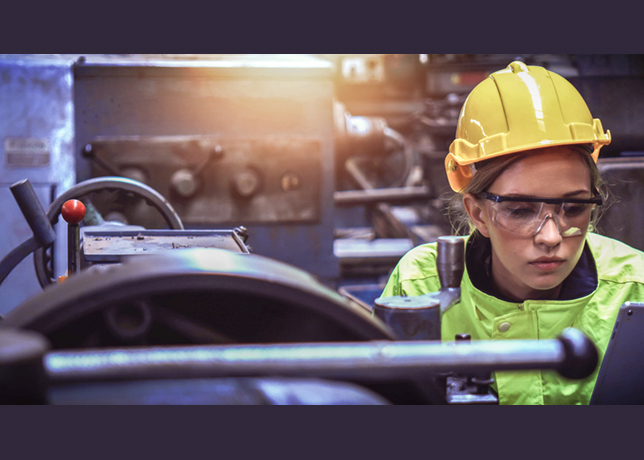
MIR combines mechanical and electrical methods to give rotating a fuller picture of asset health
Rather than supplying instruments and software for customers to operate themselves, MIR delivers reliability as a complete service: Wired and wireless vibration sensors developed in-house, the OPUS AI analytics platform and a team of specialist reliability engineers who function as an extension of the operator’s team.
This Co-Engineer™ approach has a guiding principle: To deliver answers, not data.
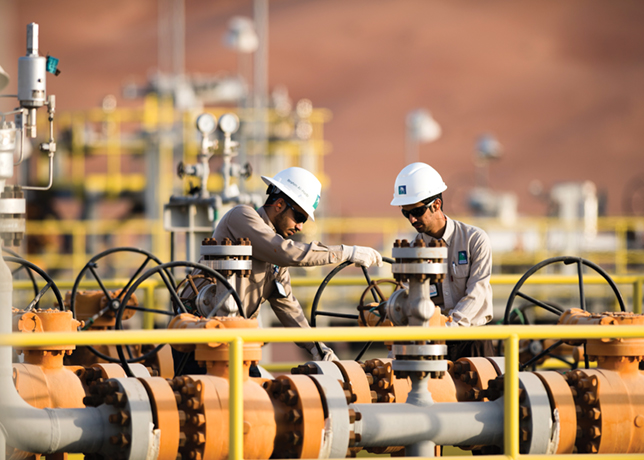
The technical foundation begins on the asset. Sensors on critical rotating equipment including motors, pumps, fans, compressors and gearboxes capture continuous vibration signatures, identifying the early indicators of imbalance, misalignment and bearing wear that precede most mechanical failures.
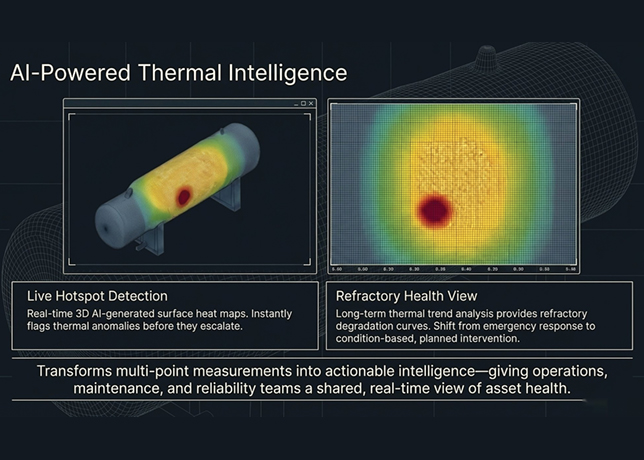
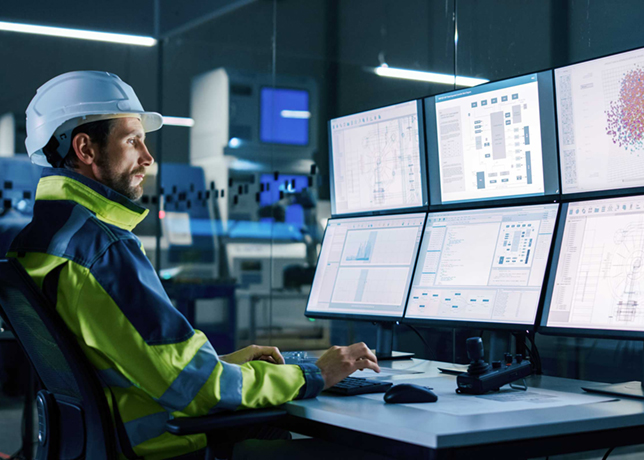
The OPUS platform then ingests, classifies and analyses that data, suppressing false alarms and surfacing the signals that genuinely warrant attention.
Where other platforms can leave engineers to interpret outputs largely on their own, MIR’s reliability specialists pick up where the AI leaves off, validating critical findings, contextualising them against asset history and recommending specific actions for the maintenance team.
The result is a service that functions regardless of the size of the operator’s in-house reliability team.
For those with established expertise, MIR augments and accelerates existing work.
For operators with a more pronounced skills gap, MIR effectively delivers a capability that would take years to build internally.
In both cases, the promise is the same: validated diagnostic insight, continuously available, supported by 25 years of condition-monitoring expertise.
CO-E™: ENGINEERING JUDGEMENT AT MACHINE SPEED
Central to the OPUS proposition is Co-E™, the AI engine that that powers the service’s always-on diagnostic depth.
It does not simply detect anomalies and forward them as alerts; it classifies and contextualises them, then recommends a course of action, work that would otherwise consume hours of engineering time per incident.
For reliability and maintenance teams, the practical effect is twofold. Routine pattern analysis is handled at machine speed and scale, freeing specialists to focus on the high-value interventions that benefit most from human judgement.
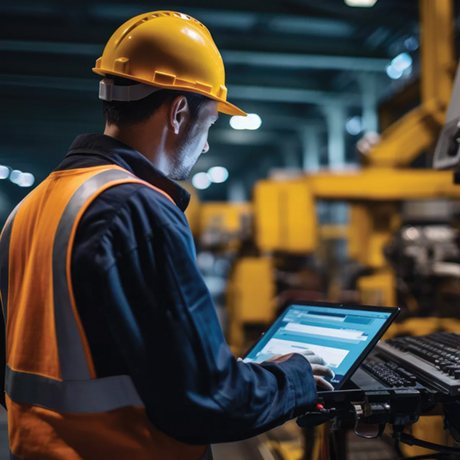
Industrial asset monitoring ... MIR delivers reliability as a complete service
The same diagnostic capability is also available to analysts and non-experts, with recommendations expressed in actionable terms.
Co-E does not replace the reliability engineer, it scales them. In a regional market where experienced specialists are in short supply, that’s a serious competitive advantage.
THE ELECTRICAL DIMENSION
Vibration monitoring is only part of the MIR diagnostic toolkit. The service draws on Megger’s heritage in electrical testing, including the Baker Instruments lineage, along with partial discharge measurement capability.
Combining mechanical and electrical methods gives rotating machines a fuller picture of asset health than vibration-only services can offer electrical faults, which account for a considerable share of motor failures, become visible alongside mechanical faults.
The result is fewer blind spots and earlier intervention on issues that would otherwise surface only at the point of failure
BUILT TO DEPLOY
For plant managers wary of integration projects that overrun, MIR’s architecture is deliberately self-contained.
Sensors, analytics, software and expertise are developed in-house and designed together, and not assembled from third-party components.
Following an onsite assessment, deployment is wired or wireless to suit the site, retrofit-friendly on existing assets, and accountable through a single relationship rather than a chain of vendors.
For operations and digital transformation leaders, that single-point accountability simplifies procurement and reduces multi-vendor implementation risk.
A MEASURABLE SHIFT
The aggregate effect is a measurable shift in how reliability is managed: From reactive intervention to planned action, raw data to validated decisions, skills-gap bottleneck to scalable diagnostic capability.
For SABIC and the wider population of high-capacity operators across the Kingdom, those outcomes align with Vision 2030’s emphasis on operational excellence and long-term industrial competitiveness: Less unplanned downtime, longer asset life, safer working environments.
For operators ready to move beyond data-rich, decision-poor monitoring, Megger Industrial Reliability offers a co-engineered alternative designed to deliver the validated insight, scalable expertise and operational visibility the Kingdom’s industrial ambitions increasingly demand.