



















By Abdulaziz Khattak
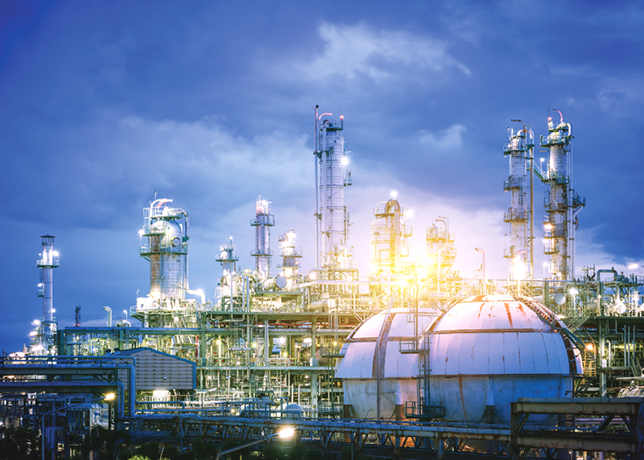
SABIC, the Saudi global chemical leader, is driving global supply chain realignment amidst unprecedented industrial fragmentation and market volatility.
The global petrochemical sector is transitioning from post-pandemic recovery into a landscape defined by economic fragility, trade fragmentation, and intense margin compression.
Macroeconomic dynamics, including historical restrictive monetary policies, persistent core inflation in developed economies, and structural oversupply from aggressive capacity additions in China and the US, have exerted significant downward pressure on global petrochemical pricing.
In response to these challenging conditions, the regional landscape has shifted towards regional blocs, with businesses prioritising localised manufacturing and supply chain resilience over traditional cost-optimisation models.
For industry participants, navigating this era of economic divergence requires clear financial objectives, structural efficiency improvements, and disciplined capital allocation to underwrite long-term commercial survival.
SABIC has adapted to these headwinds by executing a tripartite corporate strategy centred on portfolio optimisation, corporate transformation, and selective growth.
Operating across 44 countries with over 26,000 employees and 60 production sites serving over 140 markets, the company has consolidated its identity as a global leader in chemicals, polymers, and agri-nutrients.
As of December 31, 2025, the company maintained an A+ credit rating and a patent portfolio exceeding 10,700 accredited patents, introducing 148 new product applications during the year while recording a total production volume of 55.5 million metric tonnes.
With total assets of SAR244.29 billion ($65.14 billion), the company generated $31 billion in sales revenue for 2025, representing a modest 1 per cent year-on-year decline due to lower average selling prices.
The strategic pivot accelerated rapidly into the first quarter of 2026, where the company recorded a revenue of $6.97 billion, representing a 6 per cent quarter-on-quarter decrease.
CAPITAL ALLOCATION & ASSET OPTIMISATION
To enhance structural capital allocation and fortify long-term financial resilience, the company finalised two major divestment agreements at the start of 2026, targeting the complete exit of its European petrochemicals business and its engineering thermoplastics business in the Americas and Europe.
These segments were designated as discontinued operations in financial reporting, freeing up critical resources to be reallocated toward advantaged asset-product-market combinations.
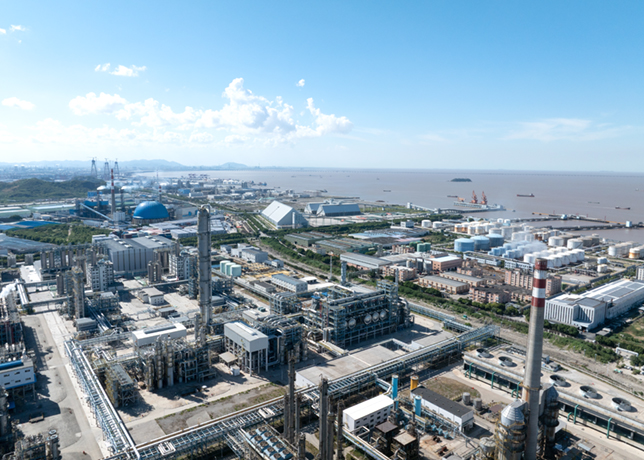
Concurrently, capital deployment has focused heavily on selective growth within high-margin geographies, primarily evidenced by the SABIC Fujian integrated petrochemicals complex in China.
This asset, representing a $6.4 billion investment, advanced systematically through its execution schedule to reach approximately 98 per cent completion by the end of the first quarter of 2026, positioning the company to capture downstream demand within the expanding Asian industrial production sector.
Domestic manufacturing capabilities inside Saudi Arabia underwent substantial scale expansions throughout 2025 via targeted debottlenecking and technology integration.
The company commissioned the Low Temperature Recovery System (LTRS-1) at the Ibn Zahr facility, optimising C3 and C4 hydrocarbon streams to achieve a 99 per cent feedstock recovery rate, which effectively added 50 kilotonnes of annual methyl tert-butyl ether (MTBE) production capacity.
Simultaneously, the organisation upscaled the MTBE plant at Petrokemya utilising proprietary technologies.
This engineering deployment established one of the largest single-train MTBE production lines globally, effectively doubling its prior operating baseline to achieve a combined annual capacity of approximately one million metric tonnes per annum.
Reliability across other chemical verticals was reinforced by installing a permanent antioxidant dosing system for 2-ethylhexanol, preserving product quality metrics against high summer temperature peaks.
Technical capacity upgrades also targeted specialised chemical catalyst production to insulate regional supply chains from external disruption.
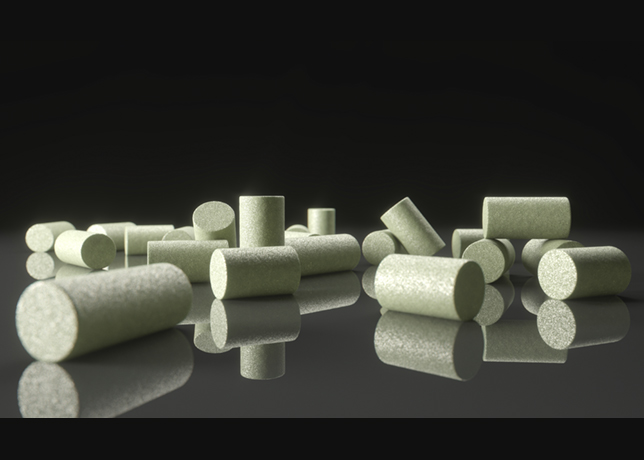
Scientific Design fully commercialised the SynDox 468 catalyst, which expanded operating lifetimes and enhanced synthesis performance margins.
Furthermore, a new BuCat catalyst production plant was commissioned at the Petrokemya site, directly scaling up manufacturing volumes to support internal linear alpha olefins businesses alongside external local and global market demand.
The corporate transformation programme delivered substantial technical returns, yielding a 40 per cent year-on-year improvement in total manufacturing plant reliability across the global network during 2025.
TECHNOLOGY COMMERCIALISATION UNDERPINS CIRCULAR CARBON ECONOMY
The regulatory and commercial push toward decarbonisation has converted the corporate innovation agenda into a mechanism for product differentiation, utilising the frameworks of a circular carbon economy to synthesise lower-carbon-intensity alternatives.
A primary milestone was established via the first commercial sale of certified low-carbon methanol, generated by capturing and converting byproduct carbon dioxide emissions.
The organisation subsequently secured formal certification for low-carbon methyl methacrylate (MMA), establishing a sustainable material pathway for automotive, coatings, adhesives, and construction applications by utilising low-carbon methanol formulated from captured carbon dioxide.
Downstream product validation extended into the glycols vertical, where the United ethylene glycol plant in Jubail successfully manufactured circular chemicals utilising captured carbon dioxide streams.
The resulting glycols and linear alpha olefins lines obtained formal TUV Rheinland certification for their product carbon footprints, verifying full compliance with Together for Sustainability (TfS) and ISO 14067 protocols.
This was supplemented by obtaining ISCC CFC certification for glycols, confirming the quantitative avoidance of carbon dioxide emissions through raw material substitution.
In parallel, scientific design advanced sustainable ethylene oxide and ethylene glycol technologies featuring integrated carbon dioxide purification modules, demonstrating the technical capacity to lower baseline production emissions by up to 40 per cent.
Specialty chemical formulations were expanded via investments at the Saudi Kayan complex, where a new polyethylene glycol (PEG) facility commenced operations.
This asset expanded the ethoxylates portfolio through the production of high-molecular-weight polyethylene glycols (HMW PEGs) tailored for the specialised personal care and pharmaceutical sectors.
These advanced materials portfolios achieved external validation, marked by the R&D 100 Award for a fire-retardant, fibre-filled polypropylene composite applied in electric vehicle battery enclosures, alongside six separate material innovations securing Edison Awards.
NATIONAL INDUSTRIAL ALIGNMENT SECURES DOMESTIC MARKET EXPANSION
The economic decision-making behind domestic capital projects is explicitly tied to Saudi Vision 2030 and the National Industrial Strategy, with the company functioning as the national chemicals champion to drive local content development and industrial multiplication.
During 2025, the firm directed 56 per cent of its total procurement and operational expenditures into the domestic economy, a metric validated by its official local content score.
This localisation framework was reinforced by the formal receipt of the local content certificate from the Local Content and Government Procurement Authority (LCGPA), which audited the 2024 financial statements to confirm the baseline credibility of the NUSANED localisation initiative.
Strategic integration with the domestic industrial ecosystem advanced through a major regulatory milestone in early 2026, when the Ministry of Energy granted formal feedstock-allocation approval for an expansion of domestic fertiliser infrastructure.
This regulatory authorisation enables a potential 54 per cent capacity increase in annual urea production, raising the baseline from approximately 4.8 million metric tonnes to 7.4 million metric tonnes, positioning SABIC Agri-Nutrients as a national champion in the global nitrogenous fertiliser market.
To further cultivate local downstream supply chains, the company signed a strategic agreement with the Public Investment Fund (PIF)–Pirelli joint venture, facilitating the domestic manufacture of 3.5 million tires annually within Saudi Arabia and directly advancing the commercial targets of the NUSANED programme.
Industrial integration also involved direct physical infrastructure linkups and cross-stream utilisation projects with national partners.
The company partnered with a local downstream producer to tie directly into its benzene pipeline network, establishing the foundation for a long-term supply agreement to satisfy domestic benzene demand.
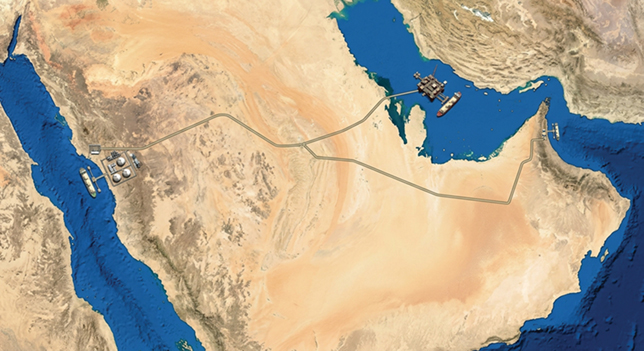
Furthermore, the company and other Saudi Aramco affiliates commissioned shared infrastructure across the east and west coasts of Saudi Arabia, enabling the commercial capture and conversion of pyrolysis oils into higher-value chemical applications.
MACROECONOMIC HEADWINDS & OPERATIONAL RATIONALISATION DICTATE OUTLOOK FOR 2026
The global chemical industry enters 2026 under cautious operating assumptions, as cumulative global supply additions are projected to continuously outpace aggregate demand growth.
The macroeconomic environment indicates a period of low-growth stabilisation, where the delayed impacts of protectionist industrial trade policies and lingering fiscal consolidations will continue to suppress consumer spending and large-scale capital investments.
These suppressed margins and elevated historical feedstock costs are expected to trigger a phase of necessary global asset rationalisation, driving the closure of older, inefficient production lines across Europe and Asia.
Industrial output within the US will likely remain constrained by trade barriers and rising material input costs, while the European Union continues to manage the structural impacts of elevated energy costs and softened industrial export demand.
This slowdown across major Western industrial economies is anticipated to decelerate production growth rates throughout Asia, even though India, China, and Southeast Asia remain the primary long-term engines of global chemical demand.
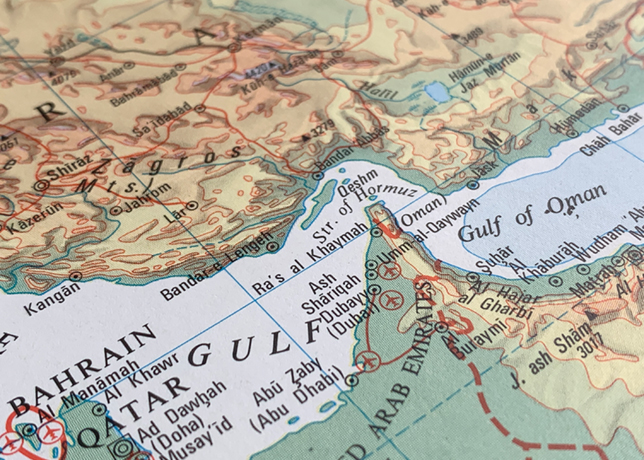
Feedstock dynamics are expected to mirror this regionalisation; for instance, Chinese industrial buyers are actively diversifying their supply chains away from US liquefied petroleum gases due to tariff policy uncertainty, shifting their long-term sourcing requirements toward the Arabian Gulf.
To insulate its financial structure from these macro-systemic risks, the organisation has extended its corporate transformation timelines through the deployment of an upgraded enterprise resource planning platform.
This digital infrastructure integrates institutional workflows to enable the broadened application of artificial intelligence (AI) across production, procurement, and logistical networks, building upon the hundreds of artificial intelligence applications already operational in 2025.
The company has established a long-term local content target framework extending through 2040 to maintain alignment with the Saudi National Industrial Strategy (NIS), focusing future domestic capital expenditure on strengthening value-chain linkages, scaling proven technologies, and protecting corporate financial performance throughout the down-cycle.