





































The global energy landscape is undergoing a profound transformation, driven by the increasing importance for energy security and decarbonisation.
Pipelines remain the backbone of this system, transporting vast volumes of hydrocarbons and emerging low carbon fuels across continents, ensuring reliable and continuous supply to industries and communities.
As demand evolves, so too must the infrastructure that underpins it.
Today, operators are increasingly focused on diversifying energy sources and reducing reliance on traditional fossil fuels.
Emerging low-carbon alternatives such as ammonia, methanol, hydrogen, and biofuels are gaining traction as viable components of the future energy mix.
These future fuels present significant opportunities to reduce emissions, but also introduce unique technical and safety challenges, particularly in high-pressure transmission environments.
Supporting this transition requires proven, high-integrity technologies.
STATS Group’s BISEP® a hot tap installed line stopping tool, has played a critical role for over two decades.
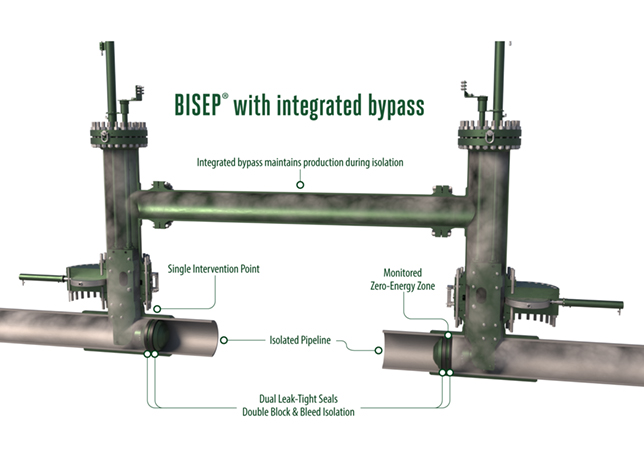
The BISEP delivers leak-tight, double block and bleed isolation, creating a verifiable zero-energy zone through dual independent seals and continuous monitoring.
This capability enables maintenance without shutdown, eliminating the need for venting or flaring and maintaining production continuity.
As pipeline networks adapt to carry next-generation fuels, robust isolation solutions like BISEP will be essential in ensuring safety, operational efficiency, and environmental stewardship.
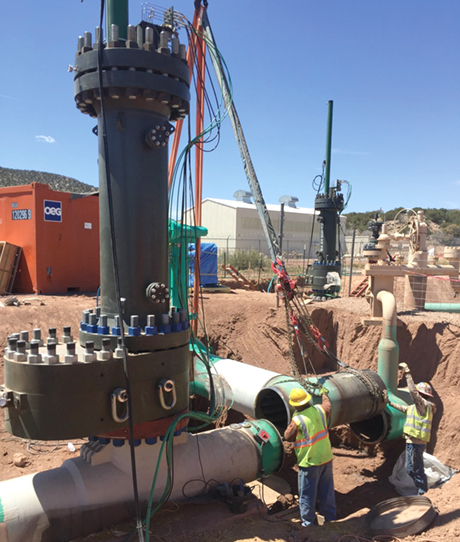
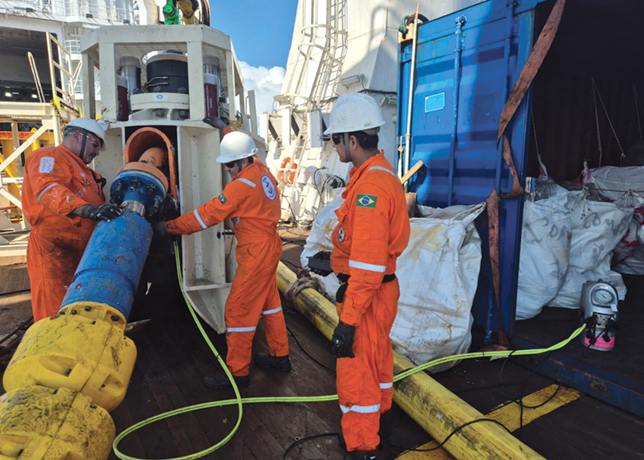
30-in BISEP, Isolationg high pressure liquid CO2 in New Mexico, US
LEAK-TIGHT ISOLATION FOR HYDROGEN NETWORKS
A recent milestone demonstrating this capability was achieved on a high-pressure 18-inch hydrogen pipeline for SGN, a gas distribution company in the UK.
The LTS Futures project, led by SGN, is a pioneering initiative exploring how the UK’s Local Transmission System (LTS) can be repurposed from natural gas to hydrogen, supporting the transition to a low carbon energy system.
Conducted on a 30 km live pipeline, the project demonstrated that existing infrastructure can safely transport hydrogen, helping create a scalable, cost-effective pathway to net-zero.
STATS operations included the installation of a grouted tee, hot tapping, line stopping, and completion plug installation.
At the core of the project was the STATS BISEP line stopping tool, which was proven to deliver a fail-safe, 100 per cent leak-tight double block and bleed isolation.
This is particularly significant given hydrogen’s small molecular size and increased propensity to leak compared to natural gas.
By successfully proving that safe, leak-tight isolation can be achieved on high-pressure hydrogen pipelines, STATS has helped qualify essential technology for future fuel networks.
This removes a key barrier to maintenance and repair operations, ensuring pipelines can be safely adapted and managed over time.
Ultimately, this supports the wider adoption of hydrogen by enabling the safe operation of repurposed infrastructure, reducing emissions, and accelerating the industry’s transition toward a resilient, low carbon future.
In addition to this hydrogen success, the BISEP has also been successfully deployed on dense-phase CO2 pipelines in New Mexico, US, further demonstrating its unique capabilities and positioning it as a key technology in support of the energy transition.
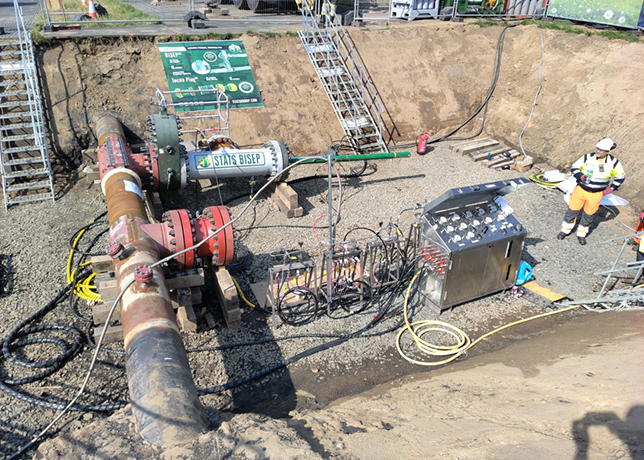
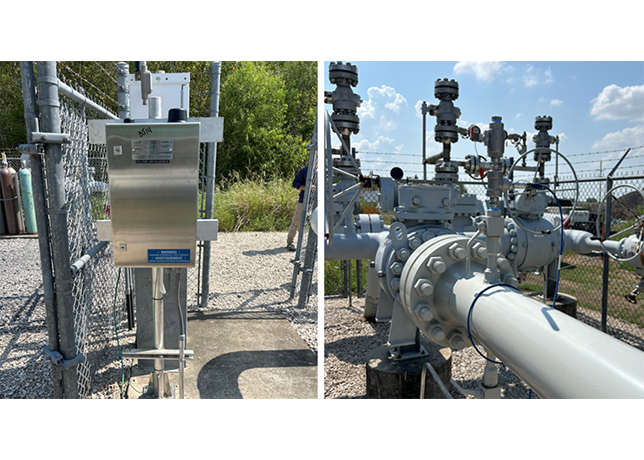
BISEP deployed in high-pressure hydrogen pipeline for SGN in the UK
DENSE PHASE CO2
Further demonstrating its versatility, the BISEP has also been deployed on dense phase CO2pipelines in the US.
A multi-location project on the Cortez pipeline marked the world’s first, hot tap installed, proven double block and bleed isolation on a live CO2system operating at over 150 bar, without interrupting production.
The Cortez project highlighted significant technical challenges: CO2 at high pressure exists in a supercritical state, but rapid depressurisation causes phase change, extreme cooling, and potential dry ice formation.
These effects risk material embrittlement, seal degradation, and blockage of pressure monitoring systems. To mitigate this, precise control of blowdown rates and nitrogen purging of the seal annulus were required to maintain safe temperatures and prevent solid formation.
Despite these complexities, the BISEP enabled safe mid-line isolation while maintaining flow via a bypass, avoiding downtime and environmental release.
Its fail-safe, self-energising seals and fully testable isolation make it the safest and most proven solution for high-pressure CO2 service.
PROVEN ISOLATION TECHNOLOGY
The BISEP is compatible with a wide range of pipeline diameters and pressures, with current applications extending up to 56 inches and pressures exceeding 150 bar.
Its proven performance across hydrocarbons, hydrogen, dense phase CO2, and high temperature steam highlights its versatility and relevance to both conventional and future energy networks.
As pipeline infrastructure evolves to accommodate low carbon fuels, the industry has a clear opportunity to reassess legacy standards, procedures and working practices.
Advanced isolation technologies provide a safer, more efficient alternative to traditional methods, enabling maintenance without shutdown while delivering enhanced environmental outcomes.
Mark Gault, Vice-President, Middle East, comments: “We’re excited about the future energy transition and the role STATS is playing in supporting our customers to achieve their net-zero goals and provide the highest level of safety during temporary pipeline isolation.
“Trusted by operators worldwide for over twenty years in hydrocarbon applications, the BISEP now brings its proven performance to emerging future fuels. Offering significant safety, efficiency, and environmental benefits over lip seal line stopping methods, this technology provides the industry with a best-in-class solution for temporary pipeline isolations, which are critical operations required throughout a pipeline’s lifecycle, including during repairs, diversions, and valve replacements”.
With proven performance in hydrogen and dense phase CO2 service, technologies such as the BISEP are helping to embed safer, more sustainable practices across the sector, ensuring that pipeline operations remain both technically robust and fit for a low-carbon future.