































By Abdulaziz Khattak
A Revolutionary hybrid flexible pipe will reshape global ultra-deepwater exploration by overcoming critical vessel constraints.
By reducing top tension weight by 40 per cent, this noncorrosive technology unlocks reserves previously considered inaccessible.
The infrastructure combines metallic tensile wires with thermoplastic composite pipe to maximise flow rates and lifecycle integrity, while this standardisation allows diverse contractors to deploy the technology without needing specialist vessels.
“The HFP will be the fastest track solution available to unlock ultradeep assets at an accelerated pace,” Daniel Wright, Global Business Leader – Flexible Pipe Systems, Baker Hughes, and Martin van Onna, CEO, Strohm, tell OGN energy magazine.
Below are excerpts from the interview:
• How will the development of a 50 per cent lighter hybrid flexible pipe for water depths exceeding 3,000 m reshape the ability of operators to access ultra-deepwater reserves, particularly in basins where traditional flexible pipe installation has become cost-prohibitive or vessel-constrained?
The hybrid flexible pipe (HFP) is 50 per cent lighter compared to a flexible pipe.
Our analysis has shown that when installed in 3000 m water depth, the weight at the top (whether installation vessel or production vessel) is still almost 40 per cent lower than the weight currently seen on flexible pipes.
This effectively means that the HFP enables operators to access and produce ultra-deepwater reserves, which were previously constrained by vessel availability and vessel top tension capability.
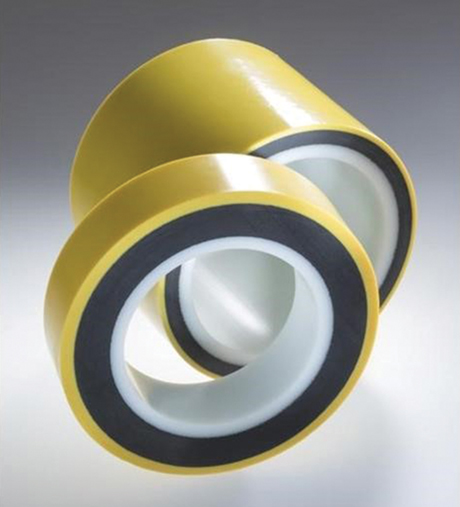
A cross-section of the Strohm TCP
In what ways could replacing the carcass, liner, and pressure armour with thermoplastic composite pipe in a hybrid design accelerate the shift from steel-based solutions, and what barriers to broader industry adoption do you foresee by 2028?
Flexible pipes have been around for five decades and earned their rightful place in the subsea market.
Especially in areas where the technology’s flexibility and spoolability was key, flexible pipes secured a significant part of the subsea pipeline market.
A good example is Brazil where the operator, Petrobras, prefers a single well tieback approach over manifolding, making flexible pipes the preferred solution.
Baker Hughes’ market-leading solutions for CO2 applications have been an important contributor to supporting this market.
The HFP concept takes this a step further as its smooth bore increases flow rates. The non-metallic thermoplastic composite pipe (TCP) improves HFP’s performance in corrosion prone environments, and the lower weight simplifies installation.
The fact that a pre-qualified TCP is used means that no changes need to be made to installation vessels and the minimum bend radius fits with the capabilities of today’s vessels.
Therefore, the HFP maintains the key benefits over steel, while expanding on the envelope for use.
With the hybrid pipe promising a 40 per cent reduction in suspended weight, how do you expect this to influence capital allocation decisions for deepwater projects, especially amid competition for limited high-tension installation vessels?
We see an increase in development activity in ultra-deepwater, and this will only become stronger in the wider context of the Middle Eastern conflict.
As the HFP displays such a significant weight reduction, the installation options increase, installation costs decrease, and variance in costing estimates reduce, meaning that cost predictions will be more accurate.
We believe that all this will result in more and easier capital allocation for deepwater projects in the future.
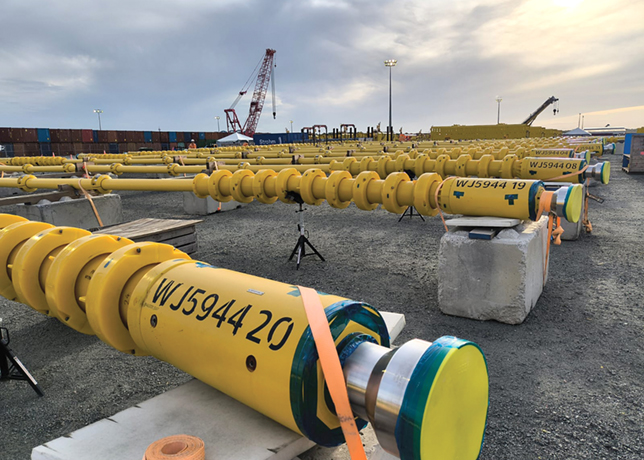
Strohm’s jumper on demand concept
Given persistent supply chain constraints and the shortage of suitable installation vessels, how significant is the potential for lighter-weight composite-hybrid technologies to mitigate execution risks and schedule overruns in ultra-deepwater developments?
By having a product that is significantly lighter, we provide operators with more choices regarding the best way to install the product, which improves schedules, lowers cost, and reduces risks.
We see a standardisation effort ongoing in the industry which can be supported by this product, as the HFP can be handled in the same way as a conventional flexible pipe, however, it allows for installation in deeper waters.
What level of delivered cost reduction per kilometre of flowline or riser would be required for this hybrid solution to meaningfully move the internal rate of return threshold for marginal deepwater fields, or enhance the competitiveness of GCC operators’ global upstream portfolios?
Cost reductions are considered on a lifetime basis, including the cost of product, cost of installation, and cost during life of field operations.
With all other things being equal, there is no cost reduction considered required for ultra-deepwater compared to the current plays.
By using HFP, the installation vessels, methodologies and, therefore, cost, remain the same.
With thermoplastic composite pipe offering corrosion resistance and a strong operational track record, how do you assess the trade-offs in fatigue performance, design predictability, and long-term integrity compared with traditional flexible pipe systems in high-pressure, high-temperature environments?
The TCP used in the HFP is a field proven and pre-qualified composite pipe based on carbon fibre and PA12 polymer.
This features a product, which does not suffer from fatigue, creep or corrosion, thereby providing the highest levels of predictability.
In full scale testing under end-of-life conditions, test results show a scatter of less than 2 per cent on the most critical tests, thereby providing the highest level of design predictability and long-term integrity.
The overall HFP product benefits from the excellent strength and fatigue capability of metallic tensile wires, with validated design methodologies proven through decades of service in harsh environments.
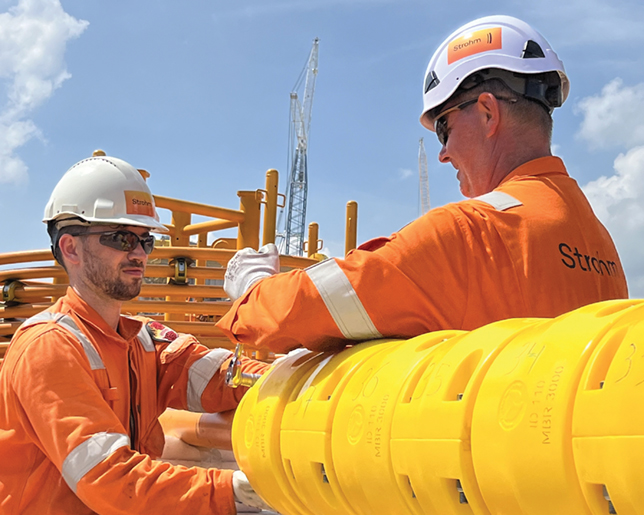
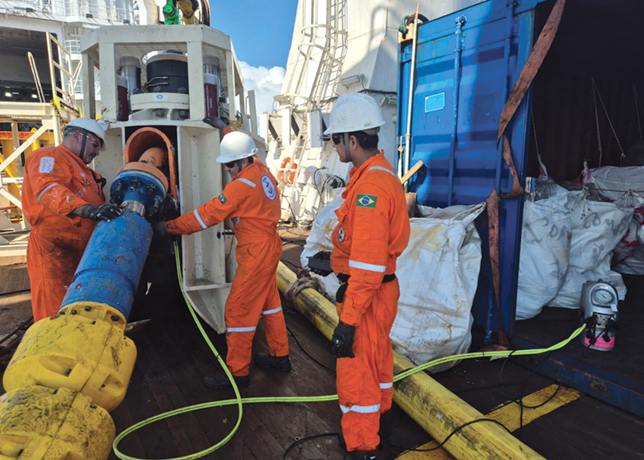
TCP can be deployed as a fast-track solution and terminated in the field
How might accelerated qualification and deployment of lighter, lower-carbon footprint pipe technologies interact with evolving regulatory expectations around methane emissions, local content requirements, or energy security priorities in key deepwater jurisdictions?
The use of proven materials, a pre-qualified TCP and a HFP based on a fully proven conventional flexible pipe enables the fastest possible qualification.
Both Baker Hughes and Strohm provide a wealth of test and qualification data to both the operators and regulators, enabling them to accept and certify the HFP as quickly as possible.
Considering Baker Hughes’ global footprint this means that the HFP can be manufactured in any of our locations around the world, providing ample local content opportunities.
Finally, especially in a time of high volatility, the HFP will be the fastest track solution available to unlock ultradeep assets at an accelerated pace.
Does this collaboration signal the beginning of a broader materials transition in subsea infrastructure, or is it more likely to remain a niche solution for the most challenging ultra-deepwater developments?
In the past few decades, composite materials have found their way into various subsea applications, ranging from umbilicals to mooring systems and subsea structures, jumpers, flowlines, and risers.
As the industry continues to face more ageing fields and subsequently ageing infrastructures, the most fundamental of all benefits of composites, namely the total lack of corrosion, means that we believe it will continue to grow to capture a significant part of the market and subsea applications.
Looking ahead to 2030, how do you see technologies such as hybrid flexible pipes influencing competitive dynamics between international oil companies, national oil companies, and specialist contractors, particularly in terms of project sanctioning timelines and overall deepwater production growth forecasts?
We see a tendency towards standardisation, which reduces risk, upfront engineering, and with that, timelines.
The HFP is designed to behave in the same way as existing flexible pipes, albeit lighter and installable in deeper waters, which means that a wide variety of installation contractors can install this product without requiring new specialist experience.
This means that both international and national oil companies will be able to benefit from the wide experience base out there, with a larger group of companies able to install the product.
Ultimately, it means that more ultra-deepwater frontiers will be ready to be developed using standard approaches.