













































In energy production, downtime is not just inconvenient; it’s a measurable and often significant commercial cost.
This is especially true as we are buffeted by strong geopolitical headwinds, which put greater focus on consistent supply and strong financials.
A floating production storage and offloading (FPSO) unit operating in a strategically important location recently experienced an unplanned compressor gearbox failure that could have been detected in advance.
The asset sat offline for nearly 20 days, and between lost production and remediation costs, the business absorbed losses exceeding $37 million.
This one incident alone highlights the clear gap in the condition monitoring chain and the opportunities for new forms of oil condition monitoring.
This is not an isolated story, but an illustration of a structural problem, one that is becoming harder to ignore as operators face a perfect storm of pressures.
Volatile oil prices, ambitious uptime targets, and a shrinking workforce are putting increased pressure on condition monitoring.
MIND THE CRITICAL GAP
FPSO operators have historically invested heavily in condition monitoring, and with good reason.
With many setting availability targets exceeding 90 per cent, and holding teams personally accountable for hitting them, the motivation is clear.
Technologies for monitoring pressure, temperature, vibration, and humidity are well established and widely deployed; but the same cannot be said for lubricants.
Lubrication is essentially the lifeblood of machinery, yet it has remained difficult to monitor continuously.
Until now, operators have relied on manual oil sampling.
This intermittent approach often requires a technician, a sample bottle, a courier and a laboratory.
In some geographies, the round trip from sample collection to actionable insight can take up to 2.5 months.
For critical machinery, this wait could have significant consequences for long-term reliability and performance.
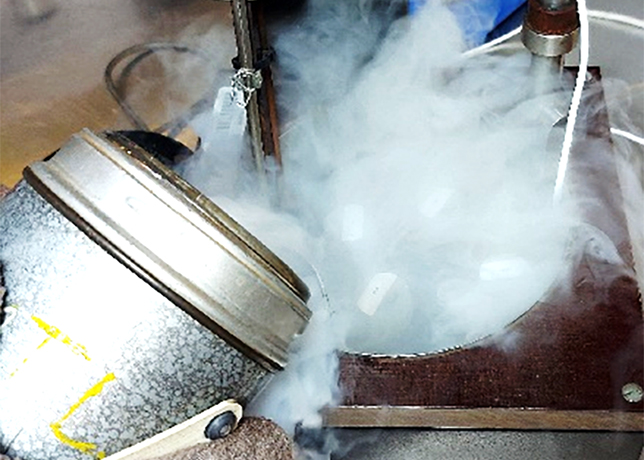
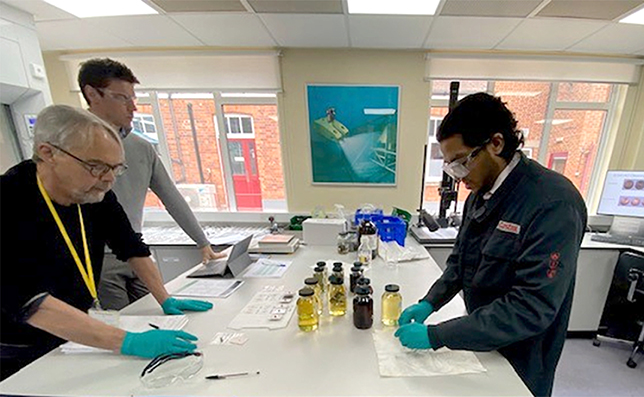
Castrol fluids being tested down to -70 deg C using an ethanol bath with liquid nitrogen charge
TREND ANALYSIS IMPORTANCE
Mounting industry pressures are putting the spotlight on the status quo.
Asset redundancy, once a standard practice, has been eroded by cost pressures.
In the past, assets had both duty and stand-by units available on specific equipment. However, due to optimisation, many now operate on a single unit.
Every hour of unplanned downtime on that single piece of equipment carries a full commercial impact.
Workforce availability presents an equally serious challenge.
An overall decline in the number of available industry workforce is accelerating the need for automation.
Oil sampling, once a dedicated function, now frequently occupies the time of highly skilled mechanical technicians.
Continuous monitoring changes that equation, freeing skilled staff to focus where they add greatest value.
Consistent, well-documented sampling remains the foundation of reliable trend analysis, and accurate sample records are equally important for protecting equipment warranties if required.
Automating routine sampling empowers teams to deliver the consistent, high-frequency datasets that meaningful trend analysis demands.
Rather than a snapshot taken every few weeks, operators receive a continuous feed.
This enables earlier detection of developing issues and better-informed decisions about oil drain intervals, load parameters, and temperature management.
Solutions such as Castrol’s Smart Monitor have already been reported to have a positive impact by helping to support waste reduction, operational efficiency and earlier identification of potential issues.
New assets being designed for remote or infrastructure-limited geographies are increasingly incorporating digital monitoring from the engineering phase, recognising that continuous lubrication monitoring is no longer an optional enhancement but a foundational design requirement.

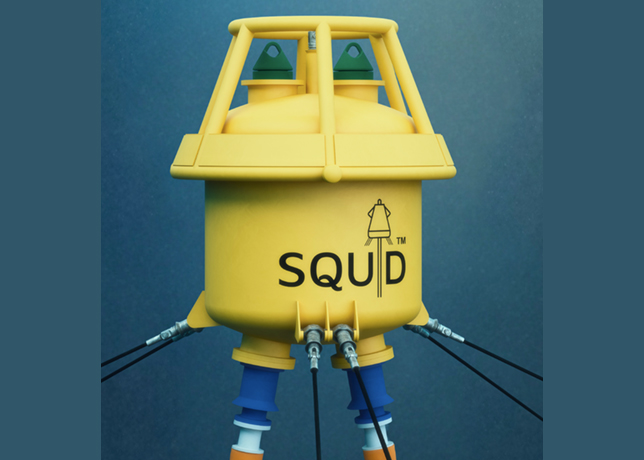
Subsea production
UNLOCK POSITIVE RESULTS
The traditional model of sending a dedicated professional onsite to conduct manual sampling has served the industry well and will continue to do so.
But continuous oil condition monitoring, in combination with the hard work and dedication of these professionals, opens new possibilities for uptime and cost efficiency that can take our industry to new levels of reliability and efficiency.
Asset owners and operators have always understood the value of data, dedicating a significant proportion of their budget to condition monitoring.
With continuous oil analysis now a commercially viable reality for operators across the oil and gas landscape, the question is no longer whether it is worth the investment.
But rather, how quickly the sector as a whole will close the condition monitoring gap.