
































By Abdulaziz Khattak
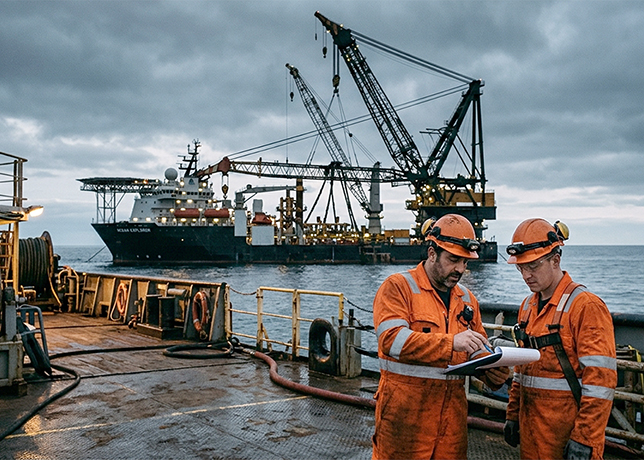
The offshore marine contracting segment closed 2025 with a record that tells two different stories at once: Across 1.02 billion hours of work reported by 167 contractor members, the sector’s two long-standing performance benchmarks both improved, even as seven workers died carrying out that work, more than double the three fatalities recorded in 2024.
The result is a dataset that the International Marine Contractors Association (IMCA), says cannot be read as straightforward success or failure, and one that reframes how the industry should judge its own performance heading into 2026.
According to the IMCA, whose Annual Safety Statistics Report 2025 draws on one of the largest safety datasets in the industry’s history, the lost time injury frequency rate (LTIFR) fell from 0.30 to 0.27 and the total recordable injury rate (TRIR) reduced from 1.10 to 0.98.
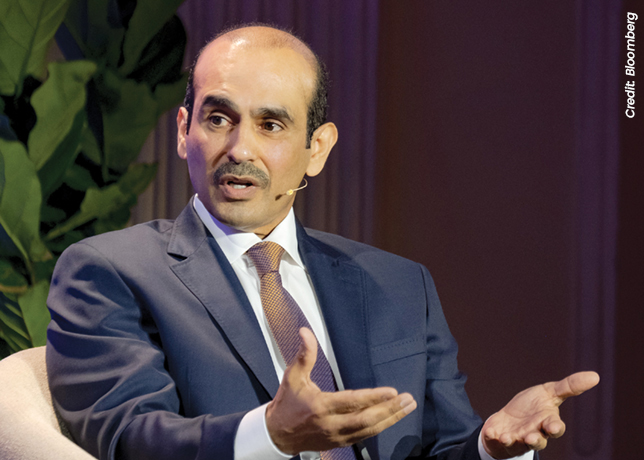
Mark Holmes, IMCA’s Safety and Security Manager, said: “Every fatality represents a person, a family and a workforce affected by loss. While the continued improvement in injury rates is encouraging and reflects the hard work of our Members, these figures demonstrate that serious harm risks remain present despite improving injury statistics.”
IMPROVING RATES, A RISING FATALITY TOLL
The scale of the underlying dataset lends the findings weight.
For the second consecutive year, IMCA’s figures are drawn from more than one billion hours of work, this time 1.02 billion hours submitted by 167 contractor members, giving the association what it describes as a substantial evidence base for its committees and safety communications.
Against that backdrop, 268 lost time injuries and 996 total recordable injuries were reported in 2025, both lower than the 302 and 1,121 recorded respectively in 2024.
Offshore performance moved in the same encouraging direction as the total figures, with offshore TRIR improving to 1.14 from 1.38 in 2024 and offshore LTIFR recorded at 0.30. The fatality count, however, moved in the opposite direction.
Seven fatalities were reported in 2025, four of them offshore and three onshore, against three fatalities, two offshore and one onshore, in 2024.
The fatal accident rate rose accordingly, from 0.30 to 0.69 per 100 million hours worked.
The reported fatal incidents included an electrocution, a fall from height and a mooring incident involving a parted rope; details of the remaining four fatalities, reported by two contractors, were not provided.
IMCA states that this increase is a serious concern and reinforces the need to look beyond headline injury rates toward serious injury and fatality prevention specifically.
Line of fire remained the leading reported cause of lost time injuries in 2025, though its share fell to 41 percent of cases, down from 52 percent in 2024.
Slips, trips and falls accounted for 34 percent of LTIs, and muscular injuries for 10 percent, both proportionally higher than the previous year.
IMCA notes that this pattern may reflect member efforts to address line-of-fire exposure specifically, alongside a broader reduction in the severity of reported LTIs, even as line of fire retains the closest link to serious injury and fatality potential of any single category.
Falls, drops and energy-related causes made up the remainder of the 2025 breakdown, with dropped objects and hand or finger exposures cited among the work situations that fall within the line-of-fire category.
Line of fire spans lifting and rigging, mooring, dropped objects, moving equipment, suspended loads, stored energy, pressure release, simultaneous operations and hand and finger exposures.
The IMCA argues that the label alone conceals more than it reveals, describing a general type of exposure without indicating the work being done, the control that failed, or the decision that needs to change.
Breaking the theme into specific work contexts and control checks is identified as the next priority for the association’s technical output.
CRITICAL RISK THEMES & HIGH-CONSEQUENCE HAZARDS
Drawing on the 2025 statistics together with safety flash learning and member feedback, IMCA identifies a consistent set of recurring critical risk themes:
• LINE of fire and harmful energy.
• Lifting, rigging and suspended loads.
• Dropped objects.
• Mooring and snap-back zones.
• Working at height.
• Electrical safety.
• Routine day-to-day work.
None of these themes are new, a point IMCA regards as significant in itself, since it indicates that serious harm continues to arise from familiar activities rather than exceptional operations.
The three fatal incidents for which IMCA has details map directly onto this list.
The fatal mooring incident is linked by the report to snap-back risk, rope condition, line handling, exclusion zones and communication; the fatal fall from height to planning, equipment, anchor points, rescue arrangements and competence; and the fatal electrocution to isolation, competence, testing, equipment condition and control of work.
Lifting and rigging risk, the report notes, is not confined to complex engineered lifts, with routine lifts, smaller lifts, container handling and deck operations all capable of creating serious exposure where planning, competence or supervision is weak.
Similarly, several member discussions highlighted that incidents are not confined to major or unusual operations, but can arise during stairs, ladders, small lifts, container moves, toolbox talk failures or missed management of change.
IMCA’s stated response is to strengthen its focus on serious injury and fatality prevention by examining how serious harm potential is identified, how high-potential incidents are classified, how critical controls are defined and checked, and how learning is shared without discouraging reporting.
The association says this work should align, where practical, with existing industry approaches already in discussion across the sector, including concepts such as fatality and permanent impairment, serious injury and fatality potential, and high-potential incidents, while avoiding the creation of an additional abstract metric that adds complexity without improving safety.
LEARNING QUALITY COMES INTO FOCUS
Alongside the injury and fatality figures, the report records a substantial decline in safety observation reporting.
The safety observation frequency rate (SOFR) fell from 482.1 to 387.1 observations per 200,000 hours worked, a reduction of around 20 percent, following what the report describes as an all-time high in 2024.
IMCA states that the reason for the fall is not yet clear, and may reflect fewer observations being carried out, changes in the group of companies submitting data, changes in internal reporting systems or definitions, or a shift in how members use observation programmes.
The association is explicit that it does not intend to draw a firm conclusion from the decline until the underlying data has been reviewed further, while treating the scale of the change as a signal worth investigating.
IMCA also cautions against treating observation volume as a proxy for safety culture in either direction, stating that a high number of observations does not automatically mean risk is being managed well, and a lower number does not automatically mean reporting culture has weakened.
The report’s stated position is that the value of an observation lies in whether it generates meaningful learning, practical improvement and stronger safety conversations, rather than in the count of cards submitted.
Company banding data reinforces the case for proportionate, size-appropriate guidance.
Of the 167 contributing members, 82 fall into Band D, reporting fewer than one million hours each, while 23 sit in Band A, above ten million hours.
Band A recorded a total LTIFR of 0.19 and TRIR of 0.76, against 0.88 and 2.32 respectively for Band D, a pattern IMCA says does not necessarily indicate that smaller companies are less safe, but does point to the need for guidance that remains practical and accessible across companies of different sizes.
Looking ahead, IMCA states that the 2025 findings will directly shape its safety programme, with priorities including:
• Strengthening serious injury and fatality prevention.
• Improving understanding of line-of-fire risk through more specific work-context breakdowns.
• Investigating the causes of the SOFR decline
• Encouraging wider contractor participation in annual data submission
• Strengthening the link between safety flashes, technical guidance and practical member action.
The association notes that its benchmark strengthens as participation broadens, and that it represents more contractor members than the 167 who submitted data for 2025.
IMCA also continues to compare selected injury rates against peer bodies including the G+ Global Offshore Wind Health and Safety Organisation, the International Association of Oil and Gas Producers and the International Association of Drilling Contractors, though it stresses that differing scopes and definitions mean such comparisons should support learning rather than serve as a ranking exercise.