














































For decades, the global oil market rested on a quiet but load-bearing assumption: the Strait of Hormuz, for all its geopolitical fragility, would stay open.
That assumption broke in 2026, and no producer has felt the break more acutely than Kuwait.
Kuwait’s economy is among the most oil-dependent on Earth.
Kuwait Petroleum Corporation (KPC) is not just the country’s largest company, it is the backbone of government revenue and foreign-exchange generation.
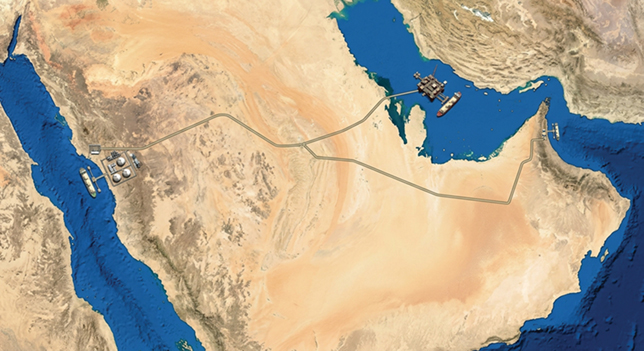
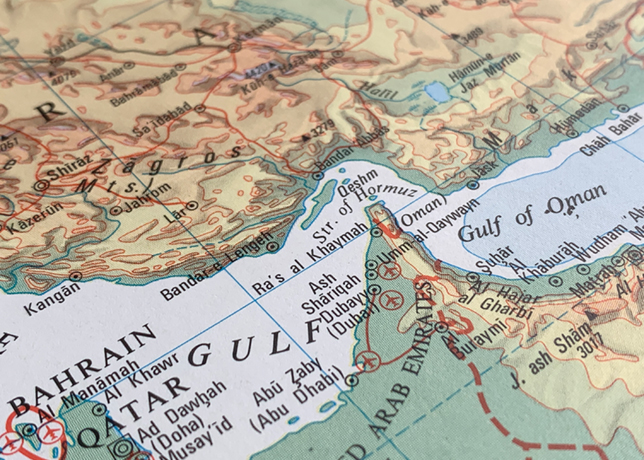
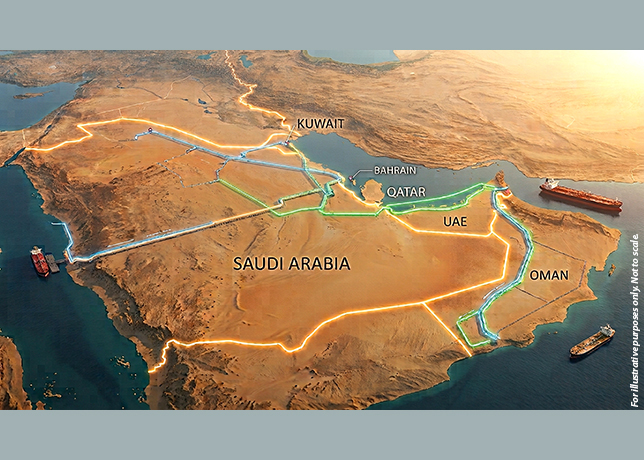
Unlike Saudi Arabia, which can divert crude overland to the Red Sea via its East-West Pipeline, or the UAE, which can bypass the strait through its pipeline to Fujairah on the Gulf of Oman, Kuwait has no such overland escape valve.
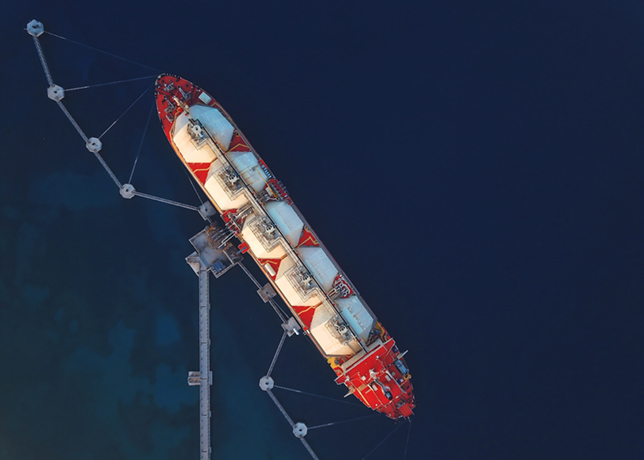
Every barrel it sells abroad leaves by tanker through Hormuz. There is no plan B built into the map.
That structural vulnerability, long acknowledged in theory, was tested in practice after the Iran war erupted in late February 2026.
War-risk insurance premiums for the strait, which had sat near a token 0.05 per cent before the conflict, spiked more than a hundredfold, effectively pricing ordinary commercial shipping out of the waterway even on the days it was technically passable.
For Kuwait, the consequence was not gradual decline but overnight collapse.
Refining output and product exports were roughly halved as crude piled up with nowhere to go.
By April, ship-tracking services reported a stretch of zero crude exports, a level of disruption unseen since the aftermath of the Gulf War.
KPC repeatedly declared force majeure, citing its inability to move oil and refined products at all.
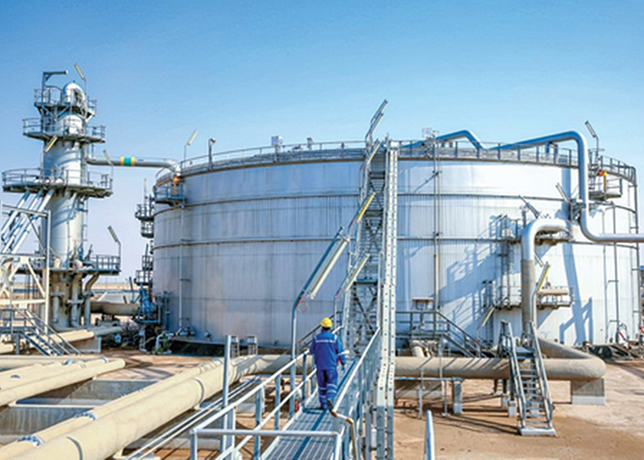
Production continued onshore, but with export routes severed, storage tanks filled and pressure built across the domestic system.
OPEN, CLOSED, OPEN AGAIN
The months since have offered little stability. A US-Iran memorandum in mid-June briefly reopened the strait and traffic rebounded, only for fresh strikes on vessels and renewed Iranian threats to shut it back down within weeks.
Insurance markets, mariners, and shippers have learned to treat “reopened” as a provisional, reversible status rather than a settled fact.
Meanwhile, attacks on Saudi tankers in the Red Sea have complicated even the traditional detour routes.
The upshot for Kuwait is a kind of prolonged uncertainty that is, in some ways, harder to plan around than a clean, total blockade would be.
LOOKING FOR A WAY AROUND
The crisis has turned what used to be a theoretical resilience exercise into an urgent operational priority. Several avenues are now being actively explored:
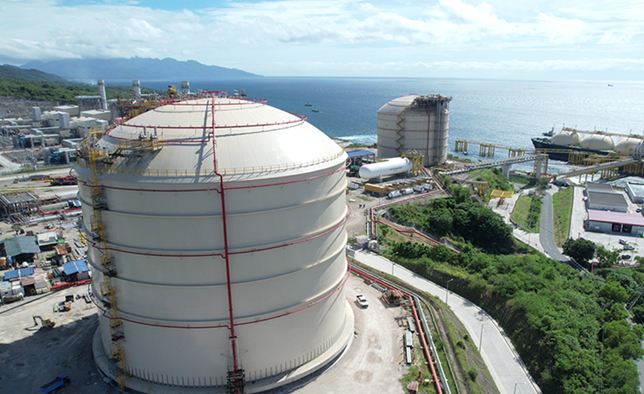
• Overseas strategic storage: Kuwait already holds modest crude reserves in South Korea and Japan as part of long-standing supply arrangements.
Expanding these buffers doesn’t solve the export problem, but it cushions downstream customers and gives Kuwait more room to ride out a closure without deeper economic strain at home.
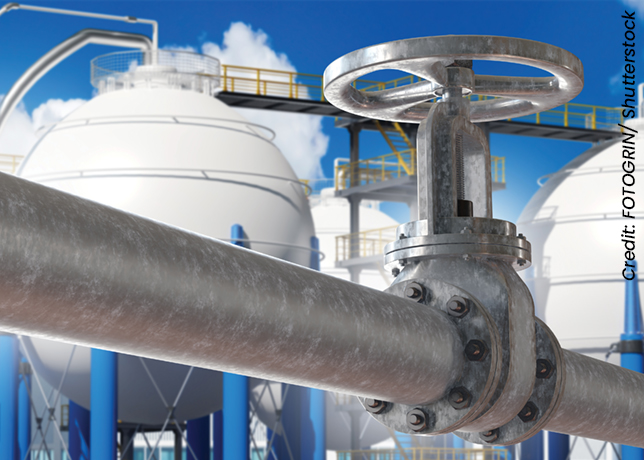
• New pipeline links: KPC officials have confirmed talks with neighbouring Gulf states about pipeline options that would let Kuwaiti crude reach terminals outside the Gulf entirely, following the model Saudi Arabia and the UAE already use.
Tying into or extending existing cross-peninsula infrastructure toward the Red Sea or the Gulf of Oman would, for the first time, give Kuwait an export path that doesn’t depend on a 33-km-wide chokepoint shared with a wartime adversary.
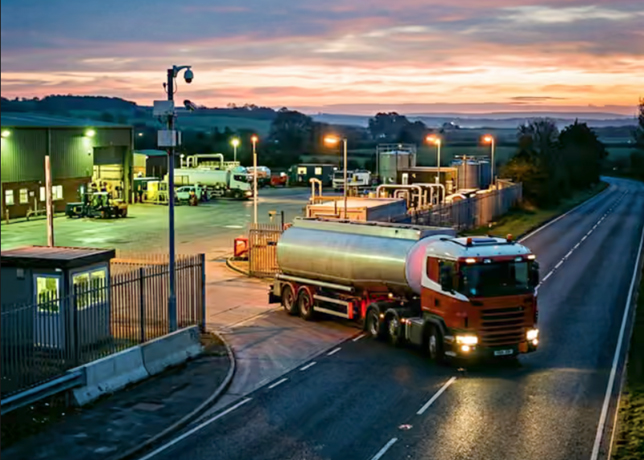
• Interim overland and short-haul options: Truck and rail transfers to Saudi or Iraqi export terminals have been floated as stopgap measures; expensive and limited in volume, but capable of keeping some revenue flowing during acute closures.
• Regional infrastructure cooperation: More ambitiously, the crisis has revived discussion of a genuinely shared Gulf bypass corridor, pooled pipeline capacity and storage that could serve several producers, not just Kuwait, reducing the entire region’s collective exposure to a single strait.
None of these are quick fixes. Pipelines take years to build and finance; storage deals only buy time; overland transfers can’t match tanker volumes.
But the direction of travel is clear, and it marks a genuine shift in Gulf energy strategy; from treating Hormuz redundancy as a nice-to-have to treating it as existential infrastructure.
THE SILVER LINING
There is something quietly hopeful in how this crisis is unfolding. It has pushed Kuwait, and by extension its neighbours, toward the kind of diversification and regional cooperation that peacetime planning rarely delivers.
A country whose entire export identity has run through one waterway is now, out of necessity, building the connections that could insulate it, and the wider Gulf, from the next disruption, whatever form it takes. If there’s a lesson for the global energy system, it’s this: Resilience built in a crisis often outlasts the crisis itself.