






































As LNG trade expands and floating gas infrastructure creates more connections between independently owned and operated assets, ensuring that technically compliant systems work reliably at their points of interface is becoming increasingly important.
And as export capacity, regasification infrastructure and marine-fuel operations expand, so does the number of transfers that depend on people operating seamlessly across a shared interface.
Global LNG imports reached 428 million tonnes in 2025, around 5 per cent above the previous year, according to the International Group of LNG Importers (GIIGNL), which also reports a carrier orderbook equivalent to 42 per cent of the existing fleet, with 95 vessels due for delivery in 2026.
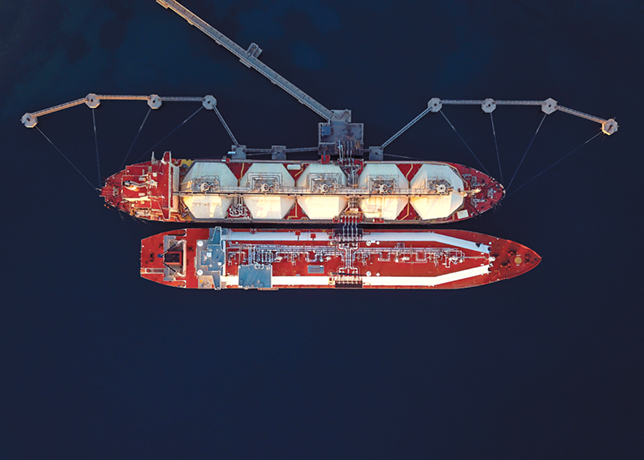
Alongside a widening network of terminals, floating storage and regasification units, floating liquefaction facilities and ship-to-ship operations, this is increasing both the volume and variety of large-scale gas transfers taking place across the industry.
Each transfer involves sophisticated engineering, yet the reliability of a high-value transaction can turn on a small number of factors, such as whether an emergency shutdown link communicates a healthy signal, whether a hose has been correctly handled and installed, and whether crews on either side share an understanding of the operating sequence.
As a result, the interface should be treated as a system in its own right, not as the point at which responsibility for one asset ends and another begins.

Matt Richardson
WHERE VALUE AND RISK MEET
A single large-scale LNG cargo can represent tens or hundreds of millions of dollars in product and the transfer of this cannot begin, or may be halted, if the connection between vessel and terminal, vessel and floating facility, or two vessels cannot be shown to be safe and operationally ready.
A modest piece of interface equipment can become the bottleneck for a much larger transaction.
LNG is carried at approximately minus 162 deg C and expands around 600 times when it vapourises, so a release at the transfer interface can rapidly form a flammable vapour cloud, while contact with materials not designed for cryogenic conditions can cause brittle fracture.
That makes the integrity, monitoring and shutdown behaviour of the complete transfer system critical controls, rather than considerations confined to either asset in isolation.
What has changed is not the risk itself, which experienced LNG operators already recognise, but the environment around the transfer.
Where an LNG operation once sat largely within one organisation, a transfer today can involve a separate vessel owner, technical operator, cargo owner, and terminal or floating-facility operator, each with its own procedures and personnel.
Interfaces are also multiplying, carrier-to-terminal, carrier-to-floating storage and regasification unit (FSRU), carrier-to- floating liquefied natural gas (FLNG), ship-to-ship and bunkering, and LNG is being joined by methanol, ammonia and other alternative fuels, each with distinct hazards but a common requirement: The safe transfer of a hazardous product between separately operated assets.
This is not necessarily a failure of individual responsibility. The problem is that no single party may have complete operational visibility across the whole connection.
The risk is a mindset that might be described as “my ship, my manifold, my tank”, in which every participant understands its own equipment and procedures, but no one necessarily owns the full interaction between them.
COMPLIANCE IS NOT THE SAME AS CAPABILITY
Existing regulation provides an essential foundation. The STCW Code, the IGF Code for low-flashpoint fuels and the IGC Code for gas carriers set important requirements, but much of that framework is structured around the individual ship or asset.
Vessel-based compliance does not automatically create end-to-end competency across a transfer involving two independently controlled systems.
Emergency shutdown illustrates this well. The requirement for a shutdown link capable of transmitting signals is fundamental, but simply fitting the link is not what makes it work
Crews must also understand how the connection has been configured, how systems on both sides interact, how the link is tested before a transfer begins, and what action to take if the expected signal is not received.
The presence of equipment is not proof of an ability to operate the interface effectively.
The European Maritime Safety Agency’s 2024 TRAINALTER study concluded that existing STCW standards do not specifically cover all aspects of the new fuels and fuel systems being adopted, including LNG, and described a “causality dilemma” in which training providers wait for regulators to define requirements while regulators wait for providers to propose programmes.
EMSA followed the study with a dedicated workshop on seafarer competences for alternative fuels in November 2025, while the IMO’s comprehensive review of the STCW Convention and Code remains underway.
That work is necessary, but compliance at the level of each individual asset does not guarantee that the two systems, or the crews operating them, will work effectively together during a transfer.
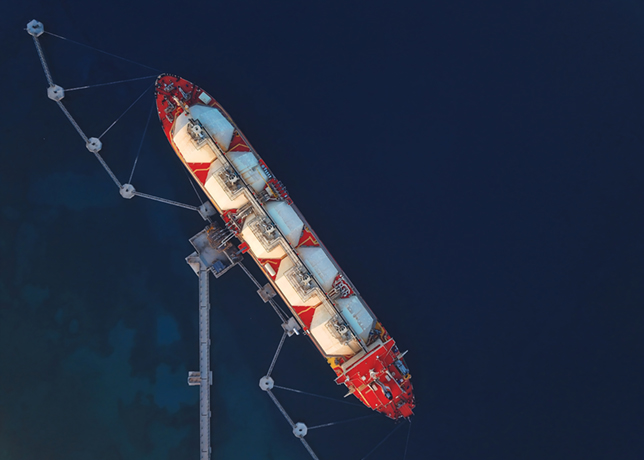
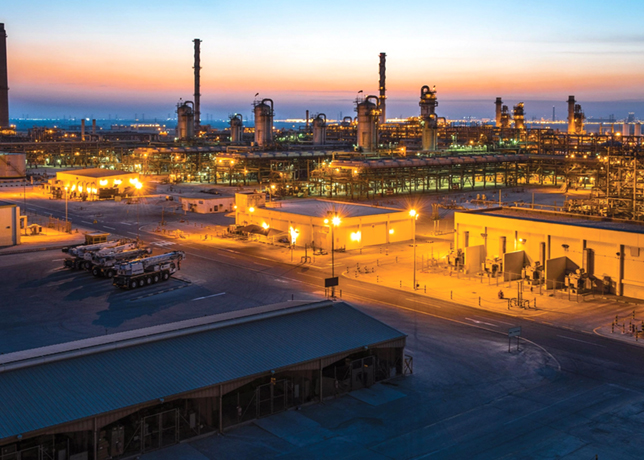
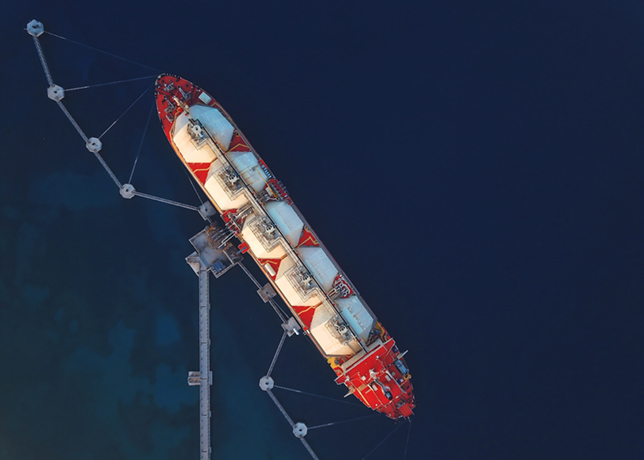
A single LNG cargo worth hundreds of millions of dollars makes safe, operationally ready connections between vessels and facilities critical to cargo transfer
FAMILIARITY IS NOT PROFICIENCY
Closing the gap requires more than another layer of equipment familiarisation.
It calls for critical interface training and that includes practical instruction in how the complete transfer system behaves, from one asset to the other.
The aim is not to make every operator an expert in every component, but to ensure crews understand the interactions that determine whether a transfer stays safe, available and controllable, and to treat the interface as one coordinated process.
Two areas deserve particular attention.
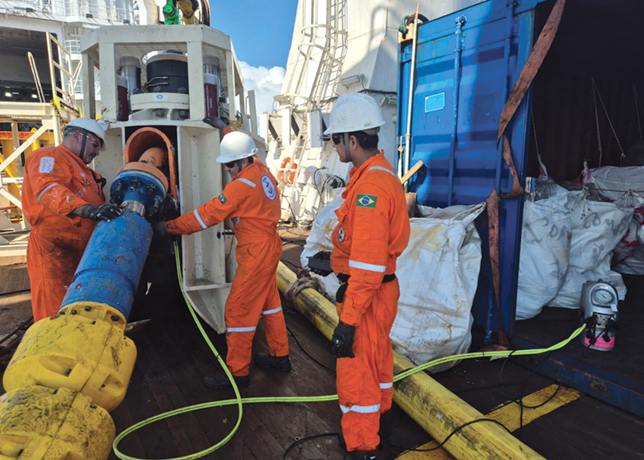
The first is the composite transfer hose. Here, correct handling, lifting and storage, inspection and retirement criteria, and the conditions that can cause it to collapse or become unsuitable for service.
These may appear routine, but they are critical to a reliable connection.
The second is the transfer and safety system as a whole. The position and purpose of emergency release couplings, quick-connect and disconnect arrangements, confirmation that emergency shutdown communication is active, the ability to perform a manual shutdown, and the sequence of pre-transfer, proof-test, start-of-transfer and in-transfer checks.
A crew may operate an individual item of equipment well while still lacking a shared understanding of how the connected system will respond during an alarm or shutdown event.
That distinction matters especially where personnel rotate frequently or meet a particular configuration for the first time on the day of an operation.
A theoretical overview may satisfy a familiarisation requirement without demonstrating the hands-on capability a live transfer demands.
Simulation has an important role, provided it tests the decisions crews actually have to make.
EMSA recognises simulators as a valuable tool, yet no international standard defines what a competent LNG-transfer scenario should contain, so training risks becoming a record of completed sessions rather than a measure of capability.
Competence must also be maintained rather than certified once and assumed to remain current.
PREDICTABILITY IS AN OPERATIONAL ASSET
For operators, cargo owners and project developers, this is not solely a safety case; it is also a case for predictable operations.
Floating gas infrastructure represents major capital investment, but its commercial performance depends on vessels connecting, transferring and disconnecting safely within an expected operating window.
Improving interface competency protects people and equipment, but it also supports schedule reliability, asset availability and confidence in the transfer process.
It also helps surface recurring problems. Incident information specific to LNG transfer interfaces remains fragmented across general marine-casualty databases and individual organisations.
SIGTTO has compiled member reports over decades, but available datasets remain limited against the volume of loading and discharge operations undertaken globally, and similar problems can appear isolated even where they share an underlying cause.
This is where equipment specialists, operators, class societies and industry bodies can contribute.
Organisations with visibility across multiple assets may spot patterns not visible from one vessel, terminal or project alone: A hose issue in one location and a comparable event elsewhere, under different owners, may share a root cause only visible to a party watching both.
Translating that knowledge into practical training is how operational experience becomes broader industry improvement.
Regulation will continue to develop, and it should, but LNG and floating gas infrastructure are expanding now.
This also bears significance in preparing for the rise in trades of methanol and ammonia cargoes so that these operational frameworks are in place from the outset.
The industry should not treat technical compliance on either side of a connection as proof the interface between them will operate reliably.
Suppliers and receivers of gas products want the same outcome: A transfer that is safe, efficient and predictable.
Achieving that means treating the interface not as a boundary between separate responsibilities, but as the point at which those responsibilities become one operation, and training and assessing crews accordingly.