








































AI, geopolitics reshape energy
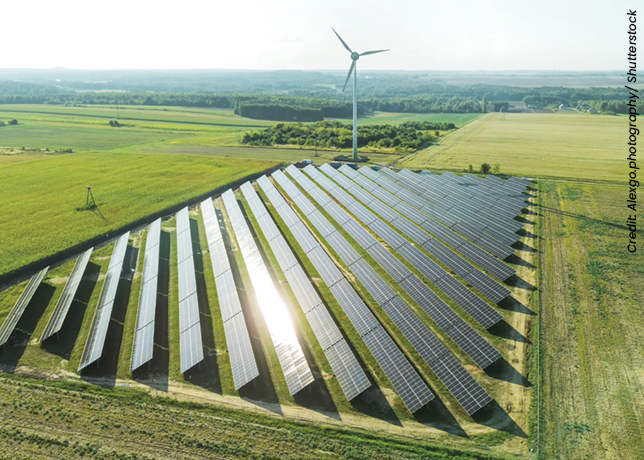
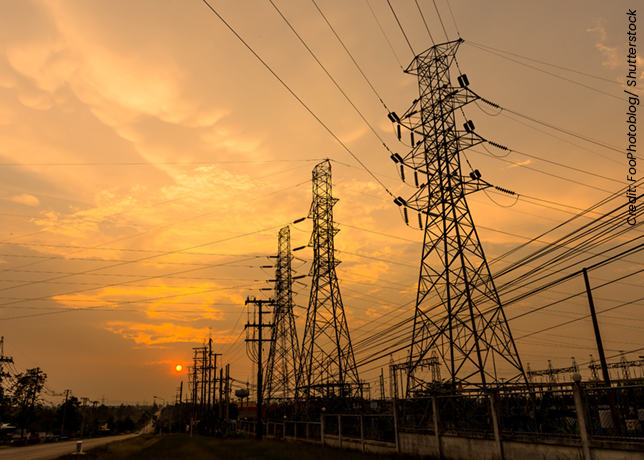
Rising electricity demand from AI, data centres and industrial electrification is putting new pressure on global energy systems, the World Energy Council’s World Energy Trilemma report says.
Drawing on views from over 275 energy leaders across 65 countries, it identifies grids, storage and system integration as major constraints.
Around 600 million people in Africa lack electricity access, while China has nearly 50 ultra-high-voltage projects delivering 420 GW.
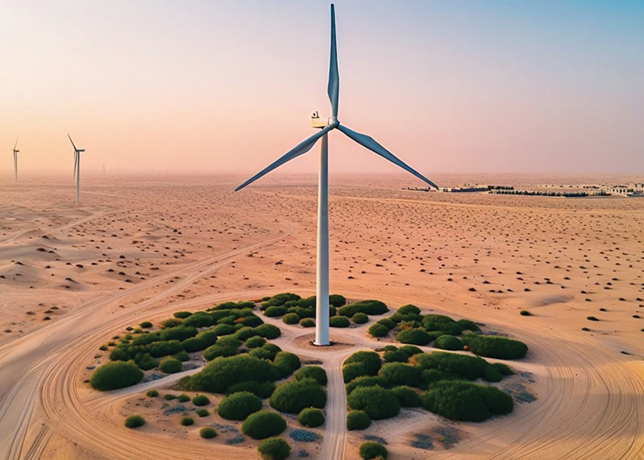
Saudi Arabia targets a 50 per cent renewable power mix by 2030.
The report calls for greater coordination between generation, storage, markets and flexible demand to balance security, affordability and decarbonisation.
Americas lead microgrid growth
The global microgrid market is set for strong growth as governments, utilities and businesses invest in resilient, decentralised power systems, according to GlobalData.
The Americas are expected to lead growth through 2030, driven by the US and supported by federal funding and clean-energy policies.
Asia-Pacific is also expanding, led by China, Japan and India.
Hybrid systems combining solar, batteries and advanced controls are gaining traction to improve reliability, flexibility and renewable integration.
Gradiant wins hyperscale water deal
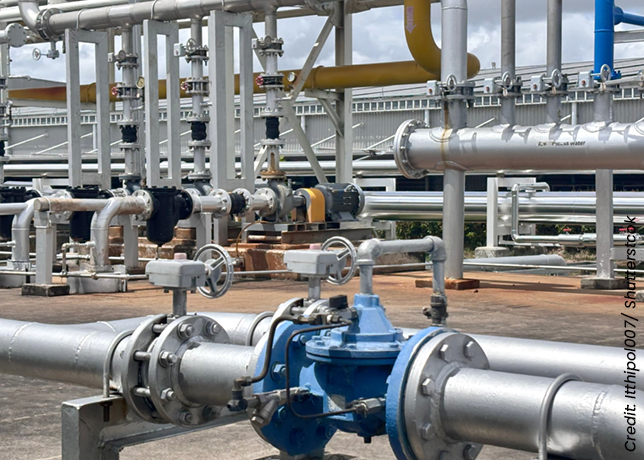
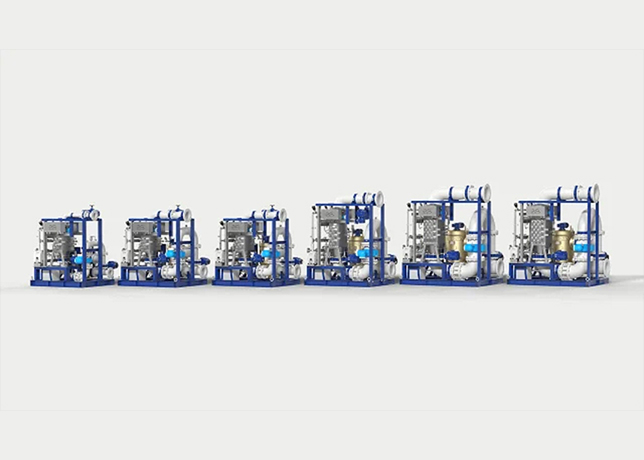
Gradiant has secured a contract to provide a turnkey water and wastewater package for a hyperscale AI data centre campus in West Texas, being developed by one of the world’s largest technology companies.
The agreement covers potable water supply and wastewater treatment, making Gradiant a single provider for the campus.
The project adds to Gradiant’s growing data centre portfolio and supports a multi-billion-dollar US AI infrastructure investment.
Shell completes $840m Gulf asset sale
Shell Offshore has completed the sale of its 50 per cent non-operated interest in the Na Kika platform and associated fields in the Gulf of America, along with its wholly owned Coulomb tieback.
Shell received approximately $840 million in cash proceeds, including adjustments from the July 1, 2025 effective date to closing.
The assets were acquired by a subsidiary of Talos Energy and an affiliate of Ridgewood Energy.
Sri Lanka offers four offshore blocks
Sri Lanka has launched its 2026 offshore licensing round, offering four exploration blocks covering 33,964 sq km in the Mannar Basin.
The blocks range from 5,949 to 11,728 sq km, with water depths of up to 3,000 metres. Previous drilling by Cairn Lanka confirmed gas and condensate discoveries.
International bids are due by February 2, 2027, with geological and seismic data available through the licensing data room.
Denmark bets on offshore wind hubs
Denmark’s planned North Sea and Bornholm energy islands could transform regional clean-energy networks as offshore wind expands, GlobalData says.
Electricity generation is forecast to rise from 33.6 TWh in 2025 to 43.3 TWh by 2035, with renewables supplying nearly 98 per cent.
More than 17.6 GW of offshore wind projects are in the pipeline, while over 8.7 GW are announced or awaiting permits.
The islands could also support green hydrogen exports.
Bilfinger joins $1.1bn biomethanol project
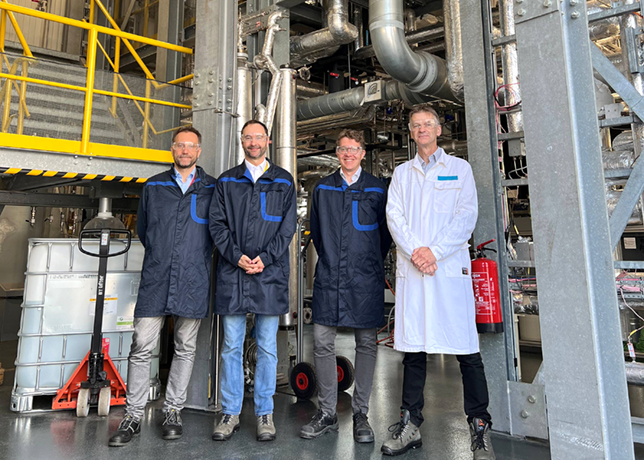
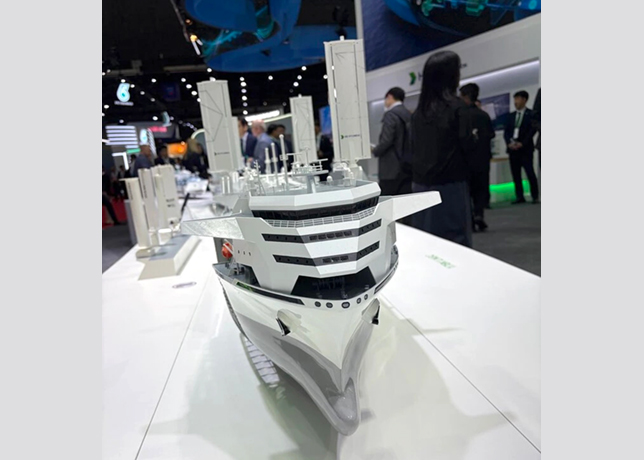
Perpetual Next has appointed Bilfinger as Owner’s Engineer for the further development of its DeltaTorr and DeltaNor biomethanol projects in Delfzijl, Netherlands.
The partnership will support engineering and project coordination as the development moves toward a Final Investment Decision (FID).
The full facility could require up to €1 billion ($1.1 billion) in capital investment and aims to produce biomethanol from sustainable biogenic residues for the maritime and chemical industries.
Renewables supply 54.1pc of EU power
Renewable sources accounted for 54.1 per cent of EU electricity generation in Q2 2026, slightly below 54.3 per cent a year earlier, Eurostat data show.
Solar led renewables at 41.6 per cent, up from 37 per cent, followed by wind at 27.7 per cent and hydropower at 22.6 per cent.
Latvia recorded the highest renewable share at 97.7 per cent, followed by Denmark at 94.3 per cent and Croatia at 92.2 per cent.
Slovakia had the lowest at 19.8 per cent.
Türkiye’s solar, wind save $43bn
Türkiye generated 442.2 terawatt-hours (TWh) of solar and wind power between 2015 and 2025, reducing fossil-fuel imports and avoiding up to 354 million tonnes of carbon dioxide emissions, according to the Energy and Natural Resources Ministry.
The renewable output was equivalent to $21.5 billion in coal or $43.3 billion in natural-gas imports.
Renewable capacity reached 42.9 gigawatts (GW) by July, accounting for 33.8 per cent of total installed capacity.
Alparslan Bayraktar, Energy Minister, said Türkiye aims to reach 120 GW of renewable capacity by 2035.
UK expertise could boost APAC CCUS
UK carbon capture, utilisation and storage expertise could help accelerate CCUS development across Asia-Pacific, according to Xodus.
The region accounts for more than half of global CO2 emissions, while its CCUS market could reach £187.8 billion ($249 billion) by 2035 under an accelerated scenario.
Xodus forecasts up to 83 million tonnes of CO2 exports annually by 2030, rising to 145 million tonnes by 2035, highlighting the need for stronger regulation and cross-border infrastructure.