




































Recent supply chain dislocations across the Strait of Hormuz, alongside refinery damage in the Middle East and Russia, have severely impacted energy security across Asia by cutting off critical access to crude oil, liquefied natural gas (LNG), refined products, fertiliser, and chemical feedstocks.
This supply shock has exacerbated economic growth vulnerabilities and threatened living standards across import-dependent Asian economies.
While supply chain volatility is a recurring feature of global commodity trade, the severity of these recent bottlenecks has demonstrated that ad hoc emergency responses are insufficient.
The nations navigating this crisis with the highest degree of operational resilience are those that established flexible national energy plans, structured flexible procurement mechanisms, and invested in physical storage capacity long before the onset of supply curtailments.
To withstand future geopolitical shocks, the region must shift from reactive crisis management toward structural, multi-layered resilience.
National planning executed prior to a crisis provides the fundamental foundation for rapid energy system flexibility.
Japan has demonstrated effective long-term energy planning through its Strategic Energy Plan, developed over decades and continuously refined following major events such as the 1970s oil shocks and the 2011 Great East Japan Earthquake.
Under this framework, government entities, such as the Ministry of Economy, Trade and Industry and the Japan Energy and Metals National Corporation, coordinate directly with major private market actors like JERA, while research bodies like the Institute of Energy Economics Japan deliver analytical guidance.
Japan’s LNG procurement strategy balances security with market flexibility by securing long-term contracts aligned with baseline domestic demand while maintaining the structural ability to market surplus volumes internationally when domestic nuclear or renewable power generation exceeds initial projections.
In Singapore, global LNG shortages and price spikes stemming from the 2022 Russia-Ukraine war exposed significant risks associated with piecemeal contracting by individual, privately run power generation companies.
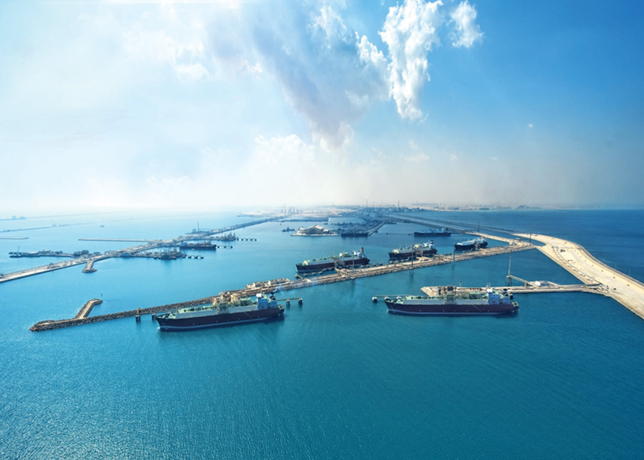
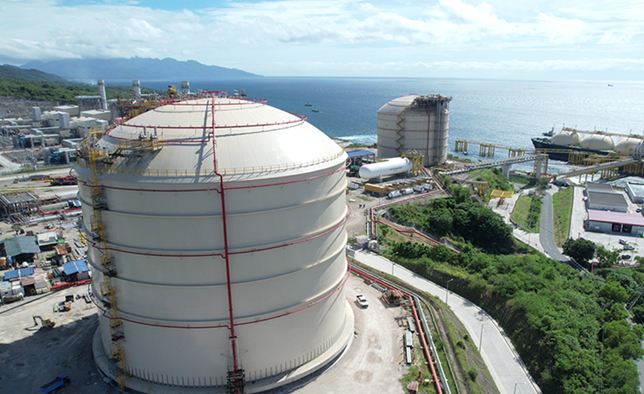
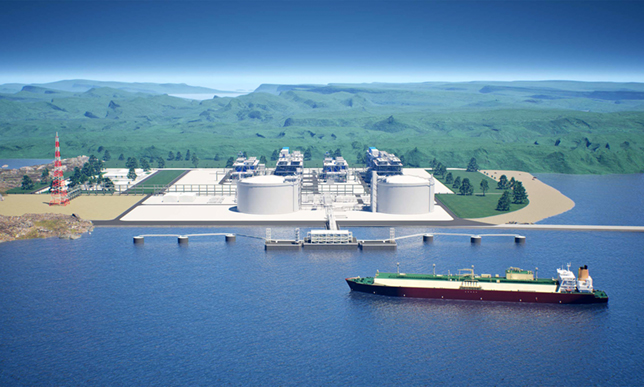
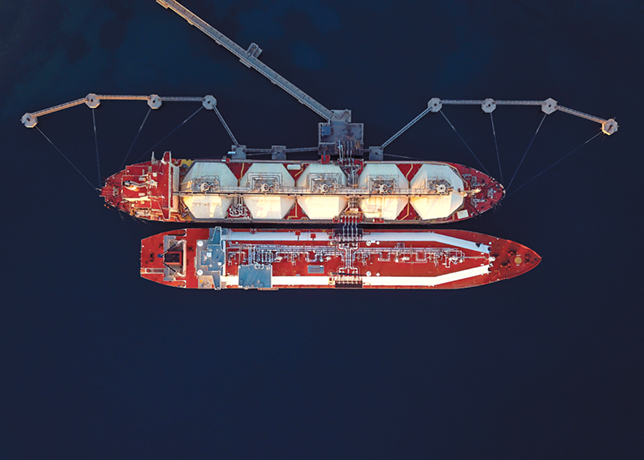
Centralised import terminals consolidate volumes to achieve economies of scale
To address these vulnerabilities, Singapore established GasCo in 2025 as a centralised national gas procurement entity to coordinate fuel purchases across the power sector.
This centralised model consolidates import volumes to achieve economies of scale and enhances national control over fuel sourcing while maintaining a commercial market structure that coordinates with power generators and international suppliers.
Furthermore, lessons from recent price shocks and Strait of Hormuz disruptions have accelerated Singapore’s infrastructure expansion, including development plans for a second LNG import facility and additional storage capacity to ensure alternative supply pathways.
Maximising domestic production through stable, transparent regulatory regimes represents another critical line of defence against external supply shocks.
Indonesia has pursued comprehensive policy reforms to revive domestic output and curb import dependence by streamlining upstream investment processes, expanding exploration, and accelerating mature asset redevelopment.
The Indonesian government identified 110 prospective oil and gas blocks and launched a national targeted program to reactivate 6,305 idle wells, with 787 wells earmarked for immediate production recovery.
Similarly, India has systematically improved its upstream competitiveness through the Hydrocarbon Exploration and Licensing Policy, accelerating fiscal and regulatory reforms since 2022 to attract international capital and advanced extraction technologies.
India reduced exploration “no-go” areas by over 90 per cent, expanded access to restricted sedimentary basins, and introduced a $10-billion risk-sharing fund to support deep-water and frontier exploration.
Modernised legal frameworks, streamlined licensing, and explicit stabilisation provisions shield investors from adverse fiscal shifts over project lifecycles.
CENTRALISED PROCUREMENT & DOMESTIC ASSET OPTIMISATION
Natural gas has cemented its structural role as a backbone of the global power sector, with global gas-fired electricity generation rising from approximately 2.7 Petawatt-hours (PWh) in 2000 to around 7 PWh in 2024.
This expansion lifted gas’s share of world electricity generation from roughly one in six units to nearly one in four, even as total global electricity demand more than doubled from 15.3 PWh to 30.9 PWh over the same period.
Global natural gas consumption increased by 2.7 per cent in 2024, accounting for 22.6 per cent of global primary energy demand.
As detailed in the ‘Global LNG Market Security’ report released by the International Energy Forum in collaboration with the Japan Organisation for Metals and Energy Security, LNG has evolved into a strategic pillar of global energy security, connecting resource-rich exporters with distant demand centres and accounting for 2.8 per cent of global primary energy demand.
While pipeline gas’s share of global primary energy fell from 4.3 per cent in 2000 to 3.7 per cent in 2024, LNG expanded rapidly, driving its share of internationally traded natural gas from around 20 per cent in 2000 to 43 per cent in 2024.
Projections by the Gas Exporting Countries Forum indicate LNG will account for around 65 per cent of international gas trade by 2055, with the International Gas Union projecting global LNG demand to exceed 600 million tonnes per annum (mtpa) by 2030 compared to 437 mtpa in 2025.
This trajectory is further reinforced by structural demand from digitalisation and advanced manufacturing.
Global data centre power demand is projected to rise by roughly 165 per cent by 2030 relative to 2023, with total capacity expanding from 82 Gigawatts (GW) in 2025 to 219 GW by 2030.
Concurrently, energy-intensive sectors like steel, aluminium, chemicals, and cement remain reliant on high-temperature process heat, where direct electrification options are typically efficient only below 150 deg C.
The global LNG supply landscape is heavily concentrated, with 2024 exports totalling 529 bcm.
The top three exporters, the US, Australia, and Qatar, account for 64 per cent of global exports, while the top five (adding Russia at 51 bcm and Malaysia at 35 bcm) collectively supply over 80 per cent.
MARITIME BYPASS CORRIDORS & SYSTEMIC CHOKEPOINT EXPOSURE
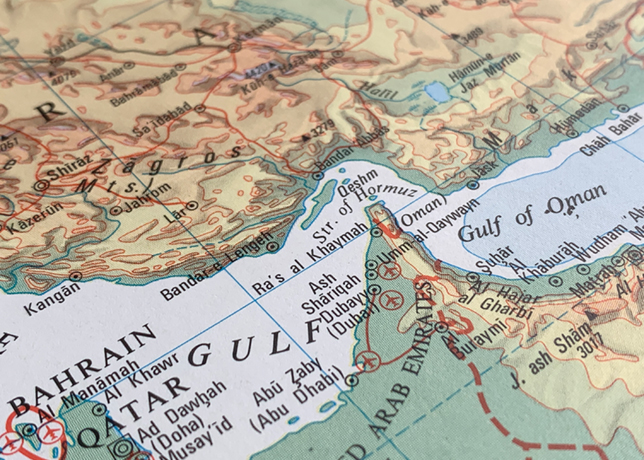
This asymmetric market structure leaves trade exposed to critical maritime transit corridors, most notably the Strait of Hormuz.
Narrowing to approximately 33 km, the Strait carried around 20 per cent of global LNG trade in 2024, predominantly from Qatar, alongside 20 million barrels per day (bpd) of oil.
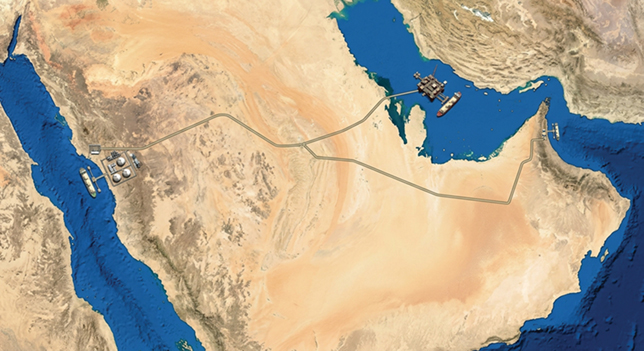
Unlike oil, LNG exports through Hormuz lack alternative pipeline or maritime bypass options.
Direct exposure varies substantially across Asia: India sourced 75 per cent (27.8 bcm) of its LNG imports through Hormuz in 2024; Pakistan relied on it for 87 per cent (7.4 bcm); Bangladesh for 71 per cent (4.8 bcm); China for 22 per cent (22.8 bcm); and South Korea for 20 per cent (12.2 bcm).
Following transit disruptions, approximately three-quarters of lost LNG volumes were offset by alternative US supplies as trading portfolios diverted Atlantic cargoes to Asia.
Diversifying fuel sources, import origins, and contractual terms is essential to reducing exposure to localised geopolitical choke points.
Over several decades, Japanese entities invested directly in LNG developments across Alaska, Brunei, Indonesia, Malaysia, Australia, Qatar, and the US.
Asian direct investment has also enabled new supply nodes outside vulnerable maritime transit routes, such as the LNG Canada project in British Columbia, which commenced production in 2025.
Developed through international collaboration involving Petronas, Korea Gas, PetroChina, and Mitsubishi, alongside $850 million from the Japan Bank for International Cooperation, the facility provides direct Pacific maritime access to Asia while bypassing the Panama Canal and Middle Eastern corridors.
Contractual structures must similarly evolve to provide liquidity during unexpected disruptions.
The elimination of destination clauses, facilitated by the Japan Fair Trade Commission’s 2017 anti-competitive ruling, has fundamentally increased global market liquidity.
In emerging gas markets like Vietnam and the Philippines, infrastructure innovation is building scale.
Vietnam is evaluating centralised LNG hubs to eliminate asset duplication, while Philippine market players formed corporate consortiums to aggregate import demand and co-develop large-scale terminals.
During the Strait of Hormuz closure, Singapore limited operational exposure because 40 per cent of its natural gas continued arriving via overland pipelines from Malaysia and Indonesia, while GasCo secured replacement LNG cargoes from the US and Australia.
STRATEGIC STOCKPILING FRAMEWORKS & RAPID DEMAND CURTAILMENT
Maintaining substantial physical fuel reserves on home soil provides the necessary operational runway during severe supply dislocations.
Japan holds more than 240 days of oil consumption across reserves and joint stockpiling agreements.
In natural gas, China developed 25 to 35 days of demand reserves through underground storage and LNG tanks, while Japan holds approximately 36 days of gas consumption in above-ground tanks.
Beyond national stockpiles, bilateral partnerships offer critical mutual support.
Following the Strait of Hormuz closure, Australia and Singapore executed a bilateral Protocol on Economic Resilience and Essential Supplies, ensuring Australia maintained guaranteed natural gas exports to Singapore, Japan, South Korea, and Malaysia in exchange for uninterrupted shipments of refined gasoline, diesel, and jet fuel.
To support broader regional security, Japan launched the $10-billion POWERR Asia initiative to provide emergency financing and long-term capital support for stockpiling infrastructure.
Rapid demand management offers an immediate line of defence when physical supplies are constrained.
Facing 98 per cent dependence on imported oil, the Philippines declared a State of National Energy Emergency during the Hormuz closure, enforcing a mandatory four-day workweek for executive branch offices and a 10-20 per cent reduction in state power and fuel usage.
Ultimately, long-term security will depend on international coordination, regional stockholding, diversified portfolios, and comprehensive value chain investment.