








By Abdulaziz Khattak
Action Energy Company (AEC) is dismantling external dependencies by leveraging strategic joint ventures designed to transition from collaborative partnerships into fully independent, indigenous execution.
By embedding international specialists directly alongside local personnel, the firm is systematically transferring proprietary technology and critical operational expertise directly into its workforce.
This deliberate capability-building framework ensures that engineering mastery, advanced troubleshooting techniques, and rigorous maintenance standards remain deeply anchored within local teams.
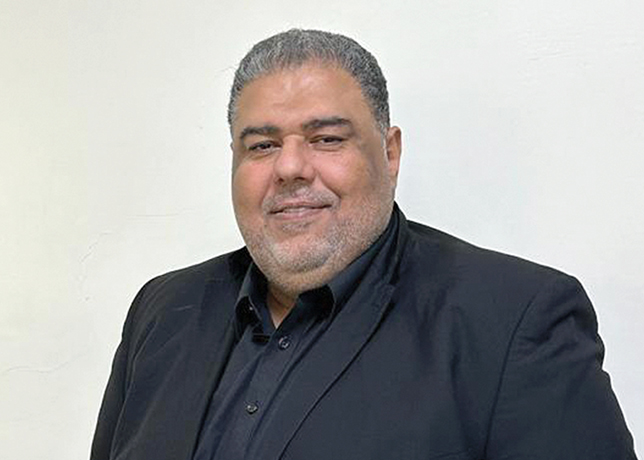
“Our engineers, supervisors, and field personnel work directly alongside international specialists on drilling and oilfield service projects, gaining hands-on exposure to advanced technologies, operating procedures, maintenance practices, troubleshooting techniques, and HSE standards,” Ivan Chikunov, General Manager, Services & Business Development, Action Energy Company (AEC) tells OGN energy magazine in an exclusive interview.
This progressive localisation strategy empowers the enterprise to evolve from a specialist drilling contractor into a comprehensive, self-sustained full-lifecycle well solutions provider.
By systematically absorbing advanced international methodologies through structured knowledge-transfer components, the company secures absolute execution certainty for national oil companies while permanently strengthening its sovereign technical capabilities.
Below are excerpts from the interview:
Following AEC’s transition from a two-rig start-up in 2015 to a fleet of 20 active rigs, how will the newly secured KWD 40.9 million in local credit facilities accelerate the company’s near-term deployment pipeline for Kuwait Oil Company (KOC)?
The newly secured KWD 40.9 million ($132 million) in local credit facilities are an important step in supporting AEC’s continued growth and operational expansion.
The facilities support the financing and deployment of new rigs linked to contract awards previously announced with Kuwait Oil Company (KOC), ensuring we have the financial capacity to execute these projects efficiently and in line with our contractual commitments.
The facilities provide dedicated funding for two new 750 HP rigs through a KWD7.3 million facility from Kuwait International Bank and four new 1,500 HP rigs and one 1,000 HP rig through a KWD 33.6 million facility from Commercial Bank of Kuwait.
Beyond funding the new rigs, the facilities strengthen AEC’s financing structure and provide additional flexibility to support growth while maintaining a prudent balance sheet.
Combined with our operational track record and expanding fleet, this financing positions AEC to execute its growth pipeline, support Kuwait’s upstream development objectives, and capitalise on future opportunities in the sector.
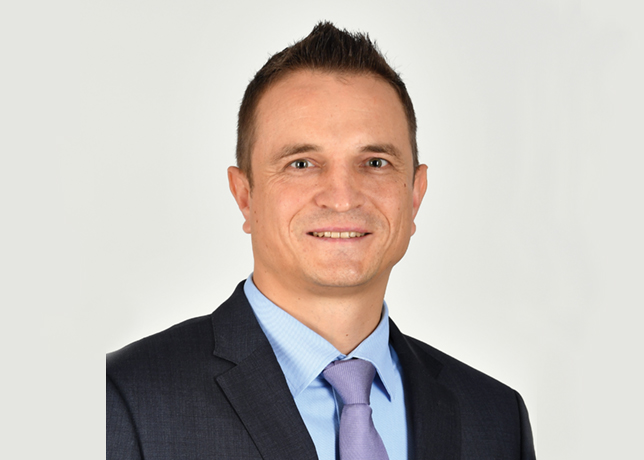
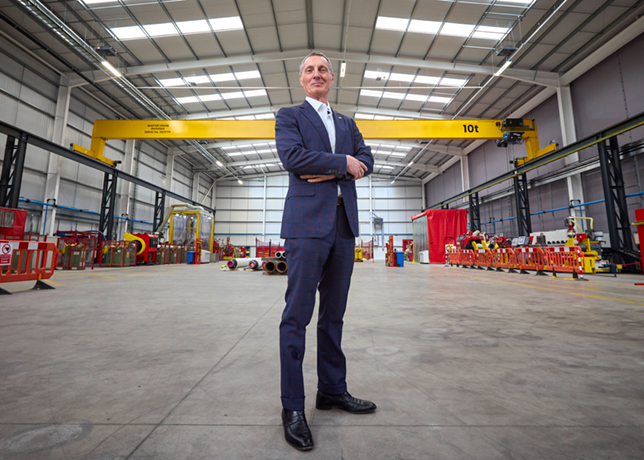
Ivan Chikunov
AEC’s rapid fleet expansion achieved near-total utilisation over the past year; what structural supply chain strategies are in place to ensure this pace of asset growth does not compromise operational efficiency or maintenance standards?
AEC’s fleet expansion has always been closely integrated with our maintenance and supply chain strategy.
This disciplined approach has enabled us to expand our fleet from four rigs in 2022 to 20 rigs today while maintaining 100 per cent fleet utilisation for four consecutive years and keeping non-productive time below 1 per cent.
This performance is underpinned by rigorous preventive maintenance and a disciplined operating model, supported by a diversified global supplier base and strong in-house maintenance capabilities, which enhance fleet reliability and reduce external dependencies.
To mitigate potential logistical risks amid current regional developments, we have taken precautionary measures, including the early activation of emergency response plans and the strategic stockpiling of critical spare parts.
Capital expenditure peaked during the heavy build phase in late 2024 and early 2025 before declining significantly as the rig-build program concluded, marking a shift from expansionary spend to generating returns from the fully deployed fleet.
This sustainable approach to growth preserves the operational reliability and performance standards that have defined AEC’s partnership with KOC for nearly a decade.
As KOC aggressively targets an upscale in production toward 4 million barrels per day, how is AEC high-grading its fleet horsepower to handle the technically demanding high-pressure, high-temperature (HPHT) environments of Kuwait’s Jurassic gas and northern heavy oil fields?
AEC operates one of the youngest fleets in Kuwait and the wider region, with an average rig age of just 2.07 years against a market average of 15.9 years, spanning a horsepower range from 550 HP to 3,000 HP with a total installed capacity of 20,600 HP.
That breadth lets us match rig capability to well complexity across Kuwait’s major producing areas, including South and East Kuwait, North Kuwait, West Kuwait, and the Ratqa, DMZ and UN region.
At the upper end of the fleet we operate rigs at 3,000 HP and above, the rig class we deployed under our nine year deep drilling contract with KCA Deutag, mobilised in 2020 and 2021.
Combined with our prequalification for drilling, workover and heavy oil services, this positions us for technically demanding programmes across these areas.
Our current expansion shifts the fleet further toward higher capacity.
The seven rigs under construction lift total installed capacity from 20,600 HP to 29,000 HP, and include four new 1,500 HP rigs and one 1,000 HP rig financed under our recent facilities.
This supports Kuwait’s targets of crude production capacity of 4 million barrels per day (bpd) by 2035 and free gas production of 2 billion cu ft per day (bcfpd) by 2040.
Our disciplined preventive maintenance model, in place since inception, ensures that as we add capacity, reliability holds and nonproductive time stays below 1 per cent.
Being the leading local integrated upstream player covering drilling and workover, what specific local content advantages does AEC leverage to guarantee execution certainty for the state’s national oil company over international competitors?
As Kuwait’s leading private upstream services provider, AEC offers KOC a combination of execution certainty and local content that supports the national oil company over international competitors.
The clearest evidence is our track record.
We have secured 94 per cent of all drilling tenders we have participated in, and maintained 100 per cent fleet utilisation for four consecutive years, compared with the Kuwait industry average of approximately 80 per cent and the GCC average of around 64 per cent.
KOC and KGOC account for approximately 94 per cent of our backlog, reflecting the depth and strength of this relationship.
A decisive advantage is that our entire operational footprint is based within Kuwait.
This provides a natural buffer against regional disruption, and combined with a diversified global supplier base, in house maintenance capabilities, and a young, high reliability fleet, it reduces external dependencies and supports continuity of our upstream operations.
Local content is central to our value proposition.
We develop Kuwaiti talent with deep operational expertise and a strong safety culture, and through our international technology partnerships we transfer global expertise into our local workforce, building sustainable local capabilities rather than relying on external resources.
This directly supports Kuwait’s long term energy ambitions.
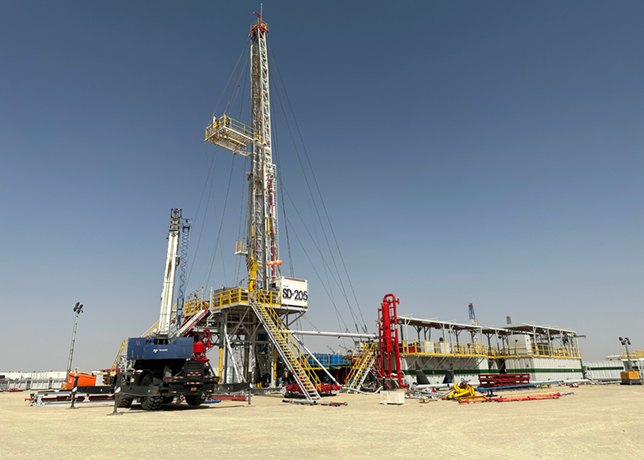
An AEC rig ... the company has 20 active rigs today up from 4 in 2022
Moving beyond AEC’s established reputation in drilling, how is the company technically integrating its specialised oilfield services, such as electric submersible pumps & slickline, to offer KOC a seamless, full well lifecycle workflow?
AEC’s strategy is to evolve from a specialist drilling contractor into a full-cycle well solutions provider, delivering support across the entire well lifecycle through a combination of in-house capabilities and strategic technical partnerships.
The integration and expansion of oilfield services are central to this transformation.
Today, drilling services account for approximately 62 per cent of our backlog, while oilfield services represent 38 per cent and are our fastest-growing business service lines.
Importantly, oilfield services contracts typically carry average remaining durations of six to seven years, providing long-term revenue visibility and reinforcing the resilience and sustainability of this growing part of our portfolio.
We deliver an increasingly broad portfolio, including electric submersible pumps, slickline, once through steam generators, tubular and mobile equipment inspection, directional drilling, wireline, cementing, coiled tubing, and workshop services.
This is achieved through a combination of in-house operations and strategic partnerships with leading international technology providers including TRG, COSL, Vigorous, Kellton, SJ, Jiangsu, TAQA, Biotechina, CPVEN, NESR, Expert Optima, Kerui, Jereh, NaftoServ and Gilgamesh. These services deepen integration with our core drilling business.
A key element of this integration is our backward integration strategy, exemplified by our acquisition of a 60 per cent stake in Target NDT for inspection services in April 2025.
Over time our partnerships are structured to enable a gradual transition from JV based participation to independent execution, transferring knowledge and enhancing capability within our own workforce.
The result is a platform that diversifies revenue, broadens our role as a partner to KOC, deepens integration with the upstream value chain, and enhances resilience through recurring service revenues.
With mature fields requiring complex intervention to sustain yields, what is the strategic roadmap for scaling AEC’s high-value production services, specifically regarding its coiled tubing and electric submersible pump (ESP) operations?
Coiled tubing and electric submersible pumps are central to our oilfield services platform, which is the company’s fastest growing segment service lines, representing 38 per cent of total backlog with average remaining contract durations of six to seven years.
Under our JV with CPVEN, AEC was awarded its first coiled tubing contract with KOC in 2016, which was renewed in 2020, and both coiled tubing and ESP are now established lines within our portfolio.
In 2025, we accelerated this transformation, expanding across multiple service lines including electric submersible pumps, slickline, inspection, once through steam generators, cementing, directional drilling and coiled tubing.
The roadmap has three reinforcing elements.
We continue to pursue additional service line prequalification’s and awards, broadening the services we can offer KOC.
Strategic partnerships with global technology providers enable a gradual transition from JV based participation to independent execution as our technical capability matures.
And within Kuwait, we are assessing bolt on acquisitions in oilfield services segments, applying the same backward integration logic behind our Target NDT acquisition.
Because oilfield services represent higher margin contributions, scaling this platform strengthens the resilience of our earnings and positions AEC to support KOC across the upstream value chain.
AEC’s growth model features prominent alliances with global oilfield service giants like KCA Deutag and CPVEN; how do these joint ventures practically facilitate the transfer of proprietary technology and technical capabilities to your local workforce?
At AEC, we view our partnerships with leading international oilfield service companies as platforms for technology transfer and capability building.
Our partnerships with companies such KCA Deutag, TRG, Vigorous, Kellton, SJ, Jiangsu, TAQA, Biotechina, CPVEN, COSLNESR, Expert Optima, NaftoServ, TRGKerui, Jereh, and Kerui Gilgamesh are structured to ensure that global expertise is transferred to and embedded within our local workforce.
The transfer takes place primarily through day-to-day operations.
Our engineers, supervisors, and field personnel work directly alongside international specialists on drilling and oilfield service projects, gaining hands-on exposure to advanced technologies, operating procedures, maintenance practices, troubleshooting techniques, and HSE standards.
This practical experience allows knowledge to be transferred in real operating environments rather than through classroom training alone.
We reinforce this process through technical service agreements, structured training programs, competency assessments, and on-the-job mentoring.
Several of our partnerships include dedicated knowledge-transfer and localisation components that enable AEC personnel to progressively assume greater operational and technical responsibilities.
Over time, this allows critical expertise to be retained within the organisation and reduces dependence on external resources.
The results are reflected in AEC’s evolution over the past decade.
We have grown from a drilling contractor operating two rigs in 2015 into Kuwait’s leading local upstream services provider with 20 active rigs and a broader portfolio of specialised services.
By combining international technology and expertise with local talent development, we are creating sustainable in-country capabilities and supporting the development of a highly skilled national workforce for Kuwait’s energy sector.
As digital transformation increasingly dictates upstream efficiency, how are these international partnerships being utilised to embed advanced data analytics and automated drilling technologies into your daily field operations?
How is digital transformation embedded into your daily field operations to improve upstream efficiency?
Technology and automation are intentionally embedded in AEC’s fleet operations, we operate one of the youngest and most technologically advanced fleets in the region, equipped with automated pipe handling systems, lower guide arms, mud buckets, iron roughnecks, joystick operated controls, climate controlled driller cabins, and site wide CCTV monitoring.
These technologies minimise manual intervention and help isolate personnel from traditional high risk zones, while each rig is also supported by advanced rig move systems and predictive maintenance technology.
Our international partnerships are a primary channel for building these capabilities.
Working day to day alongside specialists from partners such as KCA Deutag, CPVEN, TRG and others, our engineers, supervisors and field personnel gain hands-on exposure to advanced technologies, operating procedures, maintenance practices and troubleshooting techniques in real operating environments.
This is reinforced through technical service agreements, structured training programmes, competency assessments and on the job mentoring, several of which include dedicated knowledge transfer and localisation components.
Most recently, we have taken a deliberate step further by forming a strategic joint venture with Kellton, a global AI-led digital transformation and enterprise technology company, marking AEC’s first dedicated move into digitisation and AI.
The JV pairs our operational expertise and industry relationships with Kellton’s capabilities in artificial intelligence, digital engineering, cloud, cybersecurity and data.
A central focus is the regional deployment of OPTIMA, Kellton’s proprietary digital oilfield platform, which is built for intelligent operations, workflow automation, asset performance optimisation, real-time visibility and AI-driven decision-making.
Through this partnership we aim to modernise field operations, sharpen decision-making and unlock greater value from our assets, laying the foundation for a long-term platform of AI-powered innovation across our operations and the wider GCC energy sector.
This combination of a modern, technologically advanced fleet and deep technology partnerships and a growing AI and digital capability underpins our operational performance, helping us sustain 100 per cent fleet utilisation and nonproductive time below 1 per cent, and gives us a strong platform to continue embedding advanced capabilities into our daily field operations.
Following AEC’s landmark listing on Boursa Kuwait’s Premier Market, how has transitioning to a publicly-traded entity structurally enhanced the company’s capital discipline and risk mitigation frameworks when bidding for multi-year upstream contracts?
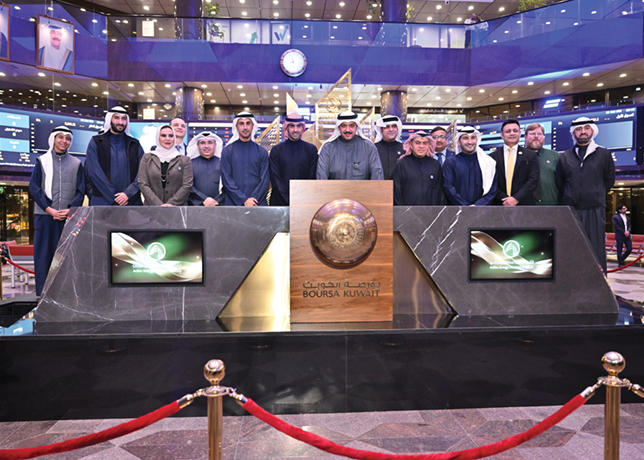
AEC’s listing on the Premier Market of Boursa Kuwait on December 17, 2025, strengthened our ability to pursue multi-year upstream contracts by enhancing both financial flexibility and governance.
The listing was accompanied by a significant capital increase, contributing to a stronger balance sheet, with our net debt-to-equity ratio declining from 1.45 times in 2024 to 0.55 times in 2025, while cash and short-term deposits increased to KWD28 million.
This improved financial position supports a disciplined capital allocation framework focused on maintaining conservative leverage while funding growth opportunities.
From a risk management perspective, the transition formalised an integrated governance framework aligned with the requirements of the Capital Markets Authority, including the establishment of dedicated Audit and Risk Committees, clearly defined oversight responsibilities, and enhanced transparency and accountability.
These structures strengthen oversight of financial reporting, internal controls, and enterprise risk management, ensuring that growth and contract execution remain supported by disciplined governance and effective risk monitoring.
As a result, AEC is better positioned to evaluate and execute large-scale, long-duration upstream opportunities while maintaining a prudent approach to capital deployment and risk.
Given the immense operational strain that accompanies managing a 1,700-strong workforce under rapid expansion, how is AEC evolving its HSE management systems to preserve its stringent zero-incident safety culture?
As AEC continues to expand its workforce to more than 1,700 employees, preserving our zero-incident safety culture remains a non-negotiable priority.
We have evolved our HSE management systems by strengthening governance, investing in advanced technologies, and maintaining rigorous workforce training standards.
From a governance perspective, we maintain structured oversight through our Audit and Risk Committee and independent compliance functions, supported by leading external specialists including Protiviti for risk management, external specialists for technical internal audits, and BDO for internal control reviews.
This framework ensures consistent monitoring and management of risk across our growing operations.
At the operational level, we continue to invest in automation and engineering controls that reduce exposure to frontline hazards.
Our fleet is among the youngest and most technologically advanced in the region, supported by site-wide CCTV monitoring and equipped with automated pipe-handling systems, lower guide arms, mud buckets, and iron roughnecks.
Combined with climate-controlled driller cabins and joystick-operated controls, these technologies minimise manual intervention and help isolate personnel from traditional high-risk zones.
Equally important is our commitment to workforce competency.
Through a comprehensive training matrix and partnerships with accredited external providers, employees complete mandatory safety programs covering H2S safety, defensive driving, emergency response, working-at-heights protection, and specialised operational workshops.
This ensures that every new hire adopts AEC’s zero-harm philosophy and that safety standards remain consistent as we scale.
The effectiveness of this approach is reflected in our industry-leading LTIR of 0.01, approximately 96 per cent below the global onshore average, and in the recognition we have received from KOC, including consecutive 7-year and 8-year Lost Time Incident-Free citations and Best Performing Rig awards.
Supported by our ISO 45001, ISO 14001, and ISO 9001 certifications, these measures ensure that our stringent safety standards remain fully intact throughout our continued expansion.