




































































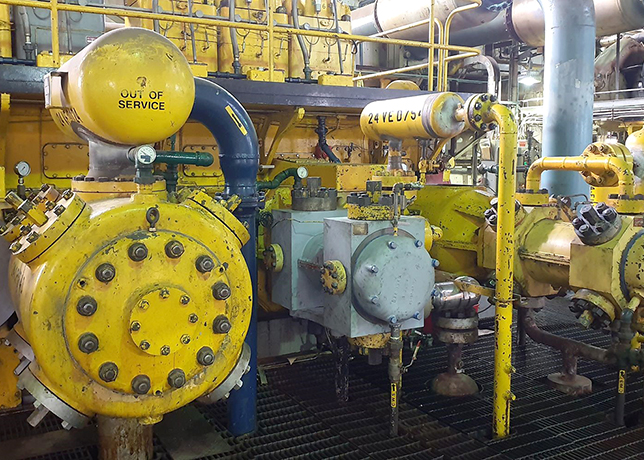
Along the high-pressure arteries that move natural gas across continents, precise flow accounting has become inseparable from commercial and regulatory integrity.
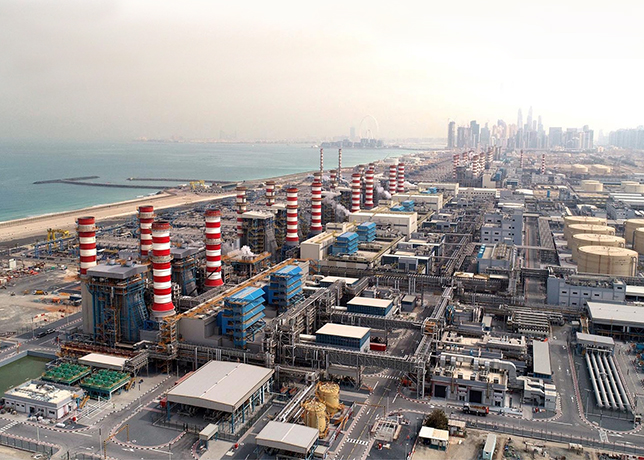
There are approximately 1,650 compressor stations in the US alone, housing nearly 9,000 individual compressors and spaced at intervals of roughly forty to a hundred miles along transmission pipelines, according to Sage Metering.
Each station sustains line pressure and keeps gas moving toward power plants, industrial users and city gates.
Transmission pipelines typically operate at pressures around 60 bar, falling to roughly 8 bar once gas reaches a pressure-regulating station at the city gate, and each compressor station along that route represents a point where flow must be defined, not merely measured, with rigour.
THE DEFINITIONS OF FLOW
Industry practice distinguishes three related but distinct measurements:
• Volumetric flow: The physical volume of gas passing a point per unit time, typically expressed in cu ft per minute or cu m per hour.
According to Industrial Monitor Direct, this figure varies sharply with pressure and temperature, since compressed gas occupies markedly less volume at elevated pressures than at atmospheric conditions.
• Mass flow: The actual quantity of gas molecules transiting the system, independent of pressure and temperature, expressed in kilograms per second or pounds per hour.
• Standardised, or pseudo-mass, flow: Volumetric flow referenced to a defined set of conditions, commonly 14.696 psia and 60 deg F under the basis cited by Industrial Monitor Direct, expressed in standard cu ft per minute or normal cu m per hour, allowing volumetric readings to be compared consistently as though they behaved like mass flow.
These distinctions produce the compressor industry’s working vocabulary of common flow units:
• ICFM (Inlet Cu Ft per Minute): The raw volumetric flow entering the compressor at actual, uncorrected inlet conditions.
• ACFM (Actual Cu Ft per Minute): Real volumetric flow at a specific point in the system, corrected for local temperature, pressure and humidity, and varying between inlet and discharge.
• FAD (Free Air Delivery): The usable volumetric flow the compressor delivers once referenced back to defined inlet conditions and adjusted for internal losses.
• SCFM (Standard Cu Ft per Minute): The most common performance rating, though Industrial Monitor Direct cautions that vendors often favour it for marketing purposes, since comparing two machines’ SCFM ratings without confirming the underlying reference conditions can obscure genuine differences in delivered output.
THE METROLOGY OF CUSTODY TRANSFER
The financial exposure created by marginal measurement error explains the industry’s exacting standards.
Emerson has calculated that an error of just 0.25 per cent on a flow of 3 million standard cu m a day, priced at $5 per million British thermal units (BTu), equates to nearly $500,000 of annual financial risk.
International metrology standards for custody transfer, the company notes, permit a maximum allowable accuracy shift of only 0.167 per cent against an international reference standard under disturbed flow conditions, a tolerance that grows especially demanding on pipelines of thirty inches or larger, where valves and fittings routinely distort the flow profile.
Ultrasonic technology has become the dominant response.
Force Technology records that ultrasonic meters, despite existing since the 1960s, were not widely accepted for gas custody transfer until the late 1990s, when AGA Report 9 supplied clear metrological guidelines that drove global adoption.
The American Gas Association (AGA) now recommends an overall system uncertainty budget of around 1 per cent for large metering stations, roughly $1 million of exposure, while trading arrangements worth up to $100 hundred dollars are typically held to a tighter 0.5 per cent limit.
REGULATORY PRESSURE SHARPENS MEASUREMENT RIGOUR
Flow measurement has gained further significance as regulators tighten oversight of fugitive methane.
Gibson Dunn notes that the Environmental Protection Agency’s (EPA) final methane rule, issued in December 2023, imposes frequent monitoring and repair obligations on well sites, centralised production facilities and compressor stations, using established leak-detection technologies or approved advanced alternatives.
The same analysis records that the Inflation Reduction Act created a methane fee schedule beginning in 2024, rising to $900 per metric tonne that year, $1,200 in 2025, and remaining at $1,500 per metric tonne from 2026 onward for facilities exceeding their statutory allowance.
The scientific basis for quantifying station-level emissions continues to sharpen alongside that framework.
A study published in Environmental Science & Technology found that site-level methane emissions at compressor stations, measured using downwind-tracer-flux techniques, ranged from 2 to 880 SCFM, with independent estimation methods generally agreeing within experimental uncertainty, underscoring why the standardised flow conventions discussed above matter as much to environmental accounting as to commercial trade.
Taken together, these developments show an industry in which the choice between volumetric, mass and standardised flow is no longer academic.
Ultrasonic metering has matured into the accepted standard for high-value custody transfer, methane accountability obligations continue tightening, and the compressor station has become as much a metrology installation as a mechanical one.