





















By Abdulaziz Khattak
Kuwait's energy sector has spent the past year proving that state control and international capital are not mutually exclusive propositions.
Oil production capacity climbed to roughly 3.2 million barrels per day (bpd), the highest level in more than a decade, according to Tareq Al-Roumi, the Minister of Oil of Kuwait and Chairman of the Board of Directors at the Kuwait Petroleum Corporation (KPC), even as the country continued to observe its OPEC+ quota of around 2.559 million bpd.
Capacity had stood at around 2.8 million bpd as recently as 2023, and Kuwait Oil Company (KOC) has separately indicated it expects the ceiling to keep rising towards the government’s stated ambition of 4 million bpd by 2035.
That restraint on actual output has not slowed the sector’s underlying expansion.
KPC, the state entity overseeing the industry, has pursued its long-term Strategy 2040 across five fronts simultaneously: Offshore exploration, unconventional gas, infrastructure monetisation, downstream integration, and decarbonisation.
The result is a sector shifting from a purely volume-driven producer towards one optimising value, capital structure and emissions intensity in parallel, without diluting the government’s constitutional authority over its hydrocarbon wealth.
OFFSHORE DISCOVERIES, UNCONVENTIONAL GAS RESHAPE THE UPSTREAM BASE
In July 2024, KOC disclosed a giant offshore discovery at the Al Nokhatha field, east of Failaka Island, with preliminary reserves of 2.1 billion barrels of light oil and 5.1 trillion standard cu ft (Tcf) of gas, equivalent to roughly 3.2 billion barrels of oil equivalent (BOE).
Sheikh Nawaf Saud Nasir Al-Sabah, KPC’s Chief Executive Officer, described the find as equal to three years of the country’s entire oil output.
The well was already producing about 2,800 barrels of light oil and seven million cu ft (mmcf) of associated gas daily at the time of the announcement.
The momentum continued into January 2025 with a further offshore discovery at the Al Jlaiaa field, holding an estimated 800 million barrels of medium-density oil and 600 billion standard cu ft (Bcf) of associated gas, as part of an exploratory campaign spanning more than 6,000 sq km of Kuwaiti waters.
Onshore, the Mutriba field in northwest Kuwait entered commercial production on June 15, 2025, tapping unconventional and geologically complex reservoirs across an area exceeding 230 sq km, with the over-pressured, organic-rich Najmah shale and the Makhul formation identified as the principal targets.
Mutriba is a technically demanding development.
First discovered in 1957 and confirmed as a viable petroleum system only in 2009, the field sits far from KOC’s existing infrastructure and carries hydrogen sulphide content of up to 40 per cent, requiring specialised metallurgy and safety design.
Gas from the field is currently piped for processing at North Kuwait’s Jurassic facilities pending dedicated infrastructure.
These technical demands prompted KOC to award SLB a $1.51 billion integrated production management contract in early 2026 to support the field’s next development phase, building on a long-term testing facility designed to handle up to 5,000 bpd and 7 mmcf of gas daily.
Alongside Mutriba, KOC commissioned Jurassic Production Facilities 4 and 5 to process non-associated gas and light oil from deep, high-pressure, high-temperature reservoirs.
National gas output averaged 1.95 bcf per day across the first ten months of 2025, hitting a monthly record of 2.07 bcf per day in May, with Ahmed Al-Eidan, KOC Chief Executive Officer, targeting 2.5 bcf per day by 2028-29 and roughly 4 bcf per day by 2040 as Mutriba, offshore fields and the shared Dorra reservoir ramp up.
All upstream activity remains governed by the state’s sovereign ownership of hydrocarbon resources, with KOC engaging international service providers strictly on a contracted, technical basis rather than through equity participation in reserves.
PROJECT PEREGRINE RECYCLES PIPELINE
The sector’s defining financial event arrived on July 24, 2026, when KOC signed a $16 billion lease-and-leaseback agreement covering its entire domestic and export pipeline network with a consortium led collectively by Blackstone, Brookfield and KKR.
KPC described the transaction, named Project Peregrine, as the largest foreign direct investment in Kuwait’s history.
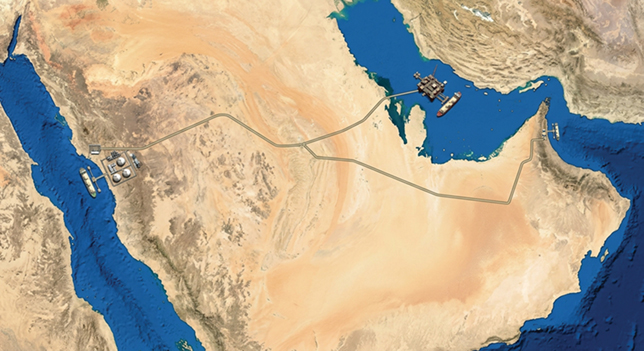
Under the structure, a newly incorporated Kuwaiti joint venture leases usage rights to KOC’s 13 pipelines, spanning approximately 320 km, before granting KOC exclusive operational and maintenance rights back for over a 20-year term in exchange for a volume-based tariff.
The three investment groups collectively hold a 49 per cent stake, with KOC retaining a controlling 51 per cent and full ownership of the physical infrastructure.
The arrangement imposes no restriction on Kuwait’s refining throughput or production volumes, both of which remain the state’s prerogative.
The deal is expected to generate $7.85 billion in upfront proceeds upon closing, funds earmarked to support KPC’s capital expenditure programme, including its target of 4 million bpd of crude production capacity by 2035.
The transaction mirrors comparable infrastructure monetisations already completed by Saudi Aramco, the Abu Dhabi National Oil Company (Adnoc) and Bahrain’s Bapco Energies, reflecting a broader Gulf trend of unlocking capital from mature assets while preserving sovereign control over strategic networks.
AL-ZOUR ANCHORS A DOWNSTREAM PIVOT TOWARDS REFINED VALUE
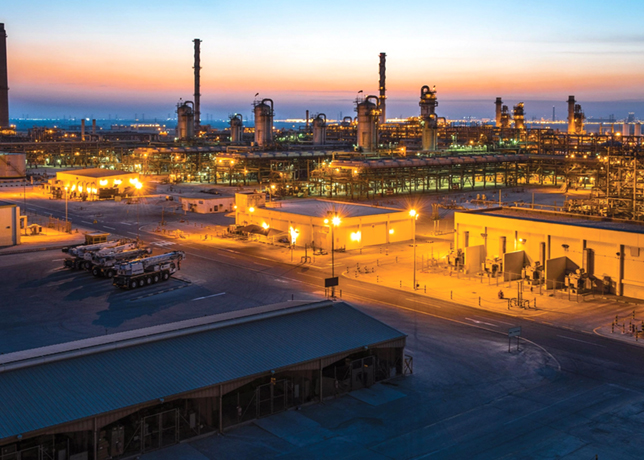
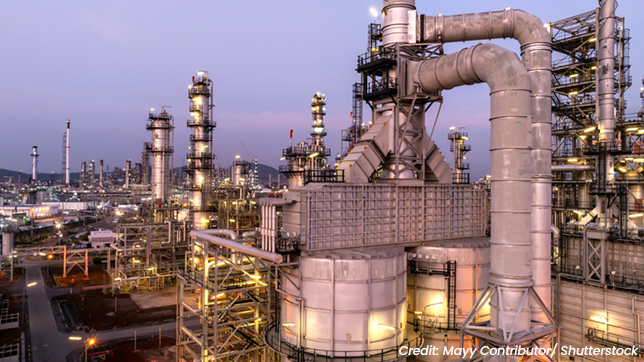
On the downstream side, the Al-Zour refinery, located 90 km south of Kuwait City, reached full operational status with output of 615,000 bpd, comprising roughly 86,000 bpd of premium naphtha, 99,000 bpd of jet fuel and 147,000 bpd of low-sulphur diesel.
The achievement lifted Kuwait’s combined national refining capacity, including the Mina Abdullah and Mina Al-Ahmadi refineries, to approximately 1.415 million bpd, ranking Al-Zour seventh among the world’s largest refineries by daily capacity.
The facility’s advanced desulphurisation system achieves a 99.9 per cent recovery rate, and its hydro processing unit strips waxy materials to produce ultra-low-sulphur diesel meeting stringent European specifications.
Al-Zour also incorporates a hydro processing unit engineered to strip waxy compounds and yield ultra-low-sulphur diesel suited to strict European specifications, alongside six of the world’s largest atmospheric distillation units, an artificial island for liquid product exports and a storage capacity of 6.5 million barrels of low-sulphur fuel to smooth seasonal and operational fluctuations.
Beyond fuels, KPC continues to pursue integration between Al-Zour’s refining streams and the Petrochemical Industries Company.
A planned aromatics and polypropylene complex is expected to yield roughly 2.35 to 2.4 million tonnes annually, part of a wider effort under Strategy 2040 to shift the sector’s revenue mix away from raw crude exports towards higher-margin refined products and petrochemical feedstocks.
The same complex is intended to supply around 1.55 million tonnes of gasoline annually to the domestic market.
Total investment envisaged under Strategy 2040 runs to approximately $410 billion through 2040, encompassing expanded refining capacity, foreign acquisitions and the 4 million bpd production target.
DECARBONISATION TARGETS ADVANCE ALONGSIDE EXPANDING OUTPUT
Kuwait’s energy transition agenda has continued to develop in parallel with its production ambitions.
KPC maintains a target of net-zero Scopes 1 and 2 emissions by 2050, feeding into Kuwait’s broader national commitment to net-zero emissions by 2060, with the roadmap built around carbon capture, utilisation and storage, gas-flaring reduction and biofuels.
Renewable capacity remains modest in absolute terms but is expanding from a low base.
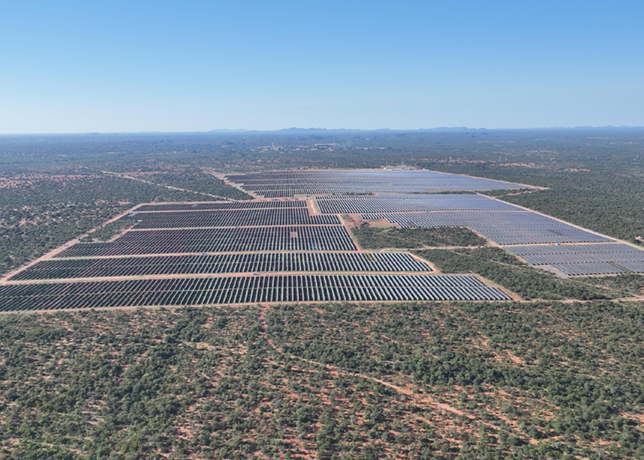
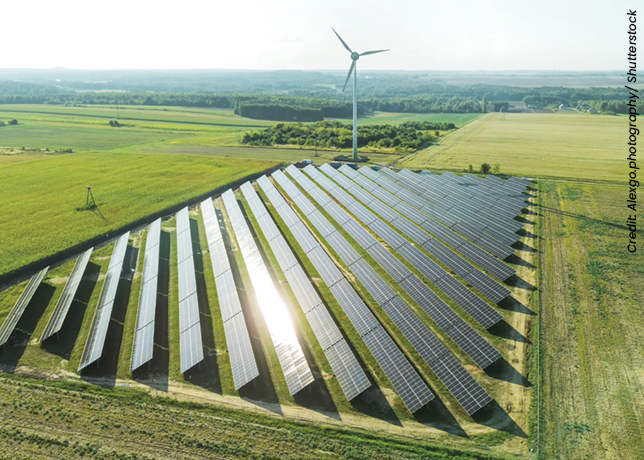
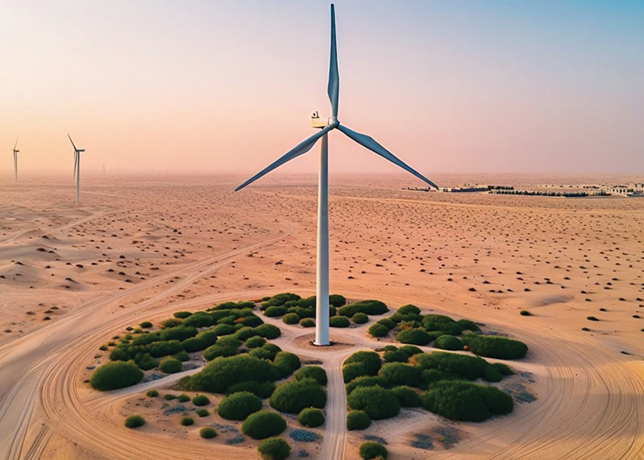
The Shagaya Renewable Energy Park combines a 50-megawatt (MW) concentrated solar plant, a 10-MW wind farm and a 10-MW photovoltaic installation.
A further 1.6 gigawatts (GW) is in pre-construction phase and 3.2 GW planned, against Kuwait’s updated national target of a 30 per cent renewable share of energy generation by 2030 and 50 per cent by 2050.
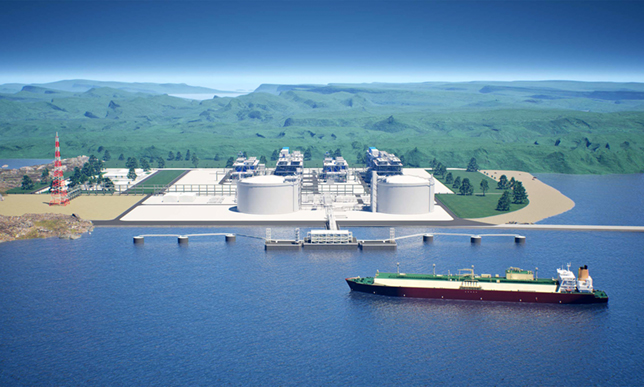
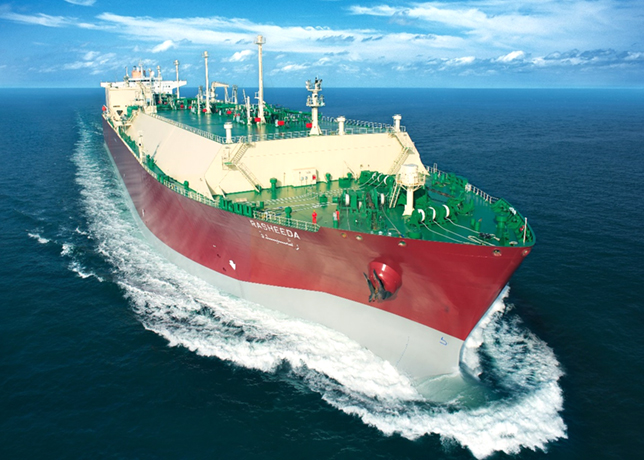
Kuwait’s approach combines this renewable build-out with continued reliance on liquefied natural gas imports, including a 15-year supply agreement with QatarEnergy for up to three million tonnes annually from January 2025, to meet domestic power demand while freeing associated gas and crude for export.
Executives at the KPC have characterised the strategy as a deliberate dual pursuit of expanded hydrocarbon output and lower carbon intensity, integrating carbon dioxide injection into oil reservoirs to enhance recovery while simultaneously reducing net emissions.