























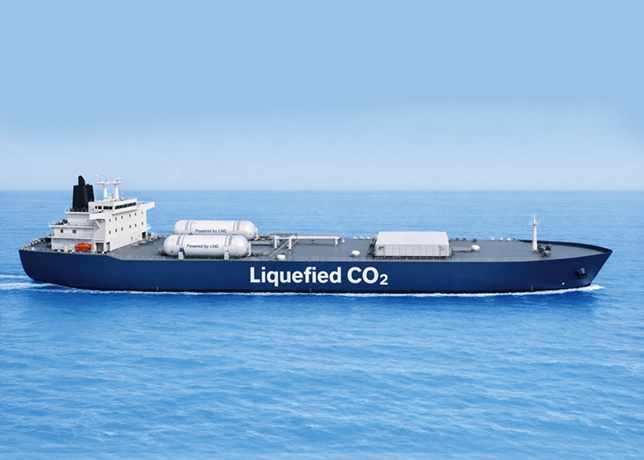

















Europe’s plans to scale carbon capture, utilisation and storage (CCUS) will require a major expansion of transport infrastructure, including around 65 CO2 carriers and 33 ports by 2050, according to a new report by Xodus, a Subsea7 company, for the Net Zero Technology Centre.
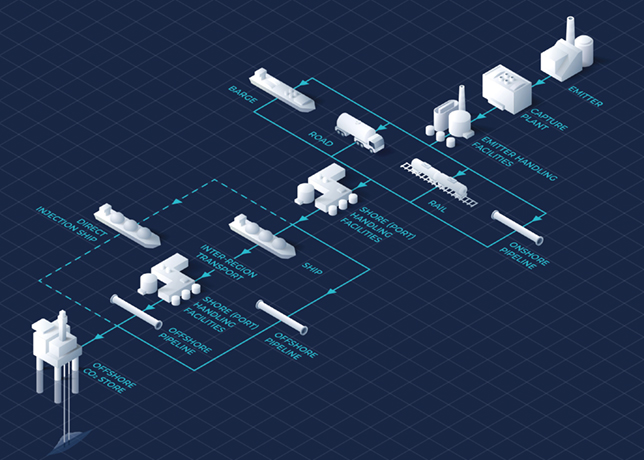
The study highlights the need to develop a coordinated network of shipping, pipelines and port facilities to move captured emissions from industrial sources to offshore storage sites, particularly in the North Sea.
Captured CO2 volumes across Europe are projected to rise from 70 million tonnes per annum in 2030 to 320 million tonnes by 2050.
While pipelines are expected to become the dominant transport method over time, shipping will remain essential, with maritime transport volumes more than doubling to 79 million tonnes as it provides early access to storage and flexible cross-border connectivity.
The analysis of 850 European ports identified around 60 as key hubs for CO2 handling, including major industrial locations such as Rotterdam, Humberside and Liverpool Bay.
These ports are expected to support both emissions collection and offshore storage distribution.
The report envisions a hybrid transport system, where pipelines serve high-volume corridors and shipping connects harder-to-reach regions.
The North Sea is consistently identified as Europe’s primary storage hub, with the UK and Dutch sectors playing a central role in receiving CO2 from across the continent.
The study also notes that existing technologies from the LPG and industrial gas sectors can be adapted for CO2 transport, but large-scale investment in ships, ports and infrastructure is required to enable deployment and meet Europe’s decarbonisation goals.