



































By Abdulaziz Khattak
The Middle East and North Africa (Mena) is emerging as one of the world’s most important growth regions for clean industry financing, with 84 announced projects representing $642 billion in potential investment across clean fuels, fertilisers, steel, and aluminium.
The growth comes as clean industry plants globally are securing finance at the fastest pace on record, with 19 projects worth $43 billion reaching final investment decision in the past six months alone, double the pace of a year earlier.
The scale of Mena’s opportunity is highlighted in a new report, ‘Clean Industry Rising: the foundation of resilient value chains’, from Mission Possible Partnership, supported by the Industrial Transition Accelerator (ITA) and published alongside the latest Global Project Tracker.
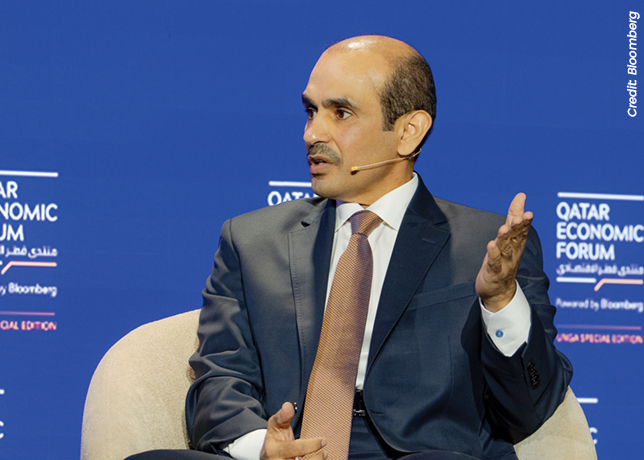
In an exclusive interview with OGN energy magazine, James Schofield, Deputy Director, ITA, says: “Mena countries have the advantage of being able to draw on proven policy and regulatory instruments already tested in other markets to activate domestic demand in turn providing a level of revenue certainty.”
Following are excerpts from the interview:
Despite a massive $642 billion pipeline, only a minimal fraction has reached a final investment decision (FID). What barriers are preventing regional developers from converting this pipeline into capital-backed, operational realities?
From a structural perspective, one of the key priorities is ensuring the rapid scaling up of affordable, reliable, and accessible renewable electricity for industrial users.
While significant progress has been made across regional electricity markets, further action is needed to expand renewable energy deployment, strengthen grid access, and establish long-term mechanisms that provide the price certainty required to underpin investment decisions in low carbon industrial production.
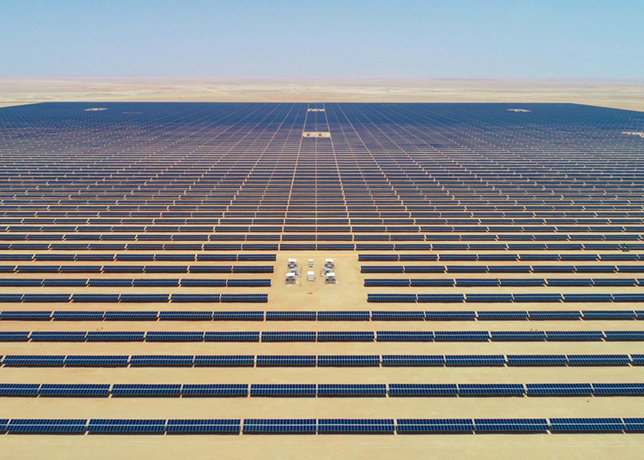
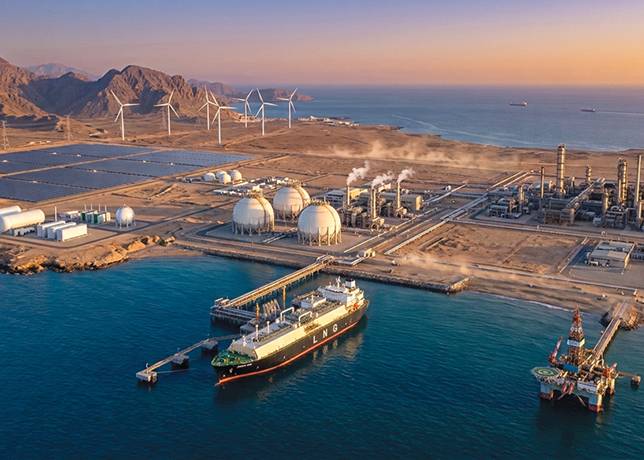
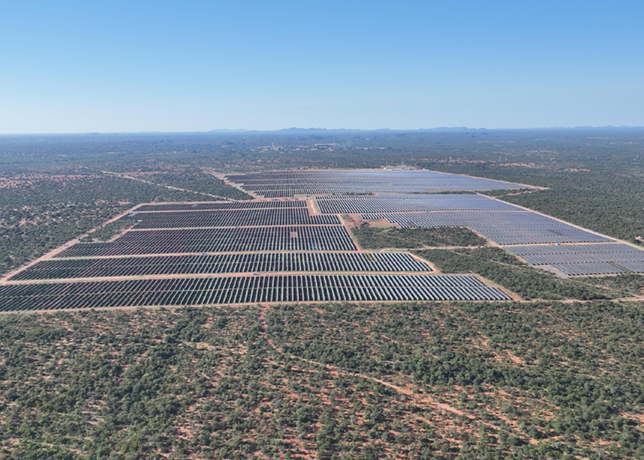
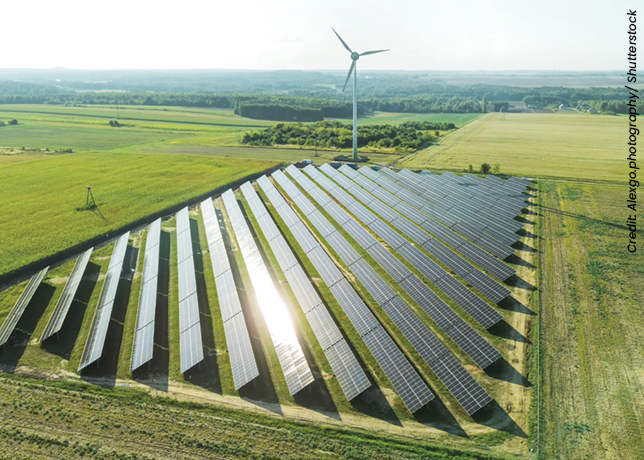
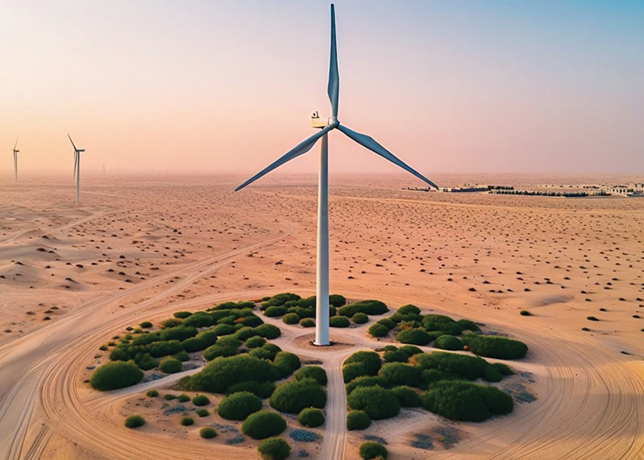
The Amin solar park in Oman ... 1,500 sq km of land has been earmarked for green hydrogen
This is particularly important as exporters seek to comply with evolving international regulatory frameworks, including access requirements for European markets.
Measures, such as carbon pricing, green public procurement, low carbon product standards, building regulations, and policies supporting the availability and uptake of sustainable feedstocks can help create the enabling conditions needed to unlock investment and accelerate market development.
The EU ReFuelEU Aviation mandate introduced in 2023 has already resulted in a sharp increase in sustainable aviation fuel projects reaching final investment decisions, with global capacity more than doubling in the last two years, demonstrating a clear supplier framework.
On the macroeconomic side, high sovereign and country risk ratings make external debt financing expensive, as international lenders price in a risk premium.
Access to private capital remains limited across most of the region outside the GCC.
Geopolitical and security conditions in specific corridors, such as North Sinai, have also directly stalled project development in otherwise resource rich areas.
The key fact remains that the region does hold a vast pipeline of projects, including many sustainable aviation fuel and chemicals projects, with the potential to create new clean industrial plants that can serve domestic and international markets.
How can Mena nations effectively compete for international private equity when global project tracker data confirms that China absorbed over 60 per cent of all clean industry FIDs in the last six months?
While GCC markets attract international private equity due to high sovereign credit ratings that reduce perceived risk premiums, the broader region faces challenges where weaker ratings make the business case harder.
For non-GCC markets, the critical lever is the blended finance architecture, utilising programmes like the Climate Investment Funds, multilateral development bank facilities, and platforms like TIDIP to provide first loss guarantees, concessional tranches, and credit enhancements.
This architecture improves the risk return profile sufficiently to attract private capital that would not otherwise deploy in these markets, as demonstrated by the Altera fund, which leverages concessional capital from the UAE to attract major institutional investors, such as Brookfield and BlackRock, because the blended structure makes the economics viable.
In parallel, strong policy signals build confidence and open opportunities for contracting offtake to unlock investment.
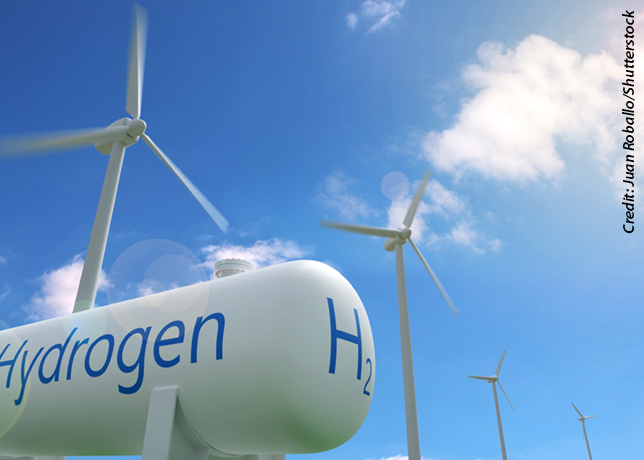
The global clean energy industry is securing finance at the fastest pace on record
Given the capital-intensive nature of flagship regional developments, what specific risk-mitigation frameworks must Middle Eastern sovereign wealth funds introduce to satisfy international lenders?
A range of bundled de-risking tools can provide catalytic solutions.
Marsh, through ICIEC reinsurance, has already structured tailored political risk insurance (PRI) policies for solar projects in Egypt that catalysed significant equity injection, this model is replicable
Furthermore, blended finance structures, such as first or second loss facilities and concessional loans, directly improve risk return profiles for commercial lenders.
Finally, export credit agencies, such as Germany’s Euler Hermes, provide vital credit guarantees on senior debt tranches into higher risk jurisdictions, as demonstrated in the Neom Green Hydrogen Project, complemented by structural market incentives, carbon credits, and direct grants.
Since domestic markets lack localised carbon pricing mechanisms to mandate adoption, how can regional producers guarantee long-term off-takers for high-premium products like green steel or clean fertilisers?
Producers must capitalise on mature export markets like the EU, where the Carbon Border Adjustment Mechanism (CABM) creates structural pricing advantages for zero liability regional commodities over grey competitors.
This regulatory environment, combined with exceptionally low levelised renewable energy costs from abundant solar resources, renders long term export agreements commercially credible, giving regional producers a genuine competitive advantage to capture significant market share.
Given that the global surge in SAF investments is heavily reliant on binding Western regulations, are regional projects strictly dependent on foreign regulatory compliance to remain bankable?
Bankability represents strategic positioning rather than dependency, as geographical advantages and massive domestic transit hubs in Dubai and Abu Dhabi create a robust commercial foundation.
Growing corporate pressure regarding emissions ensures that near term regional demand remains an absolute high probability.
Does heavy reliance on foreign technology agreements and international off-takers leave Mena’s export hubs commercially exposed if Western trade priorities or subsidy frameworks shift?
The global industrial transformation fosters deep commercial interdependencies rather than isolated exposure.
Because international technology deployment and green sourcing require mutual collaboration across geographies, diversifying the partner base across European, Asian, and Gulf off-takers effectively mitigates policy risks.
How can geographically adjacent Mena nations prevent a value-destructive regional subsidy war as they simultaneously target the exact same import markets in Europe and Asia?
Nations must strengthen regional industrial cooperation frameworks to maximise comparative advantages and prevent duplication.
Integrating cross border supply chains allows countries to capitalise on localised feedstocks, such as utilising regional cooking oil to support processing capacities in adjacent nations.
One such platform is the Integrated Industrial Partnership for Sustainable Economic Development (IIPSED), which brings together the UAE, Qatar, Egypt, Oman, Bahrain, and Turkiye.
How vulnerable are the region’s high-capital assets to the intense localised geopolitical shocks and maritime disruptions detailed in the report?
Geopolitical risk cannot be entirely eliminated, but utilising comprehensive insurance structures and robust contractual frameworks allows active international investors and lenders to manage and price these profiles effectively.
To what extent will the execution of Mena’s project pipeline remain reliant on Chinese supply chains, and does this compromise the “supply chain resilience” that the report champions?
MENA’s clean-industry pipeline is China-enabled, but there is no reason for it to become China-dependent by design.
The resilience test is not whether Mena can avoid China altogether; it is whether MENA can use Chinese participation to build optionality: Local assembly, regional manufacturing niches, workforce capability, critical-mineral processing, diversified suppliers, non-Chinese technology partners, robust MRV systems, and bankable long-term offtake structures.
KAPSARC’s work on GCC-China critical-minerals collaboration points in this same direction.
The Carboun institute critical-minerals brief is even more explicit: MENA is unlikely to replicate China’s full-spectrum dominance, but it can target competitive niches, such as low-emissions mining, selective refining, and integration with regional renewable manufacturing.
Mena can build resilience through diversification and localisation at the margins that matter most, including critical spares, grid equipment, battery packs, selected electrolyser components, mineral processing, certification, O&M capability, and alternative supplier relationships.
Given Mena’s strategic position along global maritime trade routes, what immediate infrastructure mandates must regional governments enact to ensure their ports do not fall behind the global clean fuel transition?
Governments must align rapidly with international emission reduction strategies whilst maintaining collaborative, open policies with leading maritime operators.
Providing structured incentives for bunkering infrastructure, retrofitting, and fuel storage attracts vital private capital, ensuring substantial long term revenue returns to the region.