
































When an alarm sounds on a large industrial site, the most urgent question is not what has happened, it is who is accounted for.
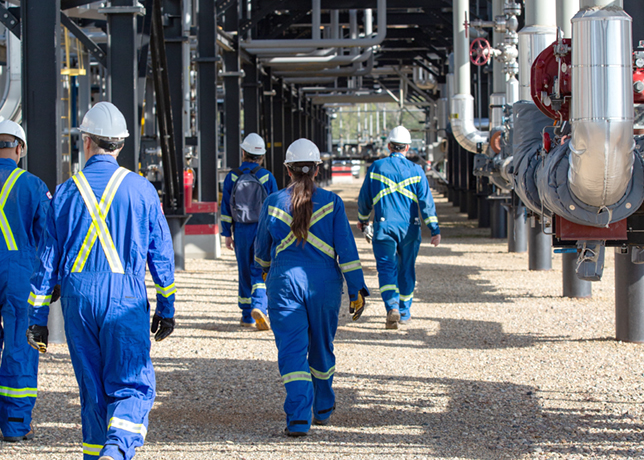
Across oil and gas, petrochemical processing and large-scale infrastructure projects, this has traditionally relied on manual mustering methods: Paper-based roll calls, supervisor headcounts and radio coordination.
While effective in simpler settings, these approaches are increasingly strained by the scale, mobility and risk profile of modern operations.
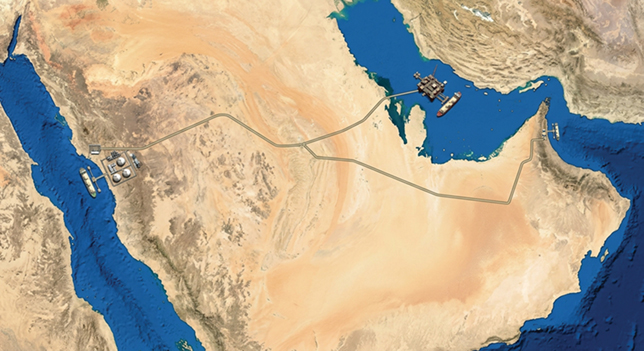
This challenge is particularly visible in distributed operations, such as pipeline networks, where personnel are often spread across long distances, remote valve stations, temporary work fronts and large production facilities making traditional muster-based accountability more difficult to execute consistently.
Digital technologies are now reshaping this landscape.
E-mustering and real-time head counting systems are enabling organisations to move from reactive, manual processes toward continuous, data-driven systems, improving both speed and accuracy during critical events.
MOVING BEYOND MANUAL MUSTERING
Conventional mustering assumes that personnel can safely and quickly reach designated assembly points before the accountability process begins.
In reality, this model introduces delays and uncertainty, particularly on large or congested sites where workers may be dispersed across multiple zones or work areas, or where crews and contractors are deployed across multiple locations simultaneously, such as in pipeline applications.
E-mustering addresses this through digitalisation. Instead of starting from a static list at the point of evacuation, connected systems maintain a live record of personnel presence, movement and status.
When an incident occurs, safety teams can immediately access an up-to-date view of who is on site and monitor real time mustering movements.
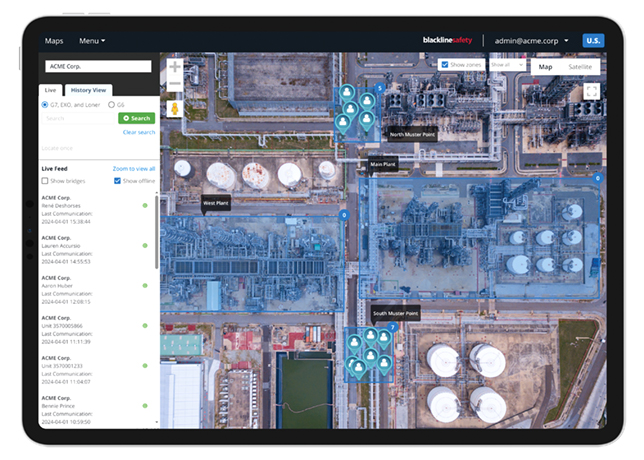
Digital mustering of personnel provides visibility
REAL-TIME HEAD COUNTING AS A CONTINUOUS FUNCTION
Closely linked to e-mustering is the concept of real-time head counting.
Rather than a one-time count during an emergency, it provides a continuous and automatically updated view of workforce occupancy.
In practical terms, this involves tracking personnel across zones, monitoring entry and exit points and maintaining live counts in hazardous or high-risk areas.
Knowing not just how many people are present, but where they are distributed along a site or corridor can significantly improve situational awareness during both routine work and emergency response.
This is especially useful during evacuation drills and related process improvement.
ROLE OF CONNECTED SAFETY PLATFORMS
The enabling layer for both e-mustering and real-time head counting is a connected safety platform.
Such systems bring together data from wearable devices, area monitors and cloud-based software to provide a unified operational view for all stakeholders.
These can include stationery and mobile teams, such as HSE, security and occupational hygiene as well as emergency response and firefighting crews, who are deployed when something happens.
Solutions in the market, such as those developed by Blackline Safety, illustrate how organisations are integrating people, assets and environmental data into a single interface for incident management.
A key development has been the convergence of personnel tracking and environment monitoring.
This allows safety teams to understand not only where people are, but how close they are to potential hazards, such as explosive or toxic gases, and whether evacuation has been completed.
ENABLING FASTER, MORE INFORMED RESPONSE
Connected systems provide continuous data streams, enabling immediate visibility of alerts, live mapping of personnel and real-time updates during evolving situations.
This bridges the gap between field activity and central control rooms, improving response coordination and enabling faster, more informed decision-making.
On top of aiding compliance, these systems deliver broader value by providing insights into workforce movement, site congestion and evacuation efficiency.
This positions personnel accountability as both a safety function and a source of operational intelligence.
OUTLOOK FOR THE MIDDLE EAST
For operators in the Middle East, where large-scale facilities, such as super complexes, pipeline networks and contractor-heavy workforces are common, the need for accurate, real-time accountability is increasing.
As digital platforms continue to evolve, emergency response is shifting from periodic, manual processes to continuous, technology-enabled capability, supporting safer outcomes across both fixed facilities and distributed assets.
Blackline Safety is a technology leader driving innovation in the industrial workforce through Internet of Things (IoT).
With connected safety devices and predictive analytics, Blackline enables companies to drive towards increased safety and improved operational performance.
The company provides wearable devices, personal and area gas monitoring, cloud-connected software and data analytics to meet demanding safety challenges and enhance overall productivity for organisations.
With customers in more than 75 countries, Blackline provides a lifeline to tens of thousands of people, having reported over 336 billion data-points and initiated over eight million emergency alerts.