




























































The need to find and transition to climate-friendly energy sources has seen attention increasingly shift to hydrogen ecosystems – a resource that can store up to three times more energy than oil.
Natural hydrogen, also known as “white gold” or “geologic” hydrogen, has emerged as a potentially commercially viable source, nevertheless the first large scale commercial-level discovery of natural hydrogen is yet to be made.
Metatek, a worldwide leader in geological exploration, has recently partnered with Natural Hydrogen Consultants Limited (NHSG), a specialist consultancy in natural hydrogen exploration, with a multidisciplinary team with backgrounds in conventional oil and gas and mineral exploration, supporting efforts to accelerate the race to find this resource.
By combining new technologies and insights, this partnership aims to enable successful future drilling programmes.
In an exclusive interview with OGN energy magazine, Jonathan Watson, Head of Interpretation and General Manager at Metatek, shares insights on this promising solution, as well as its challenges and opportunities in energy transition.
Why is it so challenging to find natural hydrogen?
Natural hydrogen exploration is still in the early stages. To date, only a small number of deep wells have been drilled specifically to target natural hydrogen, with much emphasis on near surface exploration and legacy oil and gas wells.
Successful exploration depends on variables including its generation rates and the ability of the subsurface to allow the accumulation and preservation of hydrogen in the gas phase, hence new exploration strategies need to be designed to explore for gas phase hydrogen at depth.
Natural hydrogen exploration faces additional challenges: Geophysical conditions complicate transport and storage, whilst identifying suitable source rocks and securing economic viability and licences to operate has delayed its adoption and driven up costs.
This is further complicated by potential climate impacts.
Because hydrogen reservoirs may contain methane, there is a risk that if it is not properly filtered during extraction, the methane could escape and persist in the atmosphere, contributing to global warming.
The use of start-of-the-art technology plays a key role in the field’s exploration by identifying reservoirs through 3D modelling and mapping, saving both time and money.

Microscopic view of a fractured rock matrix showing a dense network of interconnected microcracks and mineral veins
How does your partnership with NHSG offer a new approach?
This collaboration aims to identify commercially viable subsurface hydrogen accumulations.
We’re able to integrate NHSG’s expertise in oil, gas, and mineral exploration, including its proprietary Hy-Eval® tool for hydrogen yield assessment, with Metatek’s leading geophysical and multiphysics imaging and modelling technologies to create new exploration approaches.
Between us, we have the capabilities to offer new insights into the field and what constitutes a high-potential source rock, supporting more targeted exploration. Crucially, Hy-Eval can be used to evaluate the generation of hydrogen in the gas phase — critical for commercial development.
We have gained a clearer understanding of the key characteristics of high-potential hydrogen source rocks, enabling the development of integrated geological–geophysical workflows and proprietary technologies to evaluate subsurface protoliths and identify exploration targets in diverse geotectonic settings.
What’s unique about your technologies and insights?
At Metatek we have developed tools for acquiring both land and airborne high-resolution data, including enhanced full tensor gravity gradiometry (eFTG), with exclusive access to the latest generation of this technology - scalar gravity and magnetic and LiDAR data.
eFTG is the world’s most advanced and highest-resolution airborne gravity gradiometry technology, providing geological insight and accuracy from near-surface through to deep basement.
Likewise, NHSG has proprietary technology that is unique in the market.
Its Hy-Eval tool can evaluate potential hydrogen generation in temperatures from 25-400 deg C.
At higher temperatures, serpentine minerals become unstable, and hydrogen production by fluid rock interaction is effectively negligible.

Typical view illustrating the serpentine network of yellow brown-hued sub-planar serpentine veinlets and relict clinopyroxene
What factors could determine the commercial viability of natural hydrogen resources?
Natural hydrogen is produced within the Earth via a number of geological processes.
One of the most important is serpentinisation, in which underground water interacts with iron-rich rocks producing hydrogen.
Unlike industrial hydrogen, natural geologic hydrogen forms and is stored in underground rock formations, with some rising to the surface.
Methane released during extraction can be filtered whilst burning hydrogen may reduce the amount that would otherwise escape to the surface and the atmosphere.
Geologic hydrogen can be commercialised through a range of models depending upon the location, production capacity and market scale (local-regional developments and large-scale global operations).
Its effectiveness and commercial potential depend on the development of hydrogen resources with sufficient marketable quantities to attract potential investors.
These variables are measured against three parameters: Production rates sufficient to justify investment in infrastructure; hydrogen purity levels that meet market value requirements; and reserves with a high likelihood of commercial recovery under current economic and operational conditions.
Tell us about some of the joint studies you’ve worked on in recent years.
Aside from our recent natural hydrogen work, the NHSG/Metatek teams have collaborated on several conventional oil and gas exploration projects, including an offshore Morocco study conducted as part of the Ocean crust exploration project.
This research addressed key questions surrounding exploration on oceanic crust, namely source rock occurrence, thermal history and structural development.
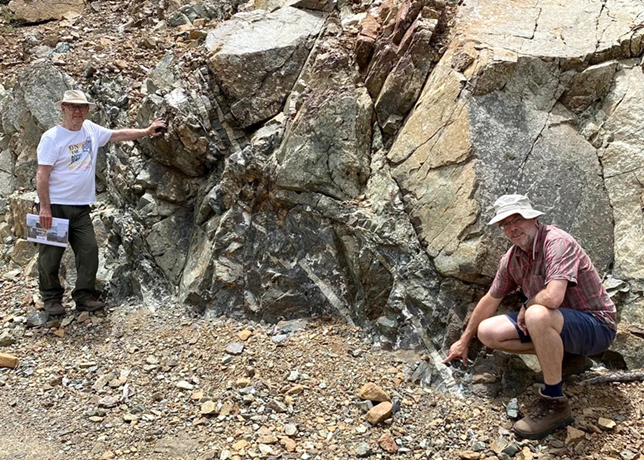
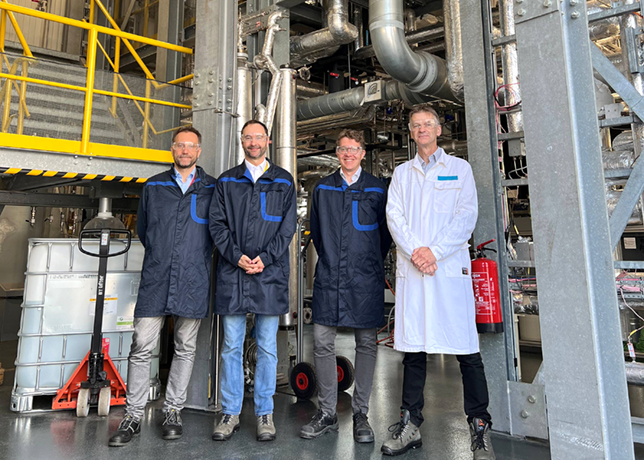
NHSG scientists on site of natural hydrogen exploration project
Have you already supported any commercial projects?
Yes, the NHSG/Metatek partnership has supported a project in the UAE for client RAK GAS in an exploration programme in the region that aims to study potential generation of hydrogen that is retained within the Semail Ophiolite.
This work has resulted in the identification of two hydrogen plays in the region: Natural hydrogen generated from deep underground rocks that have been cracked or deformed by strong forces; and hydrogen accumulated in fractured carbonates beneath the ophiolite.
This project involved the reprocessing and interpretation of legacy FTG data, geological fieldwork and data sample collection and analysis, providing new insights into the hydrogen system.
Metatek recently acquired a Magneto-telluric (MT) survey that provides data to assist in constraining the geometry of the ophiolite body in preparation for shallow drilling.
These studies will pave the way for the next phases and exploration and evaluation of natural hydrogen opportunities in the region.
NHSG scientists on site of natural hydrogen exploration project
How close do you think we are to making a big discovery?
In the past six months, several exploration wells have been drilled by companies, including Koloma, Max Power, Gold Hydrogen, HyTerra and La Française De L’Energie (FDE).
While hydrogen has been observed in these recent wells, drilling only provides evidence of hydrogen in solution in the groundwater and no definitive free gas reservoirs have been tested.
Exploration for natural hydrogen in the subsurface remains in its infancy, but efforts and spend on exploration is increasing, with several new companies actively driving exploration forwards.
We believe that with the right exploration strategies, and a clear understanding of the processes by which hydrogen is generated and migrates in the subsurface, a discovery will be made.
What role do you think natural hydrogen could play in the energy transition?
In energy transition, it’s important to consider the social and economic impacts, and to reduce risks for investors to ensure a successful and affordable shift to clean energy.
For natural hydrogen, this will require a rigorous environmental monitoring framework to track impacts and ensure regulatory compliance.
The village of Bourakébougou in Mali is, so far, the only location in the world currently extracting white hydrogen, with documented production of around 1,500 cu m per day (approximately 0.1 tonnes of hydrogen daily), representing the possibility of the region to generate electricity.
Studies suggest that even developing a small portion of hydrogen-producing geological formations could make a meaningful contribution to the low-carbon energy transition.
Progress in geologic hydrogen exploration will depend on where major finds are discovered, the availability of suitable infrastructure, and appropriate technology to access.