








































Rapid rise of SMR technology
Small modular reactors (SMR) are emerging as a key driver in the global shift toward low-carbon energy systems, with capacity forecast to rise sharply.
GlobalData projects SMR capacity to grow sixfold by 2030 and potentially over a hundredfold by 2040.
China, South Korea, the US, and others are advancing diverse reactor designs, while most projects remain at early stages.
Demand from data centres and supportive government policies are accelerating development despite financing, regulatory, and supply chain challenges worldwide in global markets
Petrobras to build $1.2bn biofuel plant
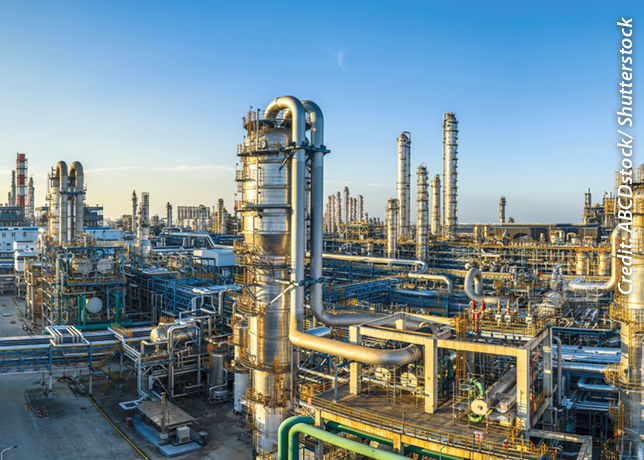
Brazilian state oil company Petrobras has approved a $1.2 billion investment to build a renewable fuels plant producing sustainable jet fuel (bioQAV) and renewable diesel, according to a securities filing.
The facility will be developed at the Presidente Bernardes refinery in Sao Paulo state, with construction expected to begin this year and operations targeted for 2030.
The plant is designed to produce up to 15,000 barrels per day of renewable fuels, supporting Petrobras’ diversification into cleaner energy.
SBTi tightens net-zero framework
The Science Based Targets initiative (SBTi) has released Corporate Net-Zero Standard Version 2.0, strengthening corporate climate guidance and shifting focus toward implementation.
The updated framework embeds science-based targets into business strategy, value chains and investment decisions while offering more flexible target-setting options.
It prioritises real emissions reductions, transparency, and continuous improvement.
The standard also introduces recognition for companies addressing ongoing emissions and reflects input from consultations, pilot testing and expert groups, supporting broader global progress toward net-zero by 2050.
Viridien, Aker BP seismic deal
Viridien and Aker BP have signed a strategic five-year partnership to enhance collaboration in multi-client ocean bottom node seismic data acquisition, imaging, and technology development.
The agreement aims to improve exploration efficiency on the Norwegian Continental Shelf by combining Aker BP’s operational expertise with Viridien’s advanced imaging capabilities. The partnership will expand OBN coverage, strengthen innovation, and support large-scale exploration.
Panasonic expands into US energy storage
Panasonic Holdings plans to begin mass production of battery cells for US data centres by fiscal 2028, targeting rising demand from AI infrastructure.
Production will be based in Kansas, expanding beyond electric vehicle batteries into energy storage systems for computing facilities.
The move supports backup power needs as data centre expansion accelerates.
Panasonic aims for up to ¥950 billion ($5.8 billion) in related sales by 2028, positioning itself to benefit from the global artificial intelligence-driven infrastructure boom.
bp restructures to boost value
bp sets out new organisational structure to simplify operations, improve performance and grow shareholder value.
From July 1, 2026, it will reorganise into two segments, Upstream and Downstream, replacing three divisions.
Gordon Birrell becomes EVP Upstream; Richard Harding serves interim EVP Downstream while permanent recruitment continues.
CEO Meg O’Neill says shift reduces complexity, strengthens execution, and supports a simpler, stronger, more valuable bp focused on disciplined capital and growth portfolio.
EU emissions fell 17pc in 2025
European Union (EU) greenhouse gas emissions totalled around 3.3 billion tonnes of CO2 equivalent in 2025, down 17.2 per cent from 2015, according to Eurostat preliminary estimates.
The energy sector recorded the steepest decline at 45.3 per cent, followed by mining and manufacturing, while households and services also fell.
However, emissions rose in construction and transport.
Overall, 23 member states saw reductions, even as the EU economy expanded 17.5 per cent, indicating continued decoupling of emissions from economic growth.
Malaysia exceeds renewable target
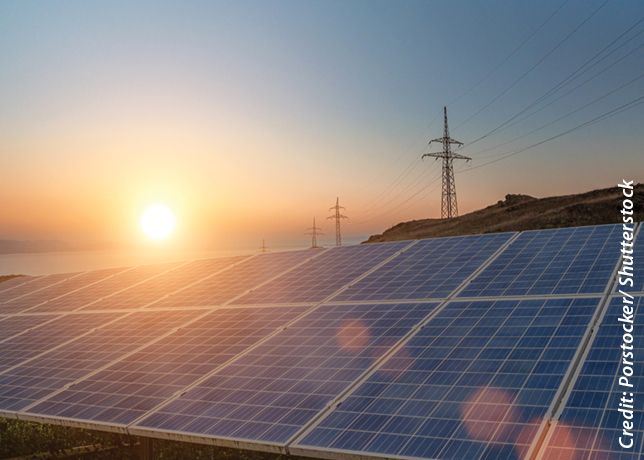
Malaysia is expected to exceed its National Energy Policy 2040 renewable energy capacity target of 18.43 GW by 2031, driven by large-scale solar expansion, strong policy support, accessible financing and improved grid integration and storage, according to GlobalData.
Capacity is forecast to rise from 6.9 GW in 2025 to 31.5 GW, with generation reaching 46.4T Wh by 2035. Streamlined approvals, corporate schemes and rising demand from data centres, EVs and industry are accelerating investment, while enhancing grid reliability and modernisation nationwide.
Shell signs e-SAF deal with Engie
Shell Catalysts and Technologies has signed a technology license agreement with Engie for the France KerEAUzen project to produce synthetic aviation fuel (e-SAF) from captured biogenic CO2 and green hydrogen.
Using Shell’s XTL process, including RWGS, Fischer–Tropsch and wax hydroconversion technologies, the project will convert CO2 into drop-in kerosene meeting ReFuelEU Aviation standards.
Located in Le Havre, it supports Europe’s emerging e-SAF value chain and advances low-carbon aviation fuel production.
US oil reserve hits 1983 low
Crude oil inventories in the US Strategic Petroleum Reserve dropped to 340.3 million barrels, the lowest level since 1983, according to the Department of Energy.
Stocks fell by 8.9 million barrels, marking the third-largest draw on record.
The reductions are part of a US programme to loan 172 million barrels from the facility in an effort to ease fuel prices, which recently surged to multi-year highs.