





















































By Abdulaziz Khattak
The global nuclear fusion sector is experiencing a profound shift as sovereign states and private investors accelerate funding to transform experimental physics into scalable grid power.
Nuclear fusion offers an exceptional energy density, capable of generating nearly four million times more energy per kg of fuel than coal or oil.
China has recently intensified its position in this global race, deploying an estimated annual investment of $1.5 billion, which nearly doubles the US government research allocation from 2024.
This capital concentration has yielded significant technical milestones, highlighted by the Chinese Academy of Sciences announcing that its Experimental Advanced Superconducting Tokamak reactor successfully maintained plasma stability at extreme densities previously deemed impossible.
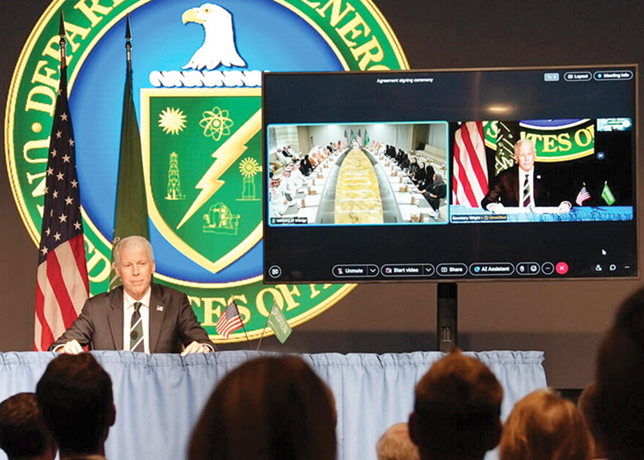
In response to escalating international competition, the US Department of Energy has released its finalised Fusion Science and Technology Roadmap, establishing a unified national strategy to accelerate commercialisation by the mid-2030s.
This framework integrates advanced research, high performance computing, and infrastructure development to close critical material gaps while advancing domestic supply chains.
The strategy explicitly builds upon public and private momentum, leveraging more than $10 billion in private investment to transition from basic science into operational pilot plants.
By coordinating contributions across 15 private entities, 10 national laboratories, and 70 universities, the US initiative seeks to reinforce technological dominance and secure reliable long term energy production through structured public and private collaboration.
Concurrently, the EU is restructuring its regulatory and financial instruments to avoid falling behind its global counterparts.
A briefing by the European Parliamentary Research Service notes that the European Commission plans to publish a comprehensive fusion strategy focusing on workforce development, supply chain security, and a dedicated investment framework.
Although the EU has historically struggled to attract a competitive volume of private capital compared to the US and China, it maintains a highly balanced investment portfolio, split between magnetic and inertial confinement technologies.
To stimulate further development, the European Commission has announced an additional 222 million euros under the Euratom work programme, supplementing broader proposals within the 2028 to 2034 multiannual financial framework.
This regional diversification aligns with macro level expansions documented across the international energy sector.
The IAEA World Fusion Outlook 2025 emphasises that fusion is transitioning from isolated experimental research into a strategic national priority, with over 160 facilities currently operational, under construction, or planned globally.
Independent economic modelling highlights that if capital costs decline to $2,800 per kW by 2050, fusion could command up to 50 per cent of global electricity generation by the end of the century.
Even under high cost assumptions, the technology is projected to achieve a 10 per cent share of the global electricity mix, demonstrating substantial long term commercial viability.
TECHNOLOGICAL CONVERGENCE & PROJECT IMPLEMENTATION
The execution of these national strategies relies heavily on massive international collaborations alongside targeted private initiatives.
The International Thermonuclear Experimental Reactor project in France remains the largest global magnetic confinement experiment, supported by thirty four nations, with full scale fusion reactions scheduled for 2039.
Domestically, the US National Ignition Facility has demonstrated consistent net energy gain via inertial confinement, achieving a record delivery of 8.6 megajoules of fusion energy from a 2.08 megajoule laser input in April 2025.
Similarly, Germany has advanced its Wendelstein seven X stellarator, raising its energy turnover to 1.8 gigajoules in May 2025, while the UK operates its experimental Spherical Tokamak for Energy Production in Nottinghamshire.
An industry analysis by Ollie Potter indicates that global private funding surpassed $10 billion between 2021 and 2025, with the corporate ecosystem expanding to over 53 specialised firms.
Commonwealth Fusion Systems leads the tokamak sector, securing $3 billion to build its experimental Sparc machine, which utilises 20-tesla high temperature superconducting magnets to demonstrate net energy gain.
Concurrently, Helion Energy is constructing a commercial facility utilising a pulsed fusion approach to directly supply power to corporate data centres by 2028 under a signed power purchase agreement.
Other entities, such as TAE Technologies, are advancing beam driven reactors using hydrogen boron fuel, while firms like General Fusion and Marvel Fusion are utilising mechanical compression and laser driven fast ignition respectively.
ENGINEERING BARRIERS & COMMERCIALISATION FRAMEWORKS
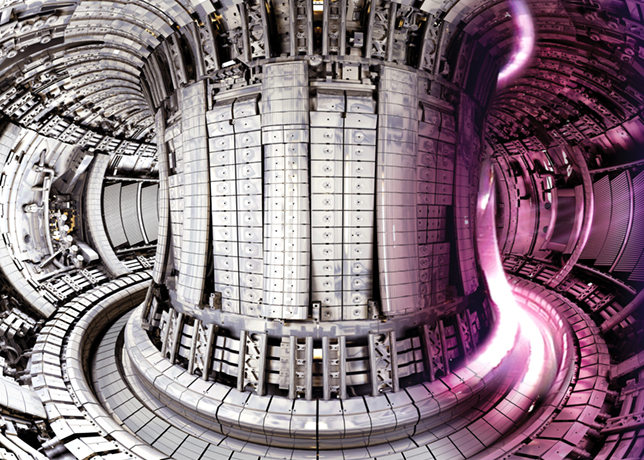
Sustaining this momentum requires overcoming immense engineering challenges, particularly regarding long-term plasma stability inside toroidal tokamak chambers.
Artificial intelligence (AI) has emerged as a critical enabler, with deep reinforcement learning models providing the millisecond level precision required to control plasma conditions at extreme densities.
Furthermore, developers are utilising digital twin models to simulate complex plasma behaviour virtually, preventing real world reactor damage.
The integration of high temperature superconducting magnets represents another pivotal advancement, enabling the design of significantly more compact and efficient fusion machines that substantially reduce overall development timelines and construction costs.
Ultimately, the transition to commercial grid delivery depends on establishing agile regulatory frameworks that remain entirely distinct from conventional nuclear fission protocols.
Sustained public and private partnerships are vital to cultivate the necessary technical talent pools, protect domestic intellectual property, and standardise international supply chains, ensuring that fusion successfully evolves from an experimental science into a dominant new industry.