

















By Abdulaziz Khattak
SandboxAQ is positioning Large Quantitative Models (LQMs) as a transformative tool for industrial innovation, enabling energy companies to accelerate scientific discovery while reducing research risk.
Unlike conventional large language models (LLMs), which identify patterns in existing information, LQMs are built on first-principle physics, chemistry and biology to solve quantitative problems.
The company is already applying the approach to screen around one million catalyst candidates for a regional oil and gas project, dramatically narrowing options before laboratory testing begins and improving decision-making efficiency.
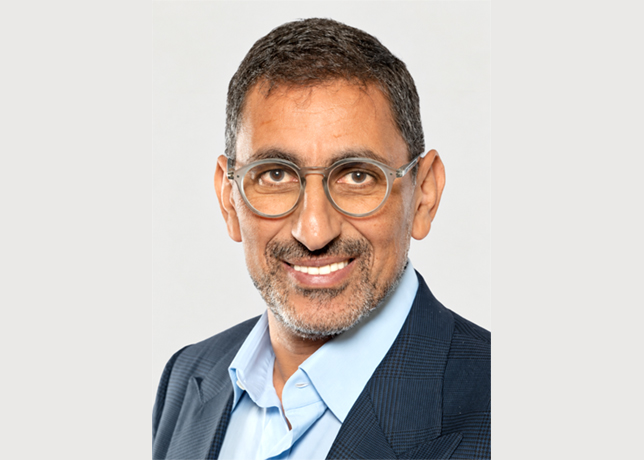
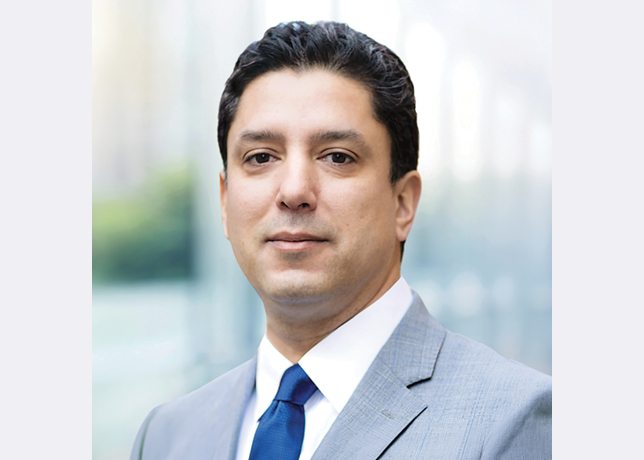
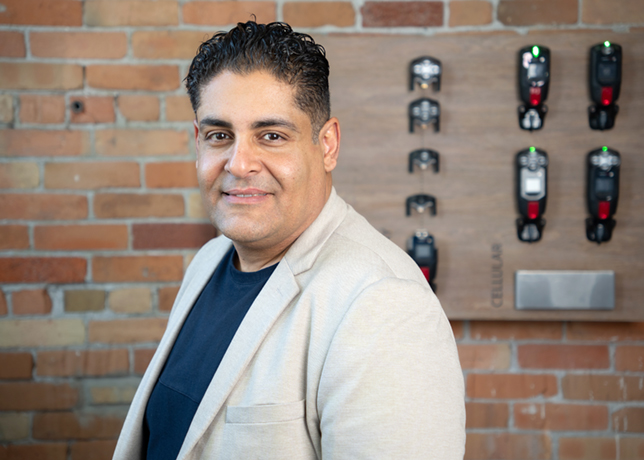
In an exclusive interview, Aayush Singh, Head of Catalytic Sciences, SandboxAQ, tells OGN energy magazine: “The route from discovery to commercial deployment remains unchanged. What changes is the speed of discovery.”
Through its AQCat platform, SandboxAQ enables users to discover, simulate, validate and optimise catalyst and feedstock candidates before committing capital to expensive development programmes.
The company also sees opportunities to convert flared methane and captured carbon dioxide into valuable downstream feedstocks, creating both environmental and economic benefits.
Singh notes that SandboxAQ’s models operate roughly 20,000 times faster than traditional quantum chemistry methods, reducing computational demands while minimising the need for resource-intensive physical experiments and accelerating regional innovation.
Below are excerpts from the interview:
How do LQMs fundamentally differ from standard LLMs in terms of predictability, and why is a physics-based approach uniquely required for heavy industrial processes like fluid dynamics?
LLMs are probabilistic systems trained on language and text. They identify patterns and generate outputs from existing information, but they do not create new scientific knowledge.
LQMs operate differently; they are deterministic systems trained on first-principle physics, chemistry, biology and related sciences to solve quantitative equations from the ground up.
A full physics-based simulation could theoretically deliver exact results, but the computational cost would be impractical.
In one project involving a regional oil and gas company, approximately one million catalyst candidates are being screened.
Rather than predicting exact reactor outputs, the model identifies candidates most likely to perform well, allowing laboratory resources to focus on the strongest options.
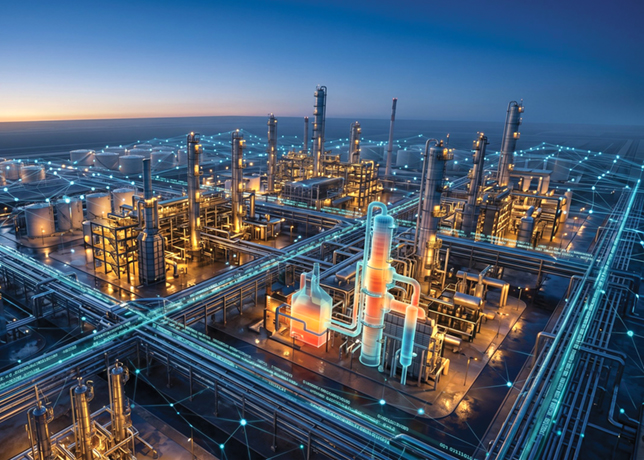
LQMs are transforming industrial discovery
While an LQM can simulate thousands of chemical processes in days, what is the realistic timeline for a Middle East & North Africa (Mena) national oil company (NOC) to transition a successful “virtual lab” discovery into a commercial-scale physical production facility?
The route from discovery to commercial deployment remains unchanged. What changes is the speed of discovery.
LQMs can compress the earliest phase dramatically, but pilot development, engineering validation, safety approvals and commercial deployment still require established processes.
The greater impact is on risk reduction. Historically, discovery is where many projects fail because physically screening enormous numbers of candidates is impractical.
By narrowing very large candidate pools to a manageable shortlist, LQMs transform highly uncertain exploration into a more structured capital allocation exercise.
With GCC majors investing heavily in downstream diversification, how exactly are SandboxAQ’s computational solvers being used to de-risk the capital expenditure required for next-generation crude-to-chemicals (COTC) projects?
SandboxAQ’s AQCat platform addresses the highest-risk phase of research and development by converting catalyst and feedstock discovery into a ranked, evidence-based process.
Instead of relying on lengthy design, build and test cycles, users can discover, simulate, validate and improve candidates more efficiently.
The platform expands molecular searches across a wider chemical space, simulates interactions, optimises properties in silico and produces stronger candidates for experimental validation.
While it does not reduce the capital required to build facilities, it improves confidence in the science before capital is committed.
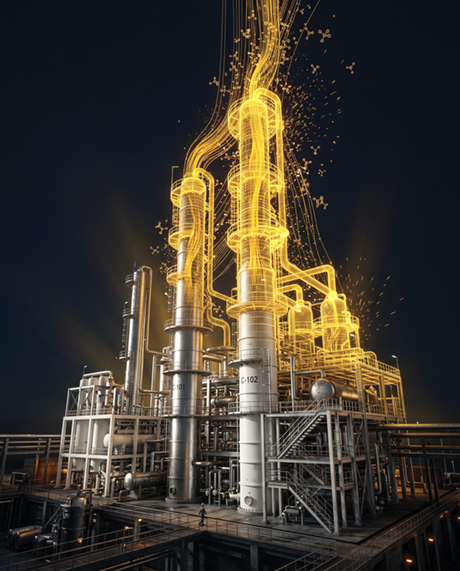
Captured emissions are becoming valuable feedstocks
How can your work with regional operators practically convert environmental liabilities, such as flared gases and captured CO2, into commercially viable advanced materials like aerospace components or battery materials?
The focus is currently on feedstock conversion rather than finished products.
The objective is to transform molecules that would otherwise be wasted, including methane flares and captured CO2, into feedstocks suitable for downstream manufacturing.
Methane and CO2 can be significantly less expensive than conventional inputs used to create these feedstocks.
Converting flared methane into ethylene, for example, replaces a more energy-intensive production route while creating value from a resource that would otherwise be burned.
The result is both an environmental benefit and a potential economic advantage.
Running multi-GPU, differentiable solvers demands massive computational power; how is SandboxAQ balancing the energy intensity of these models with the decarbonisation goals of MENA energy producers?
The company’s priority is computational efficiency.
Current models operate about 20,000 times faster than the traditional quantum chemistry methods they replace.
Every substitution of a conventional calculation with a machine-learning-accelerated solver reduces computational requirements substantially.
In addition, modelling chemical behaviour in silico eliminates large numbers of physical experiments that would otherwise consume materials, infrastructure and laboratory resources.
When these factors are considered together, the computational pathway is viewed as the more efficient option.
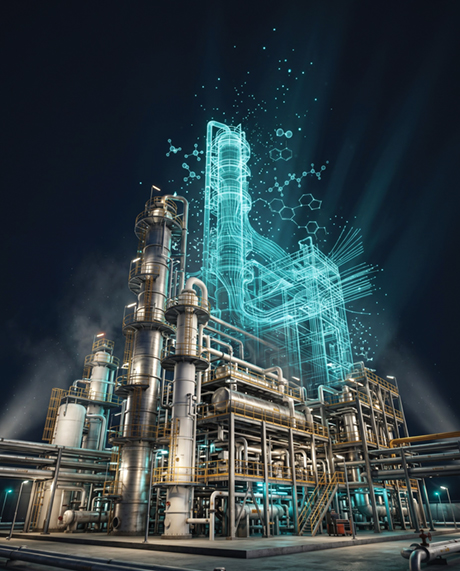
Physics-based computing is unlocking new opportunities
Given that Middle Eastern NOCs protect their proprietary operational and reservoir data fiercely, how is SandboxAQ structuring its deployment models to guarantee absolute data sovereignty within regional boundaries?
The models do not depend on proprietary operational or reservoir datasets because they are built on physical first principles.
Validation is based on whether predictions align with laboratory outcomes rather than on access to sensitive operational information.
Operators that wish to tailor models to specific processes can do so within their own infrastructure, ensuring that data remains under their control.
One of the region’s NOCs is deploying this technology at specific facilities, but what are the primary infrastructure and data-quality bottlenecks preventing the deployment of LQMs across older, legacy oil and gas assets in the wider Mena region?
Infrastructure is not considered the principal constraint.
Cloud-based offerings are being developed to make the technology available at smaller scales, allowing organisations without major data-centre resources to access the tools.
There is, however, a trade-off because lower compute capacity can reduce prediction accuracy.
The more significant limitation is scientific suitability.
LQMs create the greatest value where substantial unexplored opportunities remain.
In mature processes refined over many decades, achieving meaningful improvements requires much higher predictive accuracy and leaves less room for error.
If an LQM identifies a revolutionary catalyst for carbon utilisation, how do you solve the subsequent physical bottlenecks of raw input sourcing and regulatory approvals that traditionally slow down chemical innovation?
Once a shortlist of candidates is delivered, responsibility traditionally passes to the customer.
However, SandboxAQ is assessing whether it should play a larger role in validation and early development.
Some operators possess the internal capabilities required for initial testing, while others may benefit from external laboratory partners managed through a structured framework.
The concept remains under evaluation, but reflects interest in extending support beyond discovery and into the earliest stages of scale-up.
For energy boards in the GCC, what are the primary key performance indicators (KPIs) that prove an LQM investment delivers a better return than traditional, physical R&D methods?
Research and development cost reduction is often the most immediate metric.
Model performance can be benchmarked against previous methods and reactions whose experimental outcomes are already established.
This provides a basis for evaluating results.
The economic impact becomes clear when large candidate pools are reduced to a small number of validated options before laboratory work begins.
Beyond direct cost savings, the technology also changes the risk profile of projects that might otherwise never proceed because conventional screening methods offer too little certainty.
Beyond providing software, how is SandboxAQ collaborating with regional institutions to ensure that local Saudi and Gulf engineers are equipped with the quantitative and quantum-inspired skills needed to run these virtual labs independently?
The company views accessibility as the most practical response to the skills gap.
Rather than relying exclusively on highly specialised computational scientists, it aims to make advanced tools usable by a broader technical workforce.
AQCat integrates with leading LLMs, including Claude, allowing engineers to interact with the platform using natural language.
Users can ask questions, interpret outputs and act on recommendations without requiring detailed expertise in quantum mechanics or computational chemistry.
The objective is to expand the number of professionals capable of working effectively with advanced AI systems and accelerate regional capability development.