





















MTN Nigeria cuts diesel use with solar
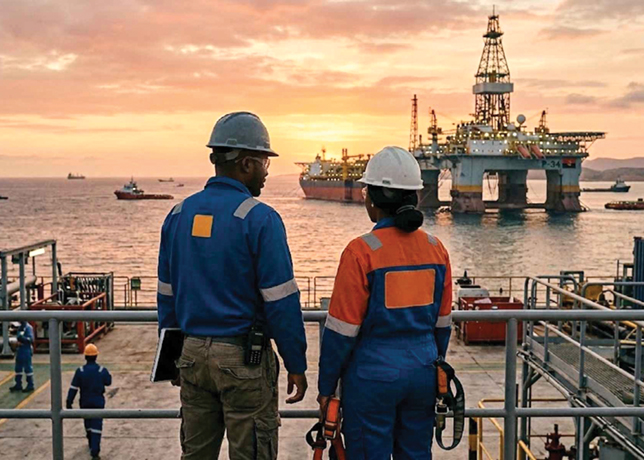
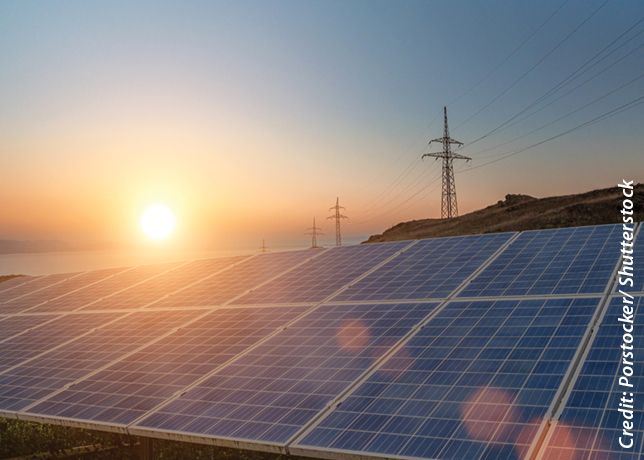
First WATT Renewable and MTN Nigeria have entered a strategic partnership to expand renewable energy use and reduce diesel reliance across critical telecom infrastructure.
The programme includes a 34 MWp solar PV and 40 MWh battery storage Energy-as-a-Service deployment across MTN sites such as data centres, switch facilities and customer service centres.
It also powers 60 kW EV charging stations across eight locations.
The initiative aims to improve reliability, cut emissions and support digital infrastructure resilience, with an estimated 25,000 tCO2e emissions reduction over five years.
New Africa minerals alliance
Energy Capital & Power (ECP) and the Africa Minerals Strategy Group (AMSG) have signed a memorandum of understanding to strengthen investment promotion, policy engagement and global positioning of Africa’s mining sector.
The partnership combines AMSG’s government and institutional networks with ECP’s expertise in investment events and communications.
It aims to boost capital inflows, enhance public-private dialogue and expand participation in industry platforms.
The agreement also establishes cooperation on investment forums, ministerial roundtables, strategic communications and investor outreach across Africa’s minerals value chain.
South Sudan pushes mining reforms
In early 2026, South Sudan advanced its Mining Act Amendment Bill to Joint Parliamentary Committees.
The reforms propose a national gold refinery, a school of mines, and a specialised mining police unit to curb illegal mining.
The Mining Strategic Plan 2026–2030 aims to unlock gold, copper, iron ore and rare earth reserves, aligning with the Africa Mining Vision.
The Gold-for-Roads framework links minerals to $2 billion in road infrastructure development across national priority road corridors.
South Africa power grid stabilises
South Africa has achieved its most stable electricity supply in years, recording a full year without load-shedding and adding 4,400 MW of capacity, supported by the return of Kusile Power Station at 4,800 MW.
Kgosientsho Ramokgopa, Electricity Minister, said focus is shifting to transmission constraints, with 130 GW projects awaiting offtake agreements.
The Transmission Development Plan targets 14,000 km lines and 105 substations by 2030, costing R400 billion ($24 billion), plus private-sector Independent Transmission Projects.
Africa carbon market growth
Africa is emerging as a key destination for carbon market projects, with stronger policy certainty and more investment-ready initiatives.
As global markets move from rule-setting to transactions, Article 6 mechanisms advance and CORSIA-driven demand grows, investors are focusing on credible supply and scalable opportunities across Africa.
Mission 300 hits 50m connections
The World Bank Group and African Development Bank Group’s Mission 300 has connected over 50 million people to electricity across 40 African countries, moving closer to its target of 300 million by 2030.
The initiative is nearly doubling electrification speed through investments across generation, transmission and distribution.
Supported by $15 billion in financing and reforms in countries like Tanzania and Ethiopia, it is also mobilising private investment, with 30 countries launching national energy compacts to expand access and renewable power.
AEC boosts Ivory Coast upstream push
The African Energy Chamber (AEC) held talks in Abidjan with Ivory Coast officials to accelerate upstream development, boost investment and strengthen energy institutions.
Discussions highlighted expanding offshore production, active drilling campaigns and major projects led by international operators, alongside rising exploration interest and financing reforms including the Africa Energy Bank.
Partners also reviewed logistics, refining capacity and local content development supporting long-term energy growth and broader regional cooperation initiatives progressing.
Congo expands oil, LNG growth
The Republic of Congo is strengthening its position as an oil producer and emerging LNG exporter, driven by developments including TotalEnergies’ Moho Nord and Marine XX assets, Trident Energy and Perenco operations, and Eni’s Congo LNG project targeting up to 3 million tonnes annually.
National oil company SNPC is advancing deepwater permits such as Nzombo while expanding its commercial role.
Regulatory reforms, including a Gas Master Plan and new gas code, aim to boost monetisation, reduce flaring and support downstream growth.
SBM Offshore expands FPSO push
SBM Offshore, with over 20 years of African operations and a $31-billion global backlog, continues expanding its offshore footprint and technology leadership.
The ABS-approved seawater intake riser system developed with Shell aims to cut FPSO emissions.
Strong financial gains followed the $2.32 billion sale of FPSO One Guyana, while new FEED work for ExxonMobil’s Longtail project advances.
In Africa, SBM is extending Angola operations, restructuring Equatorial Guinea assets, and targeting Namibia’s Venus FPSO opportunity.
Sangomar drives Senegal oil growth
Woodside Energy’s Sangomar project offshore Senegal has settled into steady production following first oil in June 2024, marking the country’s entry into oil output.
The $5.2 billion development reached 100,000 barrels per day and has produced over 50 million barrels to date.
Operated with Petrosen, it supplies domestic refining and exports.
The project is strengthening the MSGBC basin’s profile, while Woodside advances expansion plans in Africa, including exploration studies offshore Angola.