
















By Abdulaziz Khattak
Oman is executing a comprehensive, dual-track structural transformation of its public energy architecture, deliberately balancing the capital-intensive lifecycle extension of mature hydrocarbon reservoirs with a state-mandated acceleration into low-carbon infrastructure.
Under the strategic framework of Oman Vision 2040, the state is aggressively pursuing economic diversification while systematically unbundling and optimising its massive national oil companies (NOCs) to insulate public finances from global commodity volatility.
Rather than relying on direct state subsidies, the Sultunate has established independent holding entities designed to command distinct balance sheets, access international debt capital markets autonomously, and drive structural efficiency across the entire energy value chain.
This institutional shift is reconfiguring the traditional relationships between state-backed heavyweights, global corporate joint-venture partners, and global financial markets as the nation navigates a shifting global landscape.
CAPITAL RECLASSIFICATION & UPSTREAM OPTIMISATION
According to Energy Development Oman’s (EDO) financial statement for the year ended December 31, 2025, significant milestones have been achieved in balance sheet rationalisation despite facing a compressed global pricing environment.
EDO reported revenues of $14.77 billion for 2025, a decrease from the $16.07 billion earned in 2024.
The net profit earned was $523 million due to a highly substantial cost profile dominated by $5.2 billion in royalty expenses alongside $4.12 billion in rising depreciation, depletion, and amortisation charges.
However, the corporate entity dramatically fortified its core balance sheet resilience, expanding its total equity base to $11.63 billion, up from $10.20 billion in 2024.
EDO commands the absolute cornerstone of the conventional energy economy of the Sultanate, holding the 60 per cent state participating interest in Block 6, an expansive hydrocarbon concession covering approximately 90,000 sq km.
This asset block represents approximately 55 per cent of the total oil and condensate reserves of Oman and yields three-quarters of its aggregate hydrocarbon production.
The operational execution of this concession remains under the stewardship of Petroleum Development Oman (PDO), which functions as a premier exploration and production joint venture between the Government of Oman holding 60 per cent, Shell holding 34 per cent, TotalEnergies holding 4 per cent, and PTTEP holding 2 per cent.
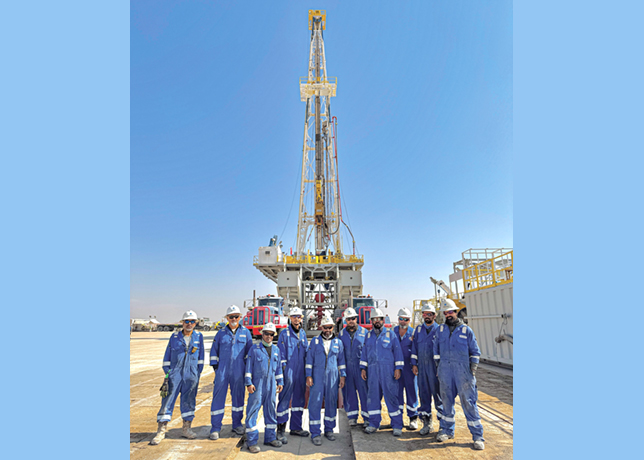
To control escalating operating expenses, which included production expenses rising to $1.27 billion, PDO is deploying advanced automated well-management digital ecosystems across its fields.
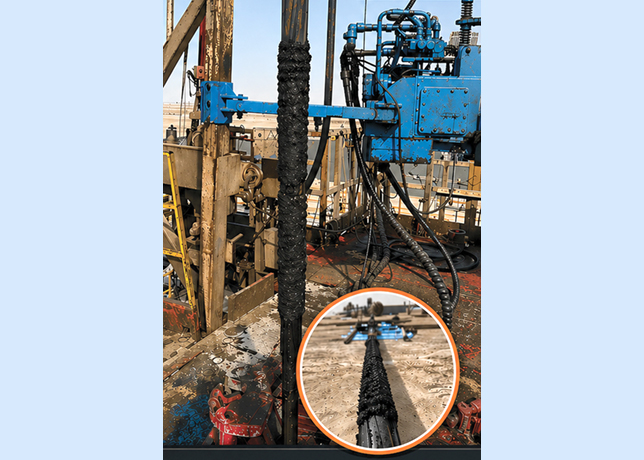
Oman’s mature reservoirs increasingly demand complex, capital-intensive enhanced oil recovery (EOR) methodologies, such as polymer flooding and sophisticated thermal recovery installations, to extract crude from geologically challenging tight formations.
Simultaneously, the upstream mandate has been extended into future green molecules through the establishment of Hydrogen Oman (Hydrom), a specialised subsidiary designated as the master planner and central orchestrator for the renewable hydrogen ecosystem of the nation.
Operating as the institutional custodian of public lands for the transition, Hydrom has initiated its critical third auction round, managing the competitive zoning and allocation of massive renewable concession blocks within the industrial hub of Duqm.
To ensure long-term off-take security and establish global supply linkages, the entity has finalised structural agreements to operationalise the first commercial liquid hydrogen maritime corridor connecting the Port of Duqm directly with the major European logistics hubs of the Port of Amsterdam and the Port of Duisburg.
DOWNSTREAM CHEMICAL INTEGRATION
Complementing the upstream resource management of EDO, OQ Group has executed an expansive corporate consolidation to manage assets spanning from upstream exploration to performance chemicals across seventeen nations.
As disclosed in the group’s annual report for 2025, the integrated energy giant demonstrated immense financial resilience amidst heightened market volatility, delivering a consolidated earnings before interest, taxes, depreciation, and amortisation of $1.348 billion.
The group locked in a net profit of $641 million, representing an impressive 25 per cent year-on-year surge in net profitability driven by deep operational efficiencies, successful portfolio transformation initiatives, and historical revenue growth.
These strong baseline results allowed OQ Group to secure an investment-grade credit rating of BBB- with a stable outlook from S&P Global, complementing an identical investment-grade rating previously elevated by Fitch Ratings, thereby enhancing its capacity to raise non-recourse project financing on the international market.
The upstream and infrastructure segments of OQ Group have pursued a deliberate monetisation and structural unbundling strategy to unlock latent capital.
Its upstream arm, OQ Exploration and Production, maintains critical strategic interests across 14 onshore and offshore concessions, leveraging its specialised technical expertise in tight gas extraction and localised production methodologies to form cross-border technical partnerships, including bilateral ventures within North African and Libyan hydrocarbon provinces.
Concurrently, midstream assets have been entirely decoupled through OQ Gas Networks, which serves as the exclusive, regulated open-access transportation operator for the natural gas infrastructure of Oman.
OQ Gas Networks is directing targeted capital allocations toward the expansion of its high-pressure gas pipeline grid to supply growing industrial energy demand inside the Special Economic Zone at Duqm and the Sohar Free Zone.
Upstream operational drilling campaigns are executed via Abraj Energy Services, the leading domestic oilfield services provider, which deploys automated drilling rigs to maximise efficiency across tight gas plays.
In the downstream sector, OQ Group has focused heavily on upgrading basic molecules into high-margin performance chemicals rather than exporting unrefined feedstocks.
OQ Refineries and Petroleum Industries has maximised petrochemical integration by driving optimal asset throughput at the extensive Liwa Plastics Industries Complex, converting refinery byproducts into highly profitable polymers.
This downstream footprint is further strengthened by the full operational ramp-up of the Duqm Refinery and Petrochemical Industries Company, known commercially as OQ8, which represents a landmark $7-billion equal joint venture between OQ Group and Kuwait Petroleum International (KPI).
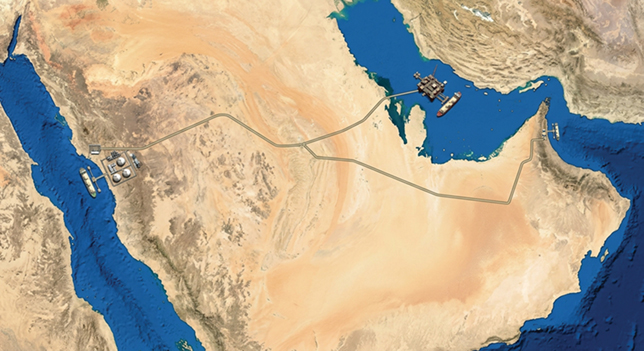
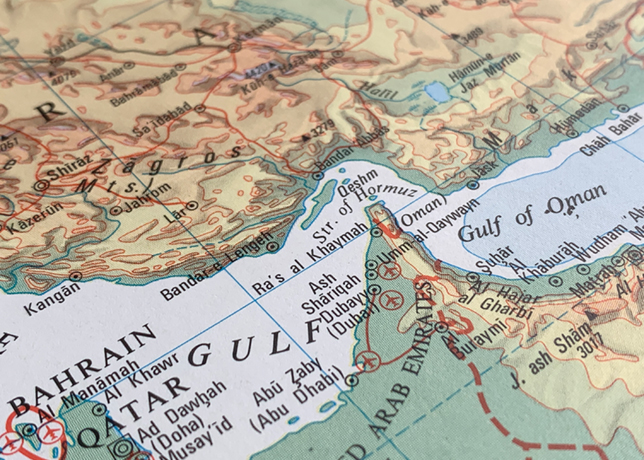
Situated strategically within the Special Economic Zone at Duqm, the refinery processes highly complex crude oil feedstock blends, benefiting from direct access to global shipping lanes outside the volatile Strait of Hormuz.
Basic chemical manufacturing is managed by OQ Base Industries, which utilises local methane streams to synthesise low-carbon methanol and ammonia molecules for export.
This integrated product value chain is optimised commercially by OQ Trading, operating from transactional hubs in Dubai and Singapore to capture cross-regional arbitrage spreads.
Furthermore, the clean energy transition within the group is led by OQ Alternative Energy, which acts as the national champion for commercial renewables, energy efficiency programmes, and green molecule projects.
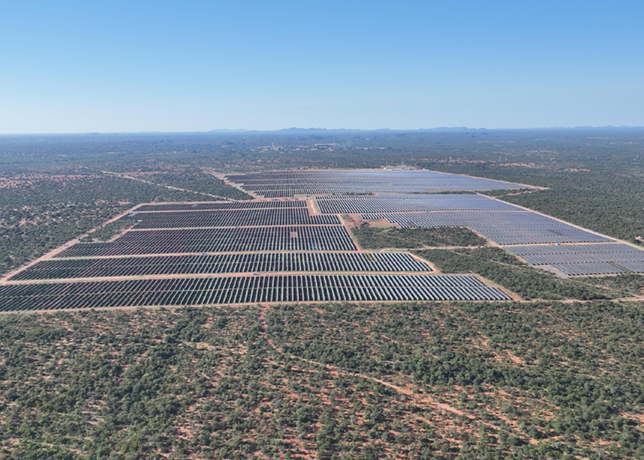
In its sustainability drive, OQ expanded its renewable energy portfolio by more than 2,000 megawatts (MW) and secured power purchase agreements for over 740 MW of solar and wind capacity.
OQ Alternative Energy is deeply embedded alongside global industrial consortia in the development of the multi-gigawatt HyPort Duqm project.
HyPort achieved a foundational structural milestone when global energy supermajor bp acquired a 49 per cent equity stake to propel the construction of its large-scale solar and wind-powered green ammonia production facility.
EMISSIONS MITIGATION
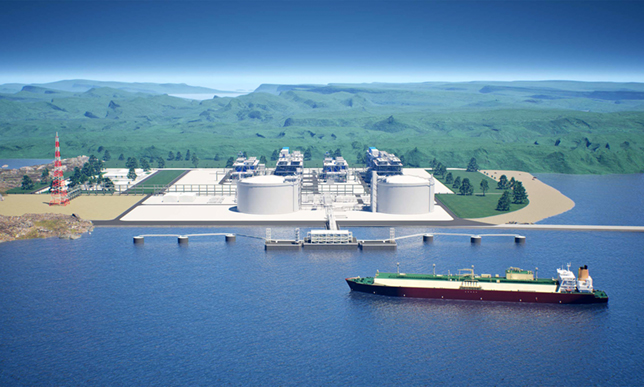
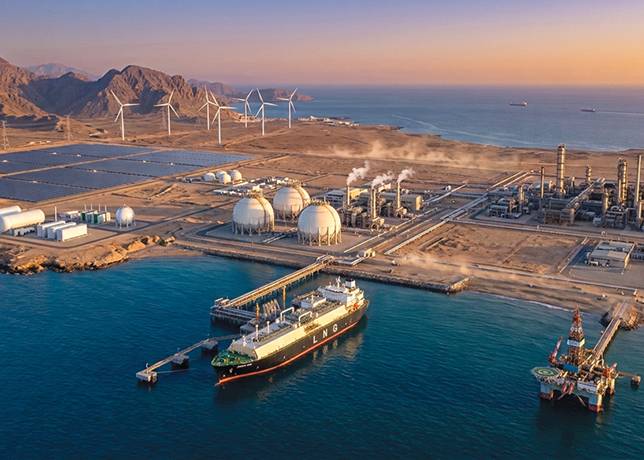
Oman LNG continues to maximise long-term export value while executing a highly targeted capital investment program directed at comprehensive asset decarbonisation.
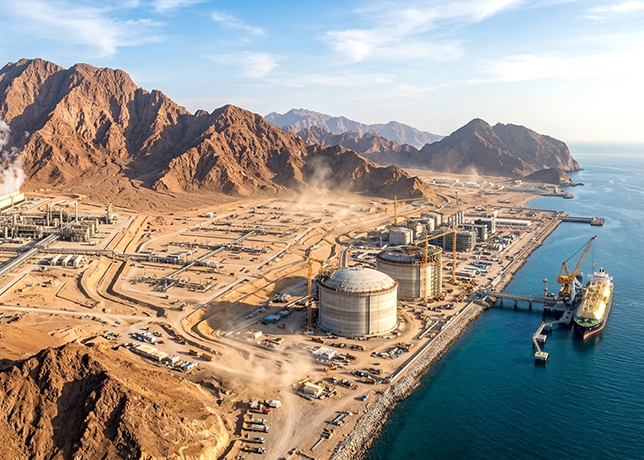
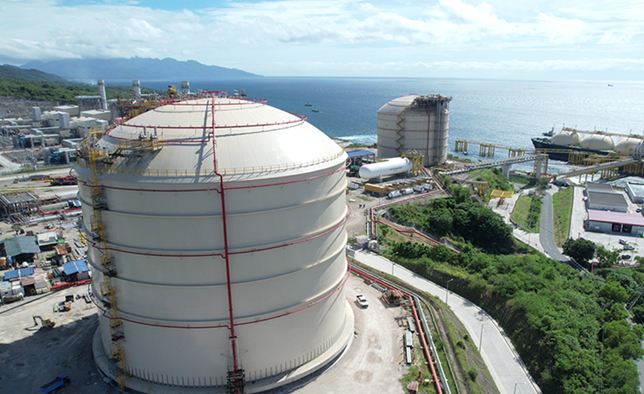
As detailed in the official publication titled Oman LNG Sustainability Report, the company is systematically integrating high-technology modifications across its core liquefaction trains located at the port of Sur.
Capitalising on newly finalised long-term supply agreements signed with premium European and East Asian off-takers, the state-backed industrial entity is structured to elevate its aggregate production and export capacity beyond eleven million tonnes per annum.
This operational volume expansion is being executed alongside stringent environmental mitigation frameworks designed to lower the carbon intensity of the produced LNG.
To achieve its mandated target of a 30 per cent reduction in lifecycle greenhouse gas emissions per unit of LNG produced, the operator is installing advanced automated heat recovery units and deploying artificial intelligence (AI) driven process monitoring sensors to optimise overall thermal efficiencies across its processing infrastructure.
This twin-track strategy allows the sovereign state to protect its immediate export revenues in a competitive global gas market while ensuring compliance with intensifying global corporate environmental, social, and governance compliance standards.
By embedding these processing refinements directly into its midstream asset base, Oman LNG safeguards its commercial relevance during the structural transition toward lower carbon energy commodities, matching the structural actions visible across the portfolios of EDO and OQ Group.
The coordinated execution of these public energy strategies confirms that Oman is actively transforming its state assets to sustain fiscal resilience, optimise asset utilisation, and capture a highly defensible and resilient market position in the emerging low-carbon economy.