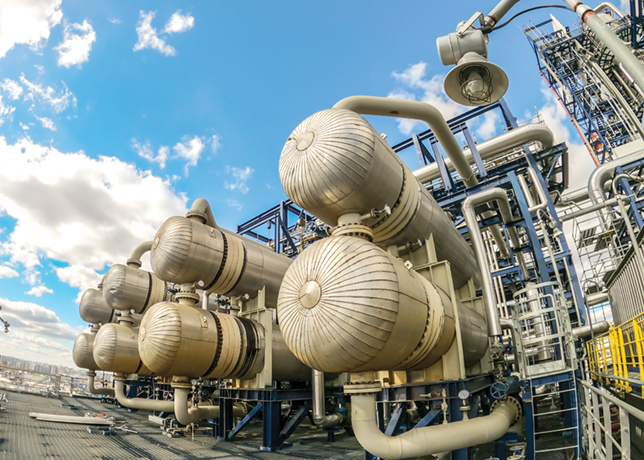







Heat exchangers are among the most intensely calculated systems in the process industry, yet they remain one of the most misunderstood pieces of equipment once long-term operational behaviour begins diverging from the original design assumptions.
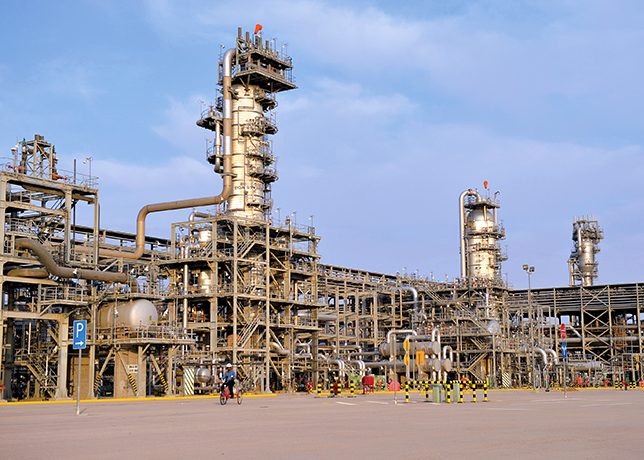
In large refineries, LNG terminals, petrochemical complexes, fertiliser plants, gas processing facilities, and power stations operating under continuous production philosophy, repeatedly encountered were exchanger systems that appeared technically flawless during engineering and procurement stages but gradually evolved into severe operational bottlenecks after years of service exposure.
What makes these failures difficult to detect early is the fact that they rarely begin with dramatic mechanical breakdowns.
Most major exchanger problems begin silently through thermal instability, abnormal pressure differential behaviour, unstable outlet temperatures, accelerated fouling propagation, increasing utility consumption, and maintenance intervals that slowly become shorter with every operational cycle.
Since the deterioration develops progressively rather than catastrophically, many facilities unknowingly normalise declining performance for years before realising that the exchanger has already lost a substantial portion of its operational reliability.
The underlying issue is usually not a direct calculation error, and the real problem originates from the gap between theoretical design behaviour and real industrial operating conditions.
Most thermal calculations are still performed using relatively ideal assumptions: Stable flow rates, predictable fluid properties, nominal fouling coefficients, homogeneous flow distribution, and utility systems operating within controlled parameters.
Real facilities do not behave this way for extended periods of time.
Particularly in large continuous-process plants, the utility quality changes seasonally, filtration efficiency deteriorates gradually, hydrocarbon composition fluctuates (depending on upstream operating conditions), fouling characteristics evolve asymmetrically, and production departments continuously push systems beyond their original operating envelopes in order to maintain throughput targets.
After several years of operation, the exchanger no longer behaves like the system represented inside thermal simulation software; it behaves according to field conditions.
This distinction becomes especially severe in Middle Eastern industrial environments where ambient temperatures, airborne contamination, chloride-heavy cooling systems, unstable utility behaviour, aggressive process chemistry, and prolonged shutdown delays create operational conditions substantially more demanding than those originally assumed during design stages.
In several facilities operating near coastal industrial zones, we observed exchanger trains that technically remained online while their thermal controllability had already deteriorated to a point where operations teams were compensating through excessive utility loading simply to stabilise process temperatures.
The exchangers had not mechanically failed. However, their thermal behaviour no longer resembled the original design conditions in any meaningful way.
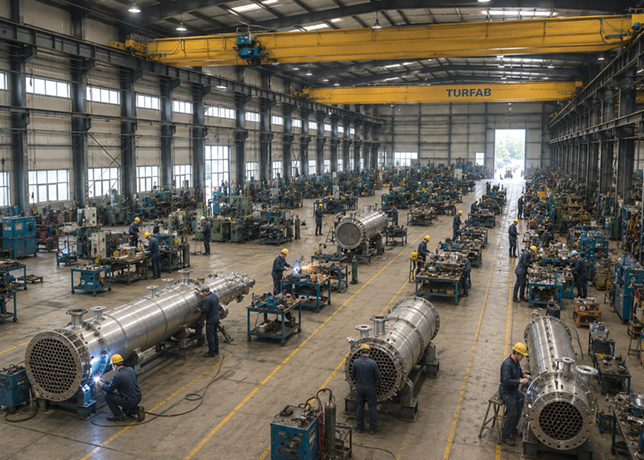
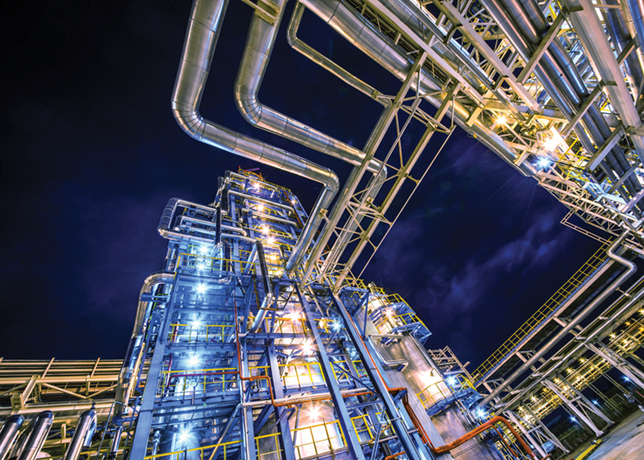
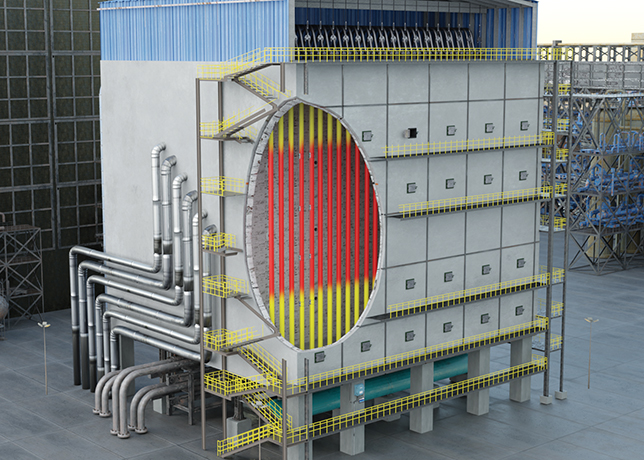
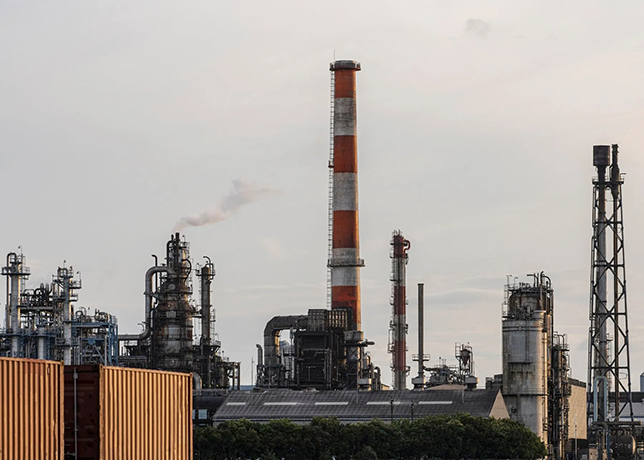
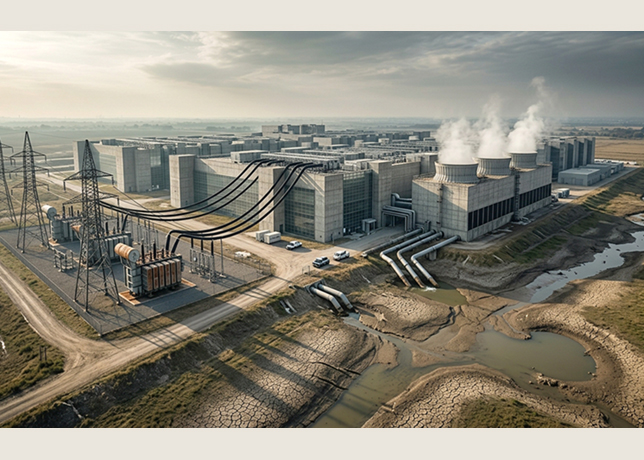
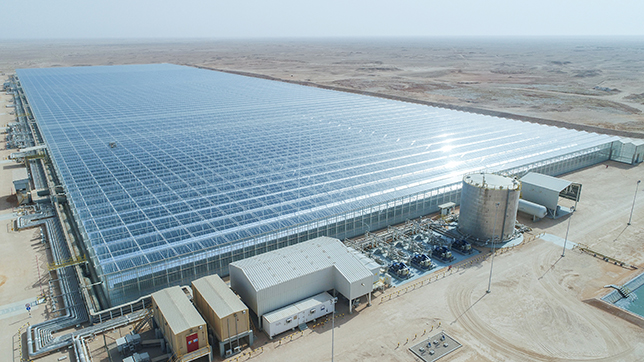
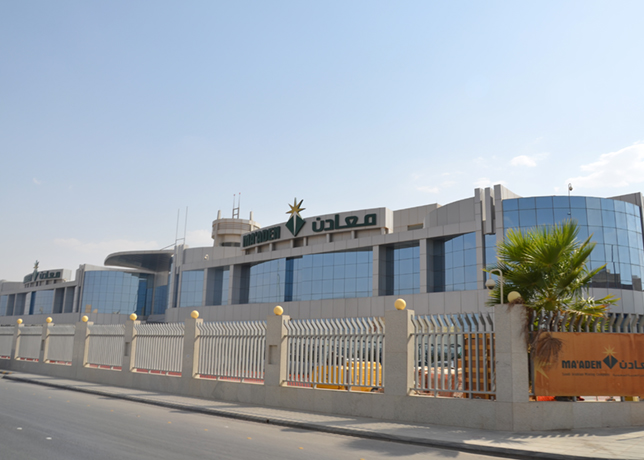
An illustration of a heat exchangers manufacturing facility
FOULING ALTERS ENTIRE HYDRODYNAMIC CHARACTER OF SYSTEM
One of the most persistent engineering misconceptions regarding heat exchangers is the tendency to treat fouling merely as a surface contamination issue.
In reality, prolonged fouling fundamentally changes the hydrodynamic structure of the exchanger itself.
Once deposit formation begins developing along tube surfaces, the system gradually loses the flow behaviour assumed during the original design calculations.
Effective flow diameters decrease, local velocity profiles begin shifting, turbulence intensity becomes non-uniform, and low shear-stress regions start forming within specific areas of the exchanger geometry.
These low-velocity zones accelerate additional particulate attachment and progressively create self-reinforcing fouling mechanisms.
This process is particularly aggressive in heavy hydrocarbon services where viscosity sensitivity and wall-temperature behaviour strongly influence deposition rates.
In several crude preheat systems, localised asphaltene precipitation was observed accelerating dramatically in regions where wall temperatures exceeded specific thermal thresholds.
Once deposition began thickening inside these zones, local Reynolds numbers decreased further, turbulence weakened, and additional fouling accumulation intensified rapidly.
At that stage, the exchanger was no longer experiencing ordinary fouling, and it had entered hydrodynamic instability.
Certain tube regions experienced accelerated flow and erosion tendencies while neighbouring sections developed severe stagnation behaviour and thermal dead zones.
The exchanger continued operating, but flow distribution across the bundle had already become fundamentally unstable.
Operations teams attempted to compensate by increasing pumping energy, raising utility loading, or adjusting process conditions elsewhere in the system, yet the underlying hydrodynamic deterioration continued progressing.
What makes this particularly dangerous is that the degradation rarely develops linearly.
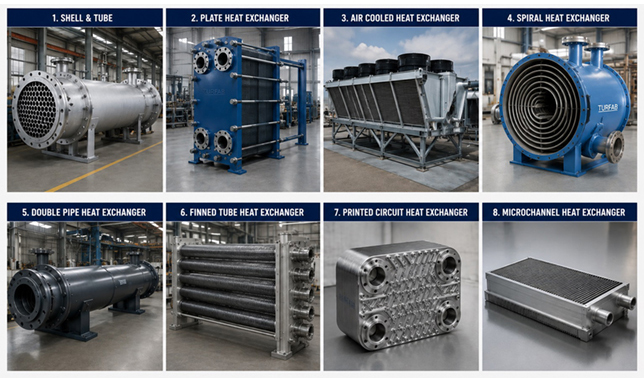
Types of heat exchangers
In many systems, the exchanger appears manageable during the early stages of fouling progression.
Then, after a certain threshold, deterioration accelerates rapidly because the altered flow regime itself begins amplifying further deposit formation.
Facilities that lack experienced thermal monitoring teams often misinterpret this transition as ordinary operational aging rather than recognising the onset of genuine process instability.
Over the years, facilities have been repeatedly seen accepting progressively higher energy consumption as unavoidable because the deterioration had developed slowly enough to become operationally normalised.
ATMOSPHERIC CONTAMINATION ALTER AIR-COOLED EXCHANGERS’ BEHAVIOUR
One of the most misunderstood operational problems in large industrial facilities involves air-cooled heat exchangers operating under aggressive atmospheric conditions.
Many engineering discussions reduce the issue to simple dust accumulation, whereas the real behaviour observed in the field is considerably more complex.
In heavy industrial regions throughout the Gulf area, finned surfaces are not exposed solely to dry particulate matter.
Atmospheric hydrocarbons, sulphur compounds, moisture, cement particles, combustion residues, and process-related aerosols gradually form dense heterogeneous deposits across fin geometries.
Over time, these deposits begin altering airflow characteristics throughout the exchanger bank itself, and the operational problem is no longer limited to reduced thermal conductivity.
The aerodynamic behaviour of the system starts changing: As fin passages narrow due to contamination buildup, static pressure losses increase significantly and fan systems begin operating far away from their original design curves.
Air distribution across exchanger bundles becomes increasingly non-uniform, producing low-velocity regions where cooling efficiency collapses while other areas experience unstable bypass flow behaviour.
Operators in several facilities encountered initially believed the problem originated from fan performance degradation or utility limitations, only to discover later that years of atmospheric contamination had fundamentally changed airflow distribution inside the exchanger structure itself.
During extreme summer conditions, some systems could no longer maintain process temperature stability despite all fans operating continuously at maximum capacity.
On paper, the exchanger still appeared technically sufficient. Operationally, however, the thermal system had already lost a substantial portion of its real cooling capability.
The most dangerous aspect of these situations is the gradual nature of the deterioration.
Because performance degradation develops progressively over years rather than weeks, facilities often adapt operationally without fully recognising how severely exchanger behaviour has changed:
• Increased energy consumption becomes routine.
• Fan overloading becomes expected.
• Temperature instability becomes part of daily operation.
And at some point, the degraded condition itself becomes accepted as normal plant behaviour.
EXCHANGERS FAIL BECAUSE OF BAD MAINTENANCE UNDER REAL SHUTDOWN CONDITIONS
One of the most severe operational problems repeatedly observed in large facilities had nothing to do with thermal calculations themselves.
The problem originated from maintenance accessibility that looked acceptable during design reviews but became extremely problematic once real shutdown conditions emerged.
In many refineries and petrochemical facilities, three-dimensional plant models technically satisfied minimum clearance requirements.
However, once pipe racks, adjacent equipment, structural steel, instrumentation systems, and utility routing were fully installed, exchanger accessibility deteriorated substantially, leading to:
• Bundle extraction operations becoming extremely difficult.
• Hydrojet equipment not achieving proper positioning.
• Crane operations becoming unsafe or severely restricted.
• Cleaning procedures requiring substantially more time than shutdown schedules allowed.
This does not merely increase maintenance duration, it reduces maintenance quality.
Several facilities gradually developed a dangerous operational habit: Exchangers were partially cleaned and returned to service before complete restoration could be achieved because shutdown windows were continuously compressed by production pressure.
As a result, residual deposits remained inside tube regions, creating ideal nucleation points for accelerated fouling during the next operational cycle.
Therefore, after several years, some exchangers became almost impossible to restore to stable operating condition because incomplete maintenance had progressively transformed internal thermal behaviour.
From an office environment, exchangers are often evaluated purely as thermal equipment.
In the field, however, they become shutdown-critical operational systems whose maintainability directly determines long-term process reliability.
This distinction is usually understood only by engineers who have spent years inside real shutdown environments rather than exclusively inside design offices.
METALLURGICAL DETERIORATION BEGINS LONG BEFORE LEAKAGE BECOMES VISIBLE
Material-related problems in exchanger systems are frequently detected far too late because many facilities still evaluate equipment health primarily through visible leakage rather than through progressive operational behaviour.
In aggressive chloride environments, especially in facilities relying on seawater cooling systems, localised corrosion mechanisms often begin developing beneath deposit layers long before external damage becomes visible.
Differential oxygen concentration cells accelerate pitting corrosion beneath contaminated regions while thermal cycling gradually intensifies stress concentration behaviour near welded areas and tube-sheet connections.
Initially, these degradation mechanisms do not produce obvious mechanical failure.
Instead, they begin affecting thermal behaviour, including pressure differential characteristics becoming unstable; outlet temperatures fluctuating unpredictably; cleaning intervals shortening; and utility demand increasing gradually.
The exchanger remains operational, but its thermal predictability begins collapsing.
This is where field experience becomes critically important.
Engineers who spend enough time observing operating facilities eventually understand that exchangers rarely fail suddenly. Long before mechanical breakdown occurs, their operational behaviour changes first.
And if those behavioural changes are not interpreted correctly, facilities continue operating unstable systems for years while believing they are simply dealing with ordinary process fluctuations.
* Dr Ramazan Gucukturali, CEO, Turali Group, is a Turkish engineer and industrial executive working in the defence industry, manufacturing technologies and industrial systems. He has experience in turnkey production facilities, hydraulic technologies, and international project management, and has delivered seminars and technical lectures at dozens of universities.