




























The Philippine National Oil Co-Energy Development Corp (PNOC-EDC) is looking for funds for the various ventures planned for this year.
Most recently, it signed a $90 million two-tranche debt facility with nine banks to partially finance the requirements of these projects.
"The debt facility will be used to partially finance foreign exchange requirements of (PNOC-EDC) in 2003," a statement released during the signing said.
It was signed by PNOC-EDC chairman, Sergio Apostol, on behalf of PNOC-EDC while finance secretary Jose Isidro Camacho represented the government.
Apostol said the debt facility comes in the form of a private placement.
BNP Paribas is the facility agent of the debt deal while ING Bank N V acted as the documentation bank on behalf of the coordinating arrangers and lenders.
The syndication was said to have attracted "strong support" from both the international and domestic markets and was oversubscribed.
In a further move to provide the Philippines government with funds, plans have also been made to go ahead with an IPO (initial public offer) of a portion of its 10 per cent stake in the $4.5 billion Malampaya natural gas project in offshore Palawan. State firm PNOC Exploration Corp holds the government stake in the project.
Malampaya is the Philippines' only gas field but boasts reserves of 2.7 trillion cubic feet (tcf) of gas and 85 million barrels of condensate.
In addition to the funding this will provide, the estimated 4.9 per cent share offering will also serve in boosting the local stock market.
Local newspapers have had a field-day guaging the value of the funds raised by the IPO with some reports suggesting that up to $15 million could be raised.
The speculation has been kept in check by energy secretary Vincent Perez who has claimed that pricing has not yet been decided upon. The IPO will be aimed at local investors offering the public a chance to participate in the project, according to him.
Oil majors Royal Dutch/Shell and ChevronTexaco are the major stakeholders in the project, each holding a 45 per cent stake.
Manila is expected to earn between $8 billion and $13 billion from Malampaya's commercial operations over a 20 year period up to 2021, sources claim.
Meanwhile, foreign investment in the Philippines may soon get a boost as well, following the results of a feasibility study, commissioned by Malaysia's oil and gas group Petroliam Nasional Bhd (Petronas).
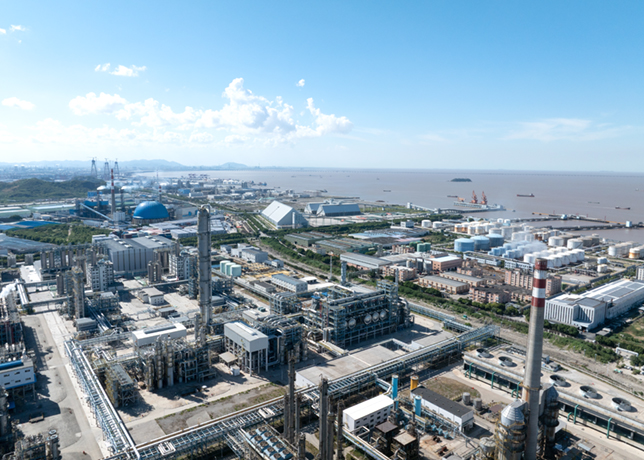
The Malaysian state-owned company is rumoured to be considering increasing its stake in a $600 million naphtha cracker plant, located at the 530 hectare PNOC Petrochemical Park in Bataan, the Philippines.
With 60 per cent of the project's total financing due to be raised through debt, Petronas' investment is expected to amount to around $48 million.
The group already holds a 20 per cent stake in the project along with PNOC.
The study, carried out by Japan's Toyo Engineering, may herald the way to a significant foreign investment in the country's first ever naphtha plant.
The plant will also supply polymers to local petrochemicals manufacturers and manufacture raw materials that can be used by polypropylene and polyethylene plants for the production of materials for plastics products.
The government has given the plant another two years to come on stream.
The potential investment comes amidst scepticism from downstream industries in the country that claim that the project is simply not viable.The Philippine Plastics Industries Association (PPIA), an association of around 200 local plastics manufacturers, have refused to join the project, claiming that the Philippines does not have a strong petrochemical industry that would support such a venture.
Reports quote Alex Teng, PPIA vice-president, saying for instance that the country's upstream oil industry is very small with only three oil companies having refineries.
Another issue Teng has pointed to is the 600,000 tonne capacity of the plant.
This, he has said, will not make the naphtha plant globally competitive.
"For it to be globally competitive, it needs to have an ethylene capacity of one million metric tonnes," Teng has said.
He also said there would only be one client of the proposed plant since other petrochemical plants have shut down.
This is a real fear, as many petrochemical facilities have close their doors, with the Gokongwei-owned JG Summit Petrochemical, located in Batangas being the sole survivor.
Ideally, a fully integrated petrochemical plant should be in one complex to make it easier to transport the compounds.
Otherwise, transporting the resins would require specialised tubes, entailing higher costs.
Heading the list is the claim that the country's downstream plastics industry simply lacks demand.
The present demand of the local industry is only at 400,000 tonnes per year while the downstream proposed capacity of the naphtha plant is 600,000 tonnes. Furthermore, the Philippines also faces tough competition from the Middle East, now able to use cheap natural gas for the naphtha cracker plant.
Proponents of the naphtha cracker project however, are keen for the project to go ahead as planned.

