






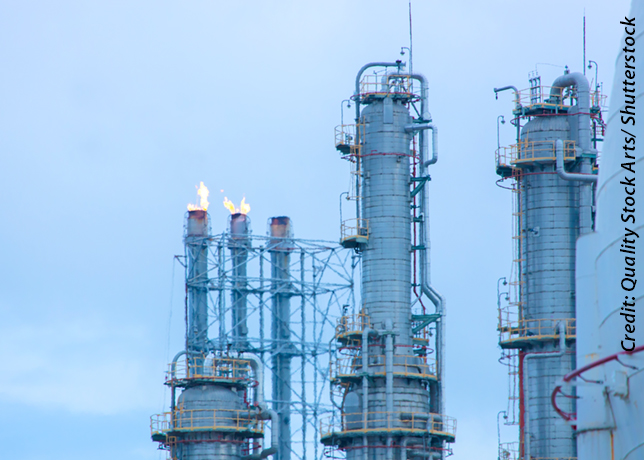


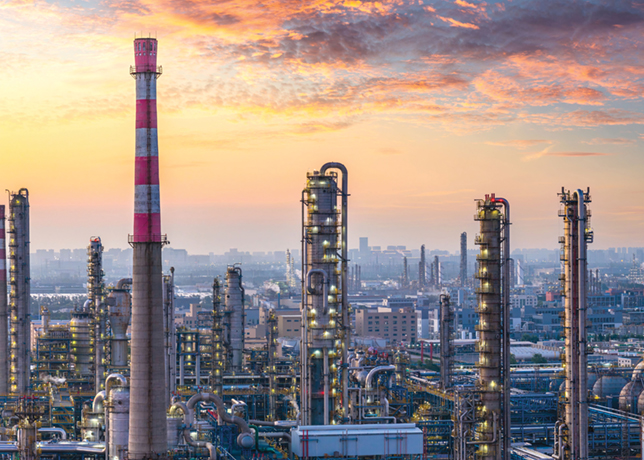

SAUDI Arabia, a key player in the global petrochemical industry, accounts for 75 per cent of GCC petrochemical production.
The kingdom’s petrochemical sector is expected to witness investments of about SR154 billion ($41 billion) between 2004 and 2009 taking Saudi Arabia’s market share in the global petrochemical market to 13 per cent.
A report by Kuwait-based Global Investment House (GIH) on “Saudi Arabia Economic and Strategic Outlook - Petrochemical Industry,” notes that a major part of the kingdom’s petrochemical production is exported.
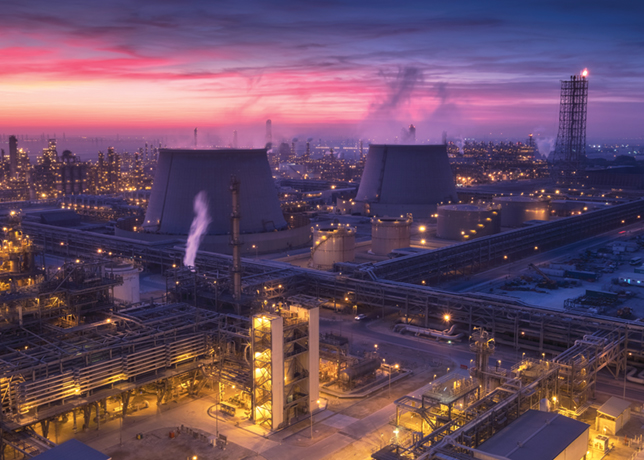
The Saudi petrochemical industry is mainly concentrated in the industrial cities of Jubail and Yanbu. The kingdom’s petrochemical industry enjoys a natural competitive advantage due to the availability of low cost feedstock on account of vast crude oil and natural gas resources, it says.
“The cost of natural gas for the Saudi Arabian petrochemical industry is just $0.75/mmbtu. The WTO agreement confirmed Saudi Arabia has the right to retain low feedstock prices on the grounds that its hydrocarbon resources are a natural advantage and low prices are not classed as a subsidy. The agreement also allows a dual pricing system, where domestic users pay less than the export price for feedstock, under the reasoning that domestic customers do not require export infrastructure or export marketing,” the GIH says.
Sabic was first conceived in 1976, and began production in 1981 is a major petrochemical player in the kingdom. It consists of 17 local world-scale manufacturing affiliates - 12 factories for chemicals, 4 for fertilisers and one for metals. Eight of these are joint ventures with foreign partners, three are wholly owned by Sabic and six are joint venture partnerships with local and regional private sector investors.
Sabic is on a major expansion drive. Its total capacity is stated to increase from 43mtpa in 2004 to 64mtpa by 2008 and 100mtpa by 2010.
GIH further says Sabic’s output accounts for 95 per cent of the domestic petrochemical output. Sabic establishment added value to Saudi Arabias natural hydrocarbon resources.
“Today, Sabic is among the leading petrochemical companies in terms of sales and product diversity. It is the Middle East’s largest non-oil industrial company. It is also a major player in the world petrochemical industry accounting for 7 per cent of the total petrochemical production. It is the world’s 7th largest petrochemical manufacturer, fourth-largest producer of polyolefins. It is the world’s third-largest producer of polyethylene and the sixth-largest producer of polypropylene. Sabic is also the world’s single largest producer and exporter of granular urea and one of the world’s top producers of olefins,” the report says.
Sabic has of late witnessed major overseas expansion by buying or entering into joint ventures, among them, with China Petroleum and Chemical Corporation, in which they agreed to form a 50:50 equal share company that will invest in a 1mtpa of ethylene derivatives complex (600,000mta of polyethylene and 400,000mta of Ethylene Glycol) to be set up in Tianjin, China. The company will receive all its ethylene feedstock from an ethylene cracker owned by Tianjin Petrochemical Company, a branch of Sinopec Corp. With a total investment of around $1.7 billion, the complex is scheduled to be completed by September 2009.
Another joint venture with Al Kayan covers a 2mtpa ethane/ butane cracker, including benzene extraction facilities; a 700,000tpa polyethylene plant; a polypropylene plant with capacity of at least 350,000tpa and a 530,000tpa ethylene glycol unit.
Sabic and Exxon-Mobil announced recently that they have begun work on a feasibility study to define a potential project that would grow their two joint petrochemical ventures at Yanbu and Jubail. The project, operational by 2011, would target domestic supply of carbon black and rubber and thermoplastic specialty polymers (EPDM, TPO, Butyl, SBR/PBR) to serve emerging local and international markets.
Sabic has also indicated that it will invest $5 billion in a new joint venture project in China. Investment might include setting up production units for ethylene, polyethylene and glycol at a cost ranging between $3 billion and $5 billion.
Moreover, Sabic Europe has signed a contract with German contractor UHDE to build a high density polyethylene plant at its production site in Gelsenkirchen, Germany. The plant will have production capacity of 250kt/year, replacing an existing 100kt/year plant. It will begin production in the fourth quarter of 2008.
Saudi European Petrochemical Company, a subsidiary of the Sabic has awarded Samsung Engineering Company Ltd. of South Korea a contract for the construction of 500,000 tonnes per annum polypropylene plant. The plant at Ibn Zahr complex in Al-Jubail, will be completed by third quarter 2008. It is the third polypropylene plant being built at Ibn Zahr.


