































SAUDI Arabia has awarded nearly $21 billion in oil and gas deals in the first half of 2009, more than 20 times the value of hydrocarbon contracts in the final few months of 2008, a key Saudi bank says.
The surge was apparently a result of a decision by the state operator Saudi Aramco to re-tender key hydrocarbon projects that were to be awarded last year to take advantage of a steep decline in construction costs, the Saudi American Bank Group (Samba) says in its economic bulletin.
The oil and gas contracts account for less than a third of the total public investment deals awarded during the first half of this year, reflecting a trend by the government to keep spending high to face the global financial distress.
In contrast, private investment declined sharply during that period after many projects have been put on hold because of the global credit crunch.
“In the hydrocarbons sector, contracts awards by Saudi Aramco have been stepped up again this year following a hiatus in the second half of 2008.
“The value of awards in the January-June period was around $21 billion, compared with less than $1 billion worth of contracts in the last quarter of 2008,” Samba says.
“The dearth of awards at the end of last year may have been related to the steep descent of oil prices, but is more likely a reflection of Aramco’s determination to rewrite existing contracts to reflect cheaper input costs.” In its statements earlier, Saudi Aramco confirmed that it had retendered some of its oil and gas ventures to secure lower costs.
“Yes we have extended some project tenders but we are talking here about a period of weeks or months… we want to give contracts an opportunity to discuss these projects and update their costs,” Saudi Aramco’s president and chief executive, Khalid Al Falih, says.
“We have taken into consideration the recent decline in the prices of building materials and the cost of labour and project construction… the aim of these measures is to give ourselves a chance to take advantage of lower costs this year compared with last year… at the same time we are giving all contractors an opportunity to give the best offers in terms of prices and costs.”
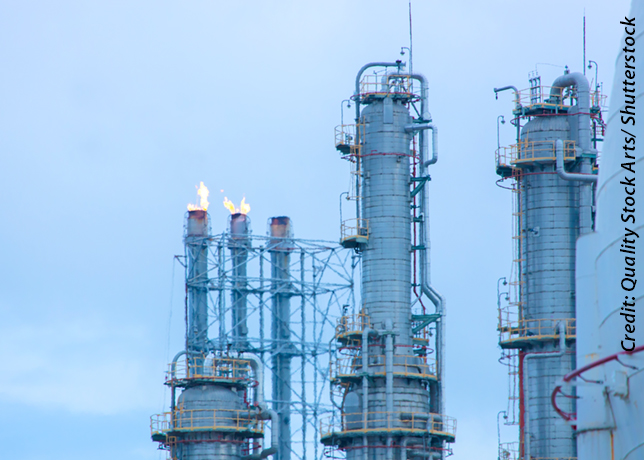
Samba says recent awards in the oil sector have focused on the Manifa field development programme, which is part of Aramco’s ongoing efforts to lift production capacity to some 15 million barrels per day (mbpd) by 2015.
The Karan gas field development has also featured prominently in recent awards as it is Aramco’s largest single non-associated gas project, which is programmed to produce as much as 1.5 million cubic feet per day of gas (mcfd) from 2011 onwards. The project is part of a major Saudi initiative to develop its gas sector to face a rapid growth in domestic demand of seven per cent.
“Public sector awards in the non-oil sector dwarfs even this investment. The value of non-oil contracts in the January-June period amounted to a staggering $70 billion, or 21 per cent of our forecast for 2009 GDP,” Samba says.
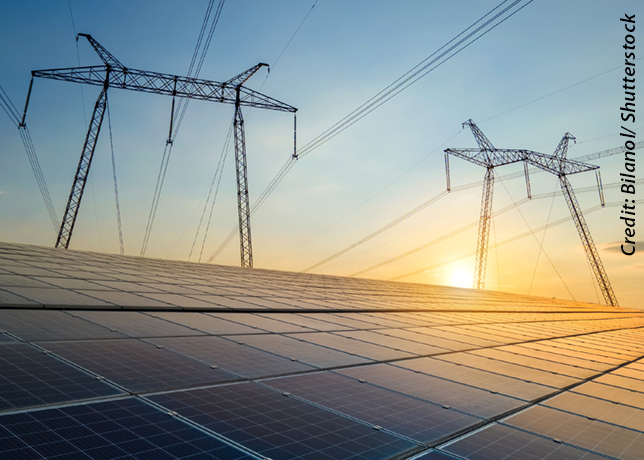
According to the report, a large number of recent contract awards has been made in the power sector, where the Saudi Electricity Company is expanding and upgrading its generation and distribution capacity.
Meanwhile, BMI’s Q409 Saudi Arabia Infrastructure Report has extended its forecast from 2009 to 2014. It has upwardly revised its forecast for 2009 and is now expecting real growth of 2.86 per cent year-on-year in the construction industry, to reach a value of SR78.71 billion ($21.02 billion). Last quarter it had maintained risks to the upside for its forecasts, and this quarter, based on continued positive news from the country; it has incorporated these upside risks into a revised forecast.
Activity has been ongoing in the majority of the major infrastructure projects currently under way, with government support providing the lynchpin for much of this. In the transport sector work is continuing on the country’s attempts to establish three new railway lines, the North-South, the Haramain High-Speed Project and the Saudi Landbridge.
Upgrading airports is also a major priority; a number of airports will be expanded, including the Medina (Prince Mohammed Bin Abdul-Aziz Airport), for which a $2.4 billion expansion project is in the pipeline, and the King Abdel-Aziz Airport, which is undergoing a $11.3 billion expansion. The utilities sector has seen perhaps the most new activity over the last quarter. The government approved the Medina power and water plant, and the tender for a 2,000 MW independent power project (IPP) in Riyadh was launched.
A contract was awarded to Kepco for the Rabigh IWPP. Regionally, the first phase of the GCC power grid was completed, signifying the linking of the power grids of Saudi Arabia, Kuwait, Bahrain and Qatar. The industrial construction sector received a major boost from the awarding of engineering, procurement and construction (EPC) contracts for the Jubail Oil refinery.
Saudi Aramco and Total awarded $9.6 billion worth of contracts to develop the refinery in 13 packages. The refinery is due to be completed in 2013. Ongoing activity in the country substantiates our previous upside risks, and thus prompted an upward revision in our forecasts, says the report. However, the forecasts in real terms are dampened to an extent due to high levels of inflation in the country over the short term. Despite this, activity is still down on previous years, with financing remaining hard to come by, and demand in residential and commercial construction far reduced.
Demand for cement and steel has been rising, illustrating construction activity, which has been fuelled by private companies looking for growth markets in the region, where demand fundamentals are strong.
Saudi Arabia stands apart from many of its regional peers as demand for infrastructure and construction projects is fuelled by domestic demand, as opposed to tourism or international demand, and thus is still evident during the global downturn. A further, more comprehensive, driver of growth is the government’s efforts to sustain much needed infrastructure projects.
Reports suggest that the government has so far extended $3 billion in financing to offset the impact of the global downturn on raising financing from the banking sector, and this is expected to grow to $5.3 billion by the end of 2009.

